EVA Foam Density & Hardness: Shore A, C, and 00 Guide
This technical guide to EVA foam density and hardness provides the framework needed for precise material selection. Understanding the mechanical differences between these two properties prevents product failure and ensures your components meet industrial performance standards.
In our experience at Damao, engineers often confuse surface firmness with structural mass. By following standardized testing protocols and selecting the correct Shore scale, you can optimize your product’s weight and durability simultaneously. For more foundational data, visit our EVA foam pillar page.
The Shore 00, Shore A, and Shore C Scales
Shore scales are the standardized measurement systems used to quantify the hardness of polymers and elastomers. While Shore A is the global standard for solid rubbers, the foam industry frequently utilizes Shore C and Shore 00 for better precision with cellular materials.
| Scale | Indenter Shape | Material Type | Common Use Case |
|---|---|---|---|
| Shore 00 | Large Ball | Ultra-Soft | Medical cushioning, gel-like pads |
| Shore C | Domed | Foam/Sponge | Athletic footwear, industrial mats |
| Shore A | Blunted Cone | Hard Elastomers | Marine decking, rigid gaskets |
According to the ASTM D2240 standard, using the Shore C scale for EVA foam provides higher resolution because the domed indenter does not puncture the cell walls as easily as the Shore A cone. This results in a more stable and repeatable measurement across different foam production batches.
3-Step Material Selection Protocol
A material selection protocol is a systematic workflow used by engineers to match EVA foam properties to functional requirements. Working through these steps in order ensures your specification is both technically sound and cost-effective.
- Define the Static Load: If your product must resist constant pressure without flattening (compression set), prioritize High Density (>150 kg/m³) first.
- Determine Target Feel: If impact absorption or user comfort is the primary goal, identify the required Shore Hardness (C or 00) range.
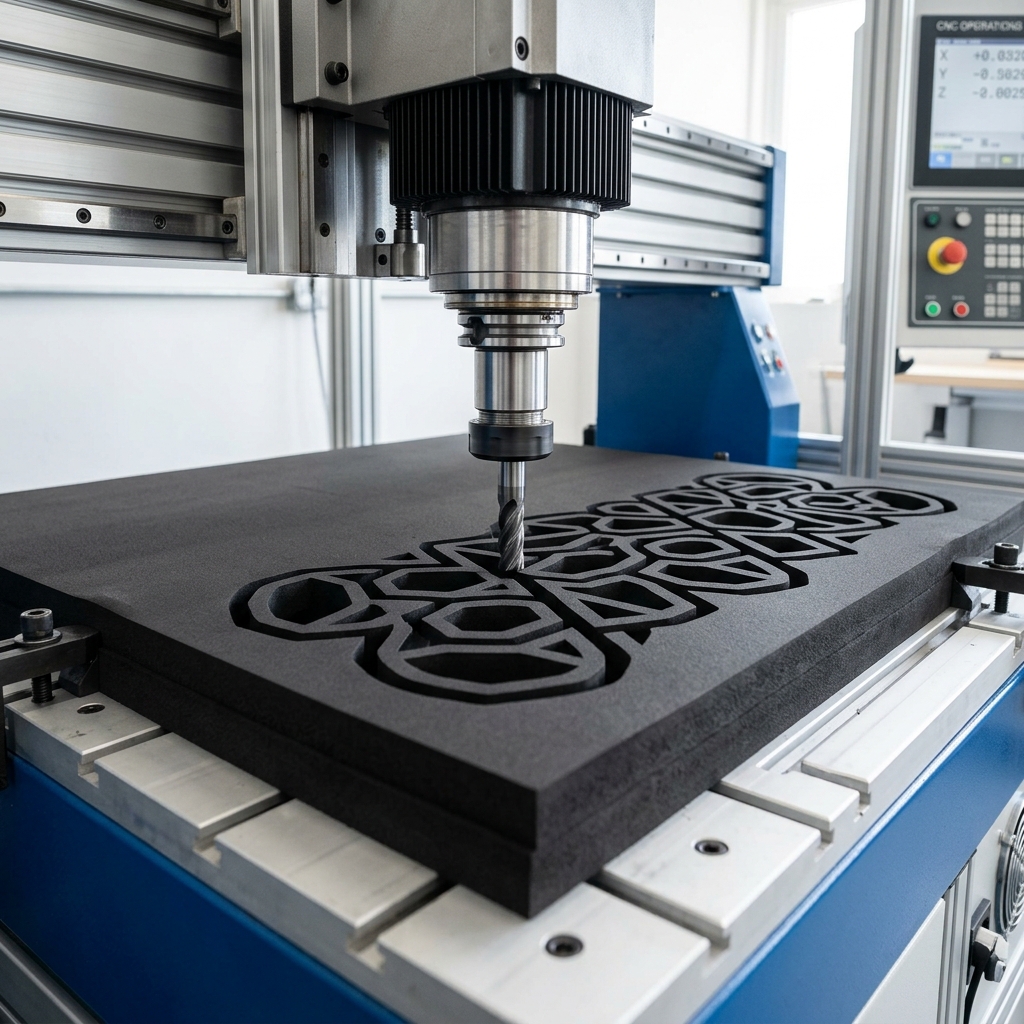
- Validate Processing Needs: If the foam requires heat-molding or CNC routing, choose a medium-to-high density to ensure the material retains sharp edge definitions after machining.
The Correct Logic for Density Classification
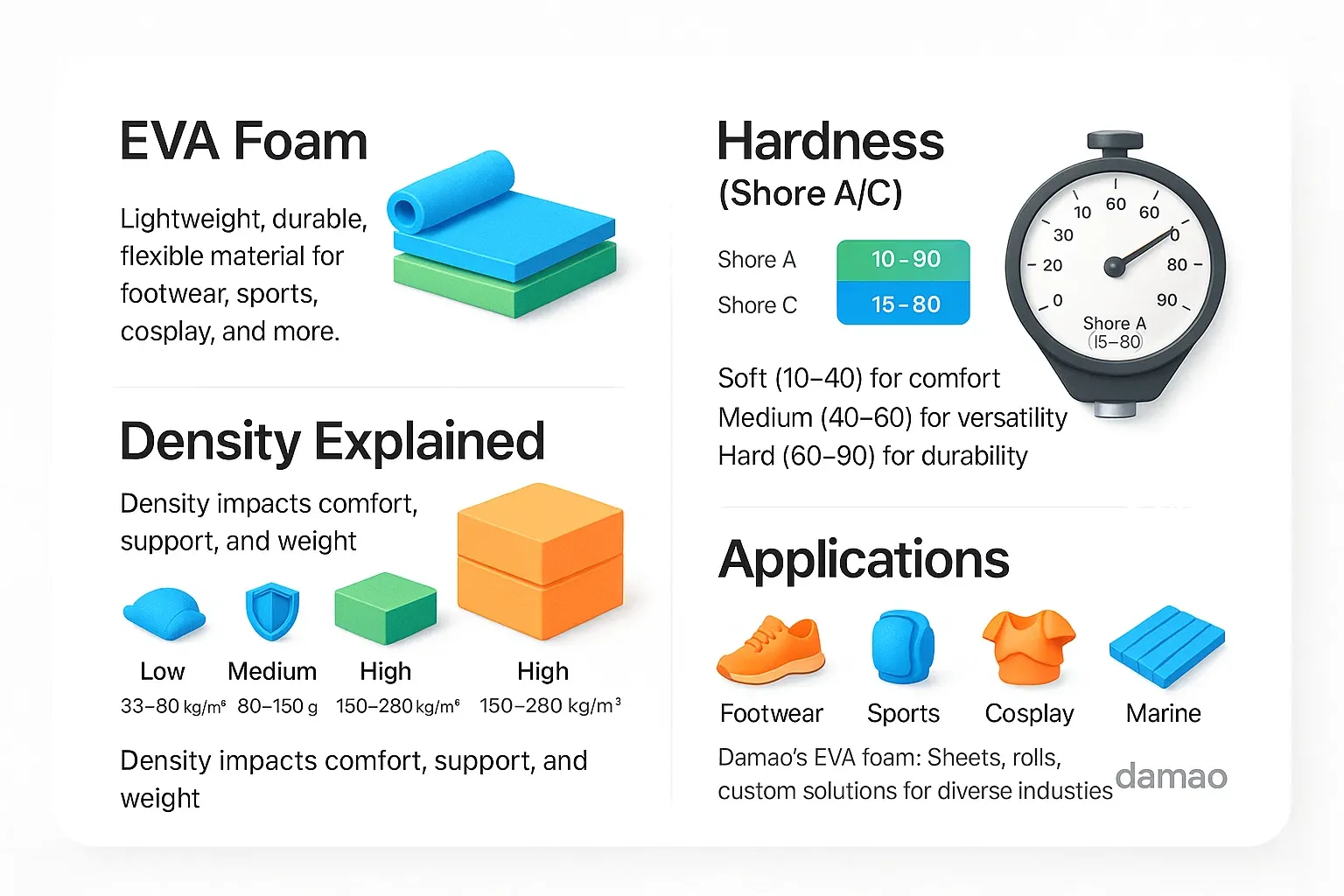
Density is the mass per unit volume of the EVA foam, typically measured in kg/m³. While density and hardness are often correlated during production, they can be adjusted independently through chemical formulations and expansion ratios.
- Low Density (33–80 kg/m³): Prioritizes lightweight performance and high compressibility.
- Medium Density (80–150 kg/m³): The industry benchmark for athletic performance and general cushioning.
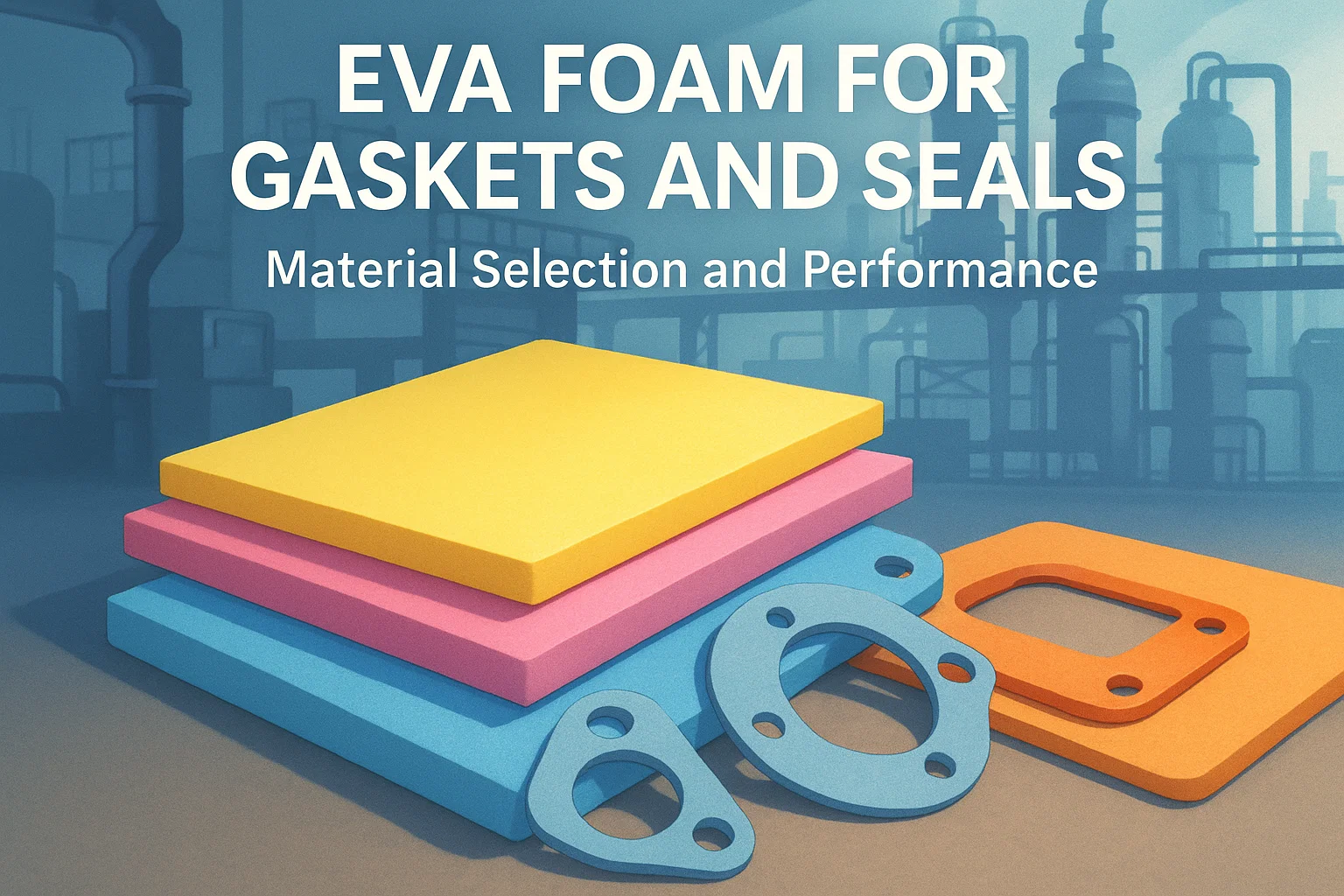
- High Density (150–280 kg/m³): Required for structural gaskets, marine flooring, and heavy-duty industrial mounts.
In our experience, choosing a high-density foam with a lower Shore hardness can create a material that is both incredibly durable and comfortable. This “soft-tough” combination is ideal for high-end automotive interior components and protective sports gear.
Managing Compression Set and Recovery
Compression set is the percentage of permanent deformation a foam suffers after being subjected to a specific load for a defined period. This is the most critical metric for the service life of gaskets, seals, and footwear midsoles.
Higher density EVA foam formulations generally offer superior resistance to compression set. If your application involves cyclic loading (repeated impacts), ensure your material data sheet includes a low-percentage compression set rating. Testing your material samples under real-world temperature and pressure conditions is the only way to guarantee long-term sealing success.
Technical Application Matrix
Use this matrix as a baseline for your initial material specifications based on common industrial use cases.
| Application | Target Density | Target Hardness | Key Performance |
|---|---|---|---|
| Footwear Midsoles | 80–120 kg/m³ | 20–35 Shore C | Energy Return / Rebound |
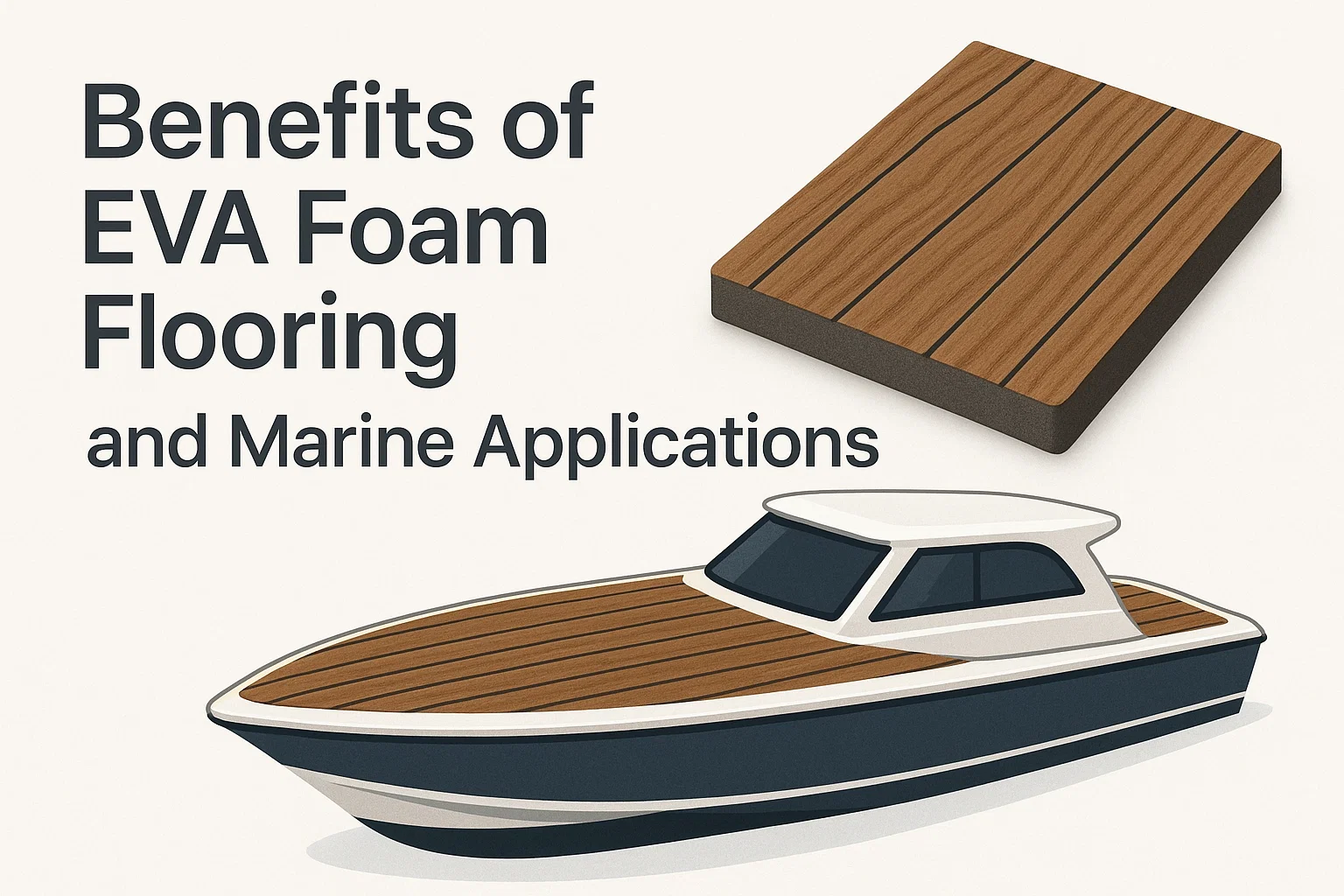
| Marine Decking | 180–220 kg/m³ | 55–65 Shore C | UV Stability / Traction |
| Medical Padding | 35–50 kg/m³ | 15–20 Shore 00 | Skin Compatibility |
| Industrial Gaskets | 200–250 kg/m³ | 40–50 Shore A | Seal Integrity |
Partner with Damao for Technical Support
Selecting the perfect balance of density and hardness requires deep expertise in polymer science. Working with a material specialist like Damao ensures your components are engineered for maximum performance from day one.
Ready to optimize your product’s performance? Contact Damao today to request technical data sheets or physical material samples for your next project. al Support](https://damao-tech.com/contact/)