How to Cut EVA Foam Cleanly: Knife, Hot Knife, CNC & Edges
- Damao Tech
- EVA Foam
- 30 Jul, 2025
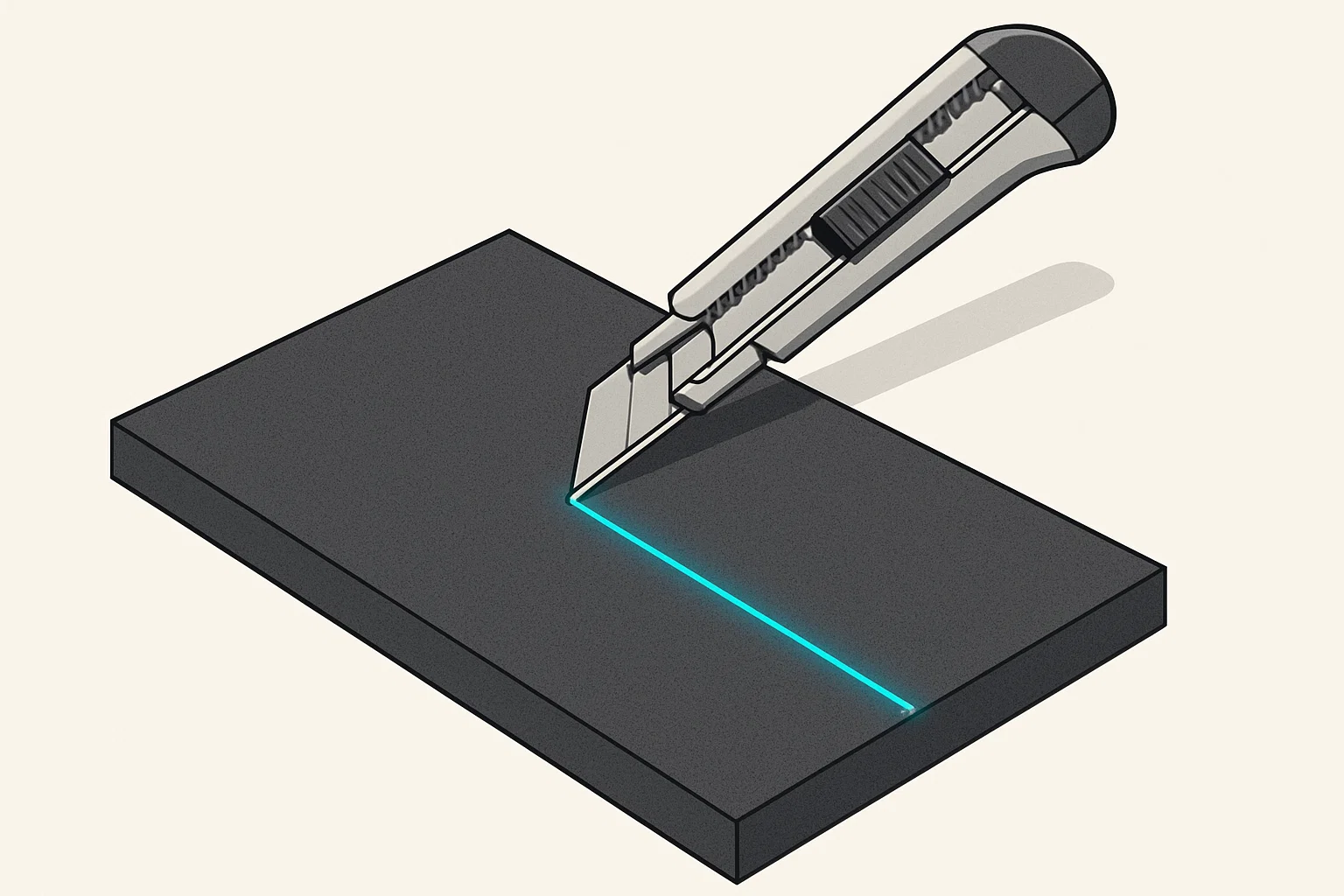
To cut EVA foam cleanly, use a sharp snap-off utility knife for sheets under 10 mm, a hot knife for smooth sealed edges on curves, or a bandsaw for foam thicker than 20 mm. The key technique is the multiple-pass method — score the line lightly first, then deepen the cut with each pass instead of forcing the blade through in one go. This single change eliminates 90% of the tearing and dragging that ruins EVA foam edges.
Whether you’re crafting cosplay armor, custom case inserts, or prototyping a B2B product, this guide walks through every tool, cutting technique, and finishing step needed for flawless EVA foam cuts.
Tool Comparison: Choosing Your Cutting Method
The table below breaks down the best tools for cutting EVA foam based on material thickness, precision, and application.
| Tool | Recommended Thickness | Precision Level | Best For | Pros | Cons |
|---|---|---|---|---|---|
| Utility Knife (Snap-off) | < 10 mm | High | Straight cuts, patterns | Cheap, accessible, very sharp | Blades dull quickly, struggles with curves |
| Hot Knife | 5 – 25 mm | Medium-High | Curved bevels, complex details | Melts and seals edges automatically | Releases fumes, slow cutting speed |
| Bandsaw / Scroll Saw | > 20 mm | Medium | Thick sheets, blocking | Excellent for bulk blocks, fast | Leaves slightly rough texture, safety hazards |
| CNC Router | Any thickness | Ultra-High | Industrial inserts, 3D milling | Perfect repeatability, automated | High setup cost, requires CAD files |
| Laser Cutter | 1 – 15 mm | Ultra-High | Intricate logos, gaskets | Extremely clean cuts, sealed edges | Burn marks on light colors, fume control needed |
Tool Precautions and Setup Guide
Before beginning, adjust your parameters and workflow according to the tool selected:
1. Manual Knives (Utility & Craft)
- Sharpness is Everything: EVA foam is highly abrasive and will dull steel blades after just a few feet of cutting. Using a snap-off utility knife is highly recommended; snap off the old segment as soon as the blade begins to drag or compress the foam.
- Safety: Always cut away from yourself and use a metal safety ruler with a finger guard.
2. Hot Knives
- Fume Control: Heating EVA foam releases acetic acid vapor and processing residues. Always wear a particulate/vapor respirator and work in a well-ventilated space or under a fume hood.
- Drip Hazards: Do not force the knife. Let the heat melt the polymer. Rushing will cause plastic buildup and messy, uneven drips along the seam.
3. CNC Routers (For Industrial Case Inserts)
- Speed Settings: Run at a high spindle speed (18,000–24,000 RPM) but a fast feed rate to avoid melting the foam.
- Tooling: Use upward spiral, single-flute solid carbide bits. These bits lift the foam waste cleanly out of the channels without wrapping or clogging the spindle.
4. Laser Cutters
- Fume Extraction: Ensure your laser has active exhaust extraction. Burning EVA releases hydrogen gas and acetic acid, which can corrode the laser optics over time.
- Avoid TPE-Copolymer Blends: Pure EVA cuts beautifully under a CO2 laser, but low-quality blends containing high vinyl acetate or chlorinated additives can char heavily.
Step-by-Step: Techniques for a Flawless Cut
Having the right tool is only half the battle. Your technique is what will truly elevate your work.
- Mark Your Lines Clearly: Use a silver pen or fine-point marker that stands out against the foam. Press lightly to avoid creating a permanent groove that your blade might follow incorrectly.
- Use a Cutting Mat: Always cut on a self-healing cutting mat to protect your work surface and keep your blade sharp. For straight lines, use a sturdy metal ruler as a guide.
- Master the “Multiple Pass” Method: Instead of trying to cut through the foam in one deep pass, use several shallow ones.
- First Pass: Score the line with light pressure. This creates a guide channel for your blade.
- Subsequent Passes: Follow the scored line, applying slightly more pressure with each pass until you are cleanly through the foam.
- Angle Your Blade: For a standard butt joint, keep your blade at a perfect 90-degree angle. For beveled edges, consistently maintain a 45-degree angle.
- Tackle Curves with Care: When cutting curves, move the EVA foam piece into the blade, rather than trying to turn the knife. This gives you more control and results in a smoother arc.
Professional Edge Finishing: How to Get Glass-Smooth Edges
If your cuts are slightly rough, you can easily restore a professional, factory-smooth edge with these finishing steps:
- Sanding (Dry or Wet): Use a rotary tool (like a Dremel) with a fine-grit sanding drum (120–240 grit) to shape and round edges. Run the rotary tool at a low speed (under 10,000 RPM) to prevent the friction from melting the foam.
- Heat Sealing: After sanding, sweep a heat gun (set to 200–300°C) across the cut edges from a distance of 3–5 inches. The heat gun causes the micro-pores on the sanded surface to melt and seal, leaving a smooth, glossy, and non-porous skin that is perfect for painting or gluing.
Frequently Asked Questions
What is the best tool for an absolute beginner cutting EVA foam?
For a beginner, a snap-off utility knife is the best starting point. It is affordable, highly accessible, and teaches you the foundational “multiple-pass” method on sheets under 10 mm thick.
How do I stop my knife from tearing the foam, especially on corners?
Tearing is caused by a dull blade or excessive downward pressure. Swap in a new blade. For sharp corners, do not try to pivot the knife at the point. Instead, cut past the corner on both intersecting lines, allowing the waste piece to fall away cleanly.
Can I cut very thick EVA foam (over an inch) at home?
Yes. If you do not have a bandsaw, use a long, sturdy utility blade (not a snap-off type). Apply lubrication (like a drop of dish soap or wax) to the blade and execute 5 to 8 shallow, controlled passes until you are through.
Does the density of the EVA foam really make a difference in cutting?
Yes. High-density EVA foam (85 kg/m³ and up) has a tighter, firmer cell structure. It resists blade compression, allowing for incredibly sharp details, crisp bevels, and minimal tearing compared to soft, low-density foam.
Damao Tech: Your Partner in Precision Projects
The success of any project is built on a foundation of quality materials and expert knowledge. At Damao Tech, we provide a diverse range of EVA Foam panels, rolls, and finished items, and we empower our clients with the expertise to get the most out of them. By choosing our consistent, high-density foam, you’re already one step closer to achieving that clean, professional cut you’re looking for.
Ready to start your next project with the best materials on the market? Contact Damao Tech today to request pricing and custom fabrication samples.