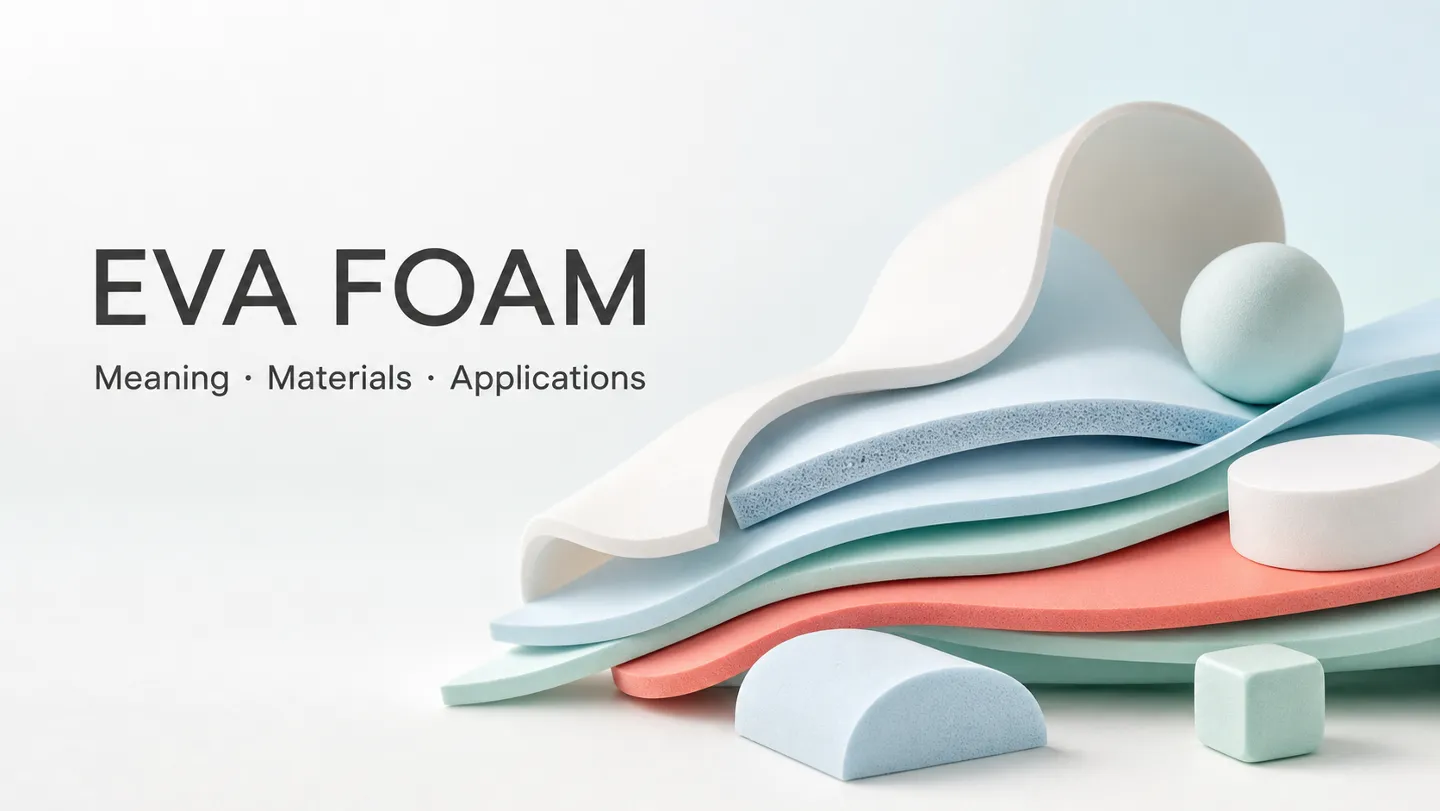
What Does EVA Stand For? EVA Foam Meaning, Materials, and Applications
- Damao Tech
- EVA Foam
- 10 Jul, 2026
If you have ever worn a running shoe, unrolled a yoga mat, or unboxed a fragile electronic device, you have interacted with EVA foam. But what exactly does “EVA” stand for, and what makes this material so dominant across both industrial manufacturing and consumer goods?
This guide breaks down the chemical meaning of EVA, how the foam is manufactured, its key technical properties, and its most common commercial applications.
What Does EVA Stand For?
EVA stands for Ethylene-Vinyl Acetate.
It is a copolymer composed of two distinct monomer compounds:
- Ethylene: A hydrocarbon gas that provides stiffness, durability, and polymer structure.
- Vinyl Acetate (VA): A compound that introduces softness, flexibility, and rubber-like elasticity.
By copolymerizing these two compounds together, manufacturers produce a material that acts as a bridge between rigid plastics (like polyethylene) and elastic rubbers.
The Role of Vinyl Acetate (VA) Content
In material science, the ratio of vinyl acetate to ethylene dictates the final properties of the polymer:
- Low VA Content (10% to 18%): Results in a firmer, tougher material that is excellent for protective packaging, structural seals, and heavy-duty industrial mats.
- High VA Content (28% to 40%): Yields a highly elastic, soft, and transparent polymer often used in adhesives, flexible tubing, and soft toys.
Most industrial-grade EVA foams fall within the 12% to 24% VA content range, balancing structural integrity with shock-absorbing flexibility.
How EVA Foam Is Manufactured
To turn raw Ethylene-Vinyl Acetate copolymer resin into the lightweight, spongy foam we use, the polymer undergoes a foaming process:
- Compounding: The raw EVA resin pellets are blended with foaming agents (blowing agents), curing agents (like DCP), and optional additives (like flame retardants or color pigments).
- Pressing and Curing: The mixture is placed into a high-pressure mold and heated. The heat activates the curing agent to crosslink the polymer chains and causes the blowing agent to decompose, releasing nitrogen gas.
- Expansion (The “Pop”): When the press opens, the pressure drop causes the microscopic gas bubbles trapped within the crosslinked polymer structure to expand instantly, creating a sheet of closed-cell EVA foam.
For a deep dive into the chemical agents used during this process, read our D DCP Crosslinking in EVA Foam Guide.
Key Properties of EVA Foam
EVA foam’s physical characteristics make it a highly sought-after material for B2B product designers:
- Closed-Cell Structure: The gas bubbles are sealed in individual pockets. This makes EVA foam completely waterproof, buoyant, and highly resistant to moisture absorption.
- Shock Absorption: It excels at dispersing impact energy, which is why it is the premier material for protective sports gear and orthotics.
- Chemical Resistance: EVA resists degradation from oils, solvents, ozone, and UV radiation.
- Thermal Insulation: It blocks heat transfer, serving as an excellent thermal barrier for HVAC gaskets and marine refrigeration.
- Lightweight: With typical densities ranging from 30 kg/m³ to 250 kg/m³, it adds minimal weight to finished products.
Common Applications of EVA Foam
Thanks to its versatility, EVA foam is used across a vast array of global industries:
1. Footwear (Midsoles & Insoles)
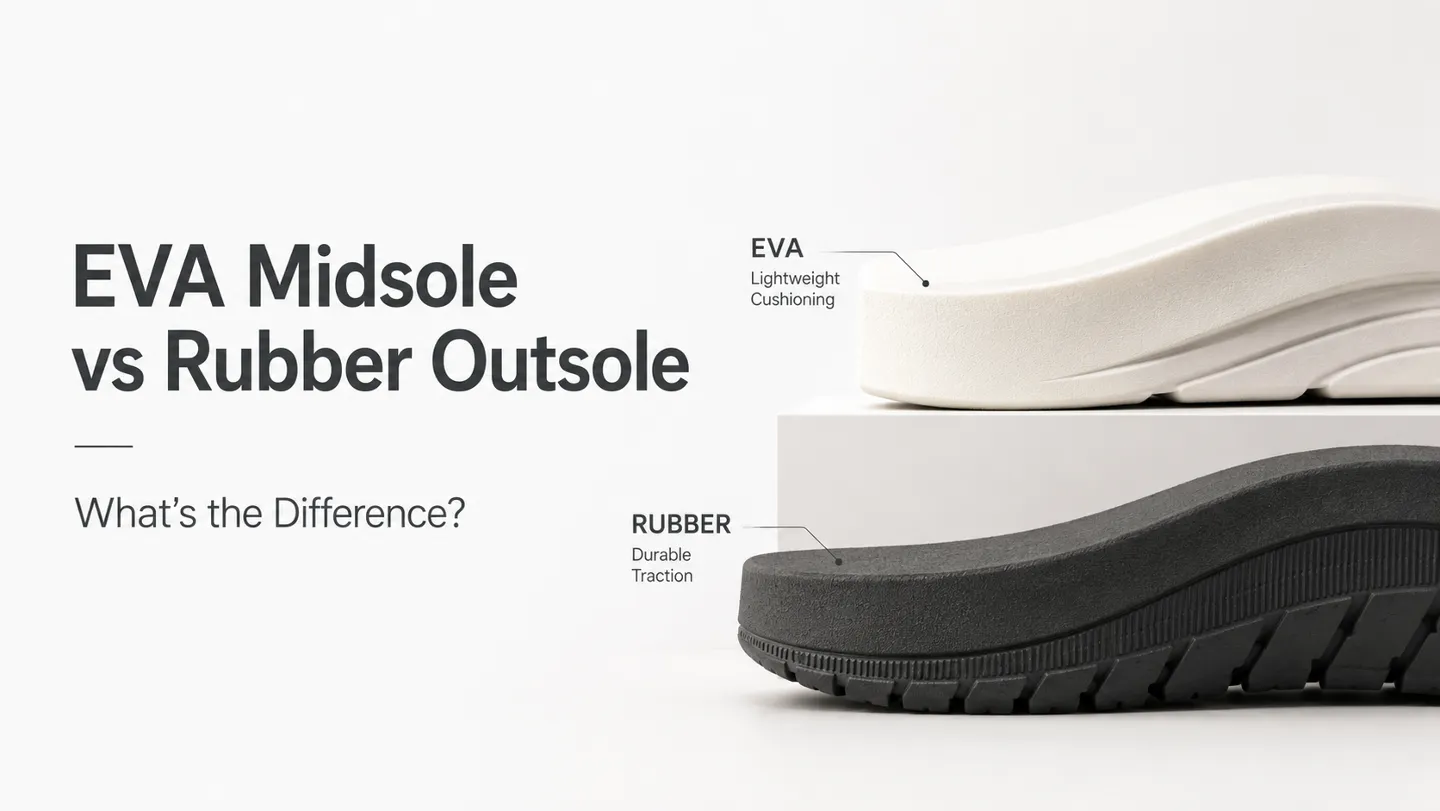
Because of its high rebound resilience and cushioning, EVA is the industry standard for athletic shoe midsoles. It cushions the foot and absorbs the shock of heel strikes. Read our comparison of EVA Midsole vs. Rubber Outsole to see how they work together.
2. Protective Packaging and Inserts
High-density EVA foam is custom-milled to create protective inserts for electronics, medical devices, and luxury goods. It holds items firmly in place and absorbs shipping vibration. Learn more in our EVA Foam Packaging Inserts Guide.
3. Marine Flooring and Decking
Due to its closed-cell, non-skid, and UV-resistant nature, EVA foam is laminated and routed to make durable boat flooring that stands up to salt water and direct sunlight. Explore our Marine Flooring Guide.
4. Consumer Mats and Sports Gear
Interlocking play mats, yoga blocks, and martial arts flooring are made from EVA foam because it is soft, easy to clean, and safe for skin contact.
Frequently Asked Questions
Is EVA foam toxic?
No. Fully cured EVA foam is non-toxic, BPA-free, and contains no plasticizers or heavy metals. It is widely certified as safe for children’s toys and baby play mats. For details, see our EVA Foam Safety Guide.
Is EVA foam biodegradable?
Standard EVA foam is not biodegradable due to its crosslinked polyolefin structure. However, it is highly durable and has a long service life, reducing replacement waste. It can also be recycled back into industrial compounds.
How does EVA foam compare to PE foam?
Polyethylene (PE) foam is stiffer and more rigid, making it excellent for heavy structural packaging. EVA foam is softer, more rubbery, and has much higher rebound resilience, making it superior for comfort, cushioning, and repeated impacts. Read our comparison of EVA vs. PE Foam for a full breakdown.
Partner with a Premium EVA Foam Manufacturer
Understanding the material science behind EVA foam helps you specify the correct grade for your product line. At Damao Tech, we manufacture custom EVA foam rolls and sheets tailored to your exact density, hardness, and color requirements.
Ready to source premium EVA foam directly from the manufacturer? Contact Damao Tech today to request specifications and product samples.