Recycled EPS Pellets
Construction, packaging, and composite manufacturers can source recycled EPS pellets from Damao Tech for lightweight fillers, insulation products, protective packaging, and molded components. Densified EPS waste is processed into consistent rEPS pellets for circular material programs.
Consult Now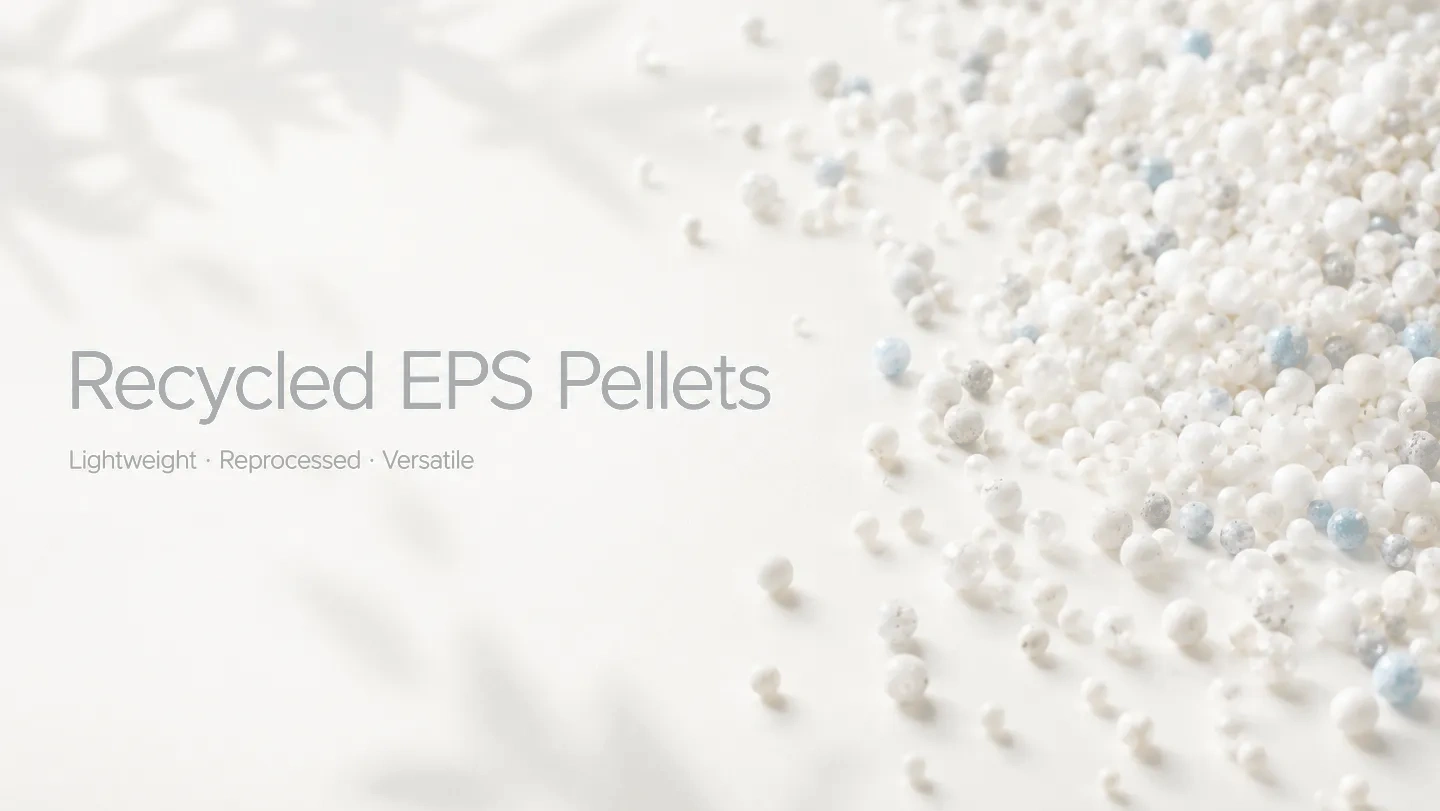
What Are Recycled EPS Pellets?
Recycled EPS pellets, or rEPS pellets, are granules made from Expanded Polystyrene foam waste. EPS is widely used in protective packaging, cold-chain boxes, and building insulation, but its high air content makes it bulky and expensive to transport before recycling.
The recycling process densifies EPS foam, removes much of its volume, and converts it into reusable pellets for manufacturing. This gives a second life to a material that otherwise takes up significant landfill space.
From Bulky Foam to Dense Pellets
Recycling EPS requires a different process from many rigid plastics because EPS is mostly air.
- Sourcing and Collection: EPS waste is collected from packaging, insulation sheets, fish boxes, and post-industrial foam streams.
- Sorting and Cleaning: Tape, labels, paper, dirt, and other contaminants are removed.
- Densification: A densifier or compactor uses pressure or controlled heat to reduce foam volume by up to 90:1.
- Grinding and Pelletizing: Densified blocks are crushed, melted, filtered, extruded, and cut into consistent rEPS pellets.
- Quality Control: Density, purity, pellet consistency, and contamination levels are checked before shipment.
Key Benefits of Recycled EPS
- Major Waste Reduction: Densifying EPS makes recycling economically practical and helps divert bulky foam from landfill.
- Lightweight Performance: rEPS supports lightweight parts, fillers, and composite products where weight reduction matters.
- Thermal Insulation: Recycled EPS can retain useful insulation characteristics for selected construction and packaging applications.
- Cost-Effective Feedstock: rEPS provides a recycled alternative to virgin polystyrene in applications where recycled content is acceptable.
- Circular Material Story: Brands can turn a difficult waste stream into a functional input for new products.
Typical Applications for rEPS Pellets
- Construction and Building: Lightweight aggregate, insulation boards, geofoam-related products, and composite panels.
- Protective Packaging: Molded corner protectors, cushion components, and non-food packaging parts.
- Furniture and Decor: Picture frames, decorative moldings, hangers, and lightweight molded items.
- Consumer Goods: Plant pots, outdoor goods, surfboard cores, and selected composite products.
Buyer Considerations
Because EPS feedstock can vary, buyers should confirm density, color, contamination level, and compatibility with their manufacturing process. For construction-related applications, local performance standards and fire-safety requirements should be reviewed before material selection.
Frequently Asked Questions
Why does EPS need densification before recycling?
EPS foam contains a large amount of air, making it bulky and inefficient to ship. Densification compresses or thermally compacts the foam into solid blocks, which are easier to transport, grind, and pelletize.
Is recycled EPS waterproof?
EPS is naturally resistant to moisture because of its closed-cell structure. Recycled EPS can retain useful moisture resistance, though final product performance depends on the grade, processing method, and formulation.
What are the main uses for rEPS pellets?
Common uses include lightweight concrete, insulation-related products, protective packaging, decorative moldings, and filler materials in composites.
Can Damao Tech help select an rEPS grade?
Yes. Send your application, density target, processing method, and volume through our contact page, and our team can help evaluate a suitable recycled EPS pellet option.
Technical Specs
Core technical parameters and performance indicators for precision EVA foam production.
- Material Recycled Expanded Polystyrene (rEPS)
- Common Sources Packaging Blocks, Insulation Boards, EPS Foam Waste
- Key Properties Lightweight, Insulating, Moisture Resistant
- Processing Methods Densification, Extrusion, Pelletizing