Desktop 3D Printer Filament Extruder
Compact filament extrusion system for producing consistent 3D printer filament from plastic pellets, custom compounds, or clean recycled material. Designed for labs, universities, prototyping teams, and small-batch production.
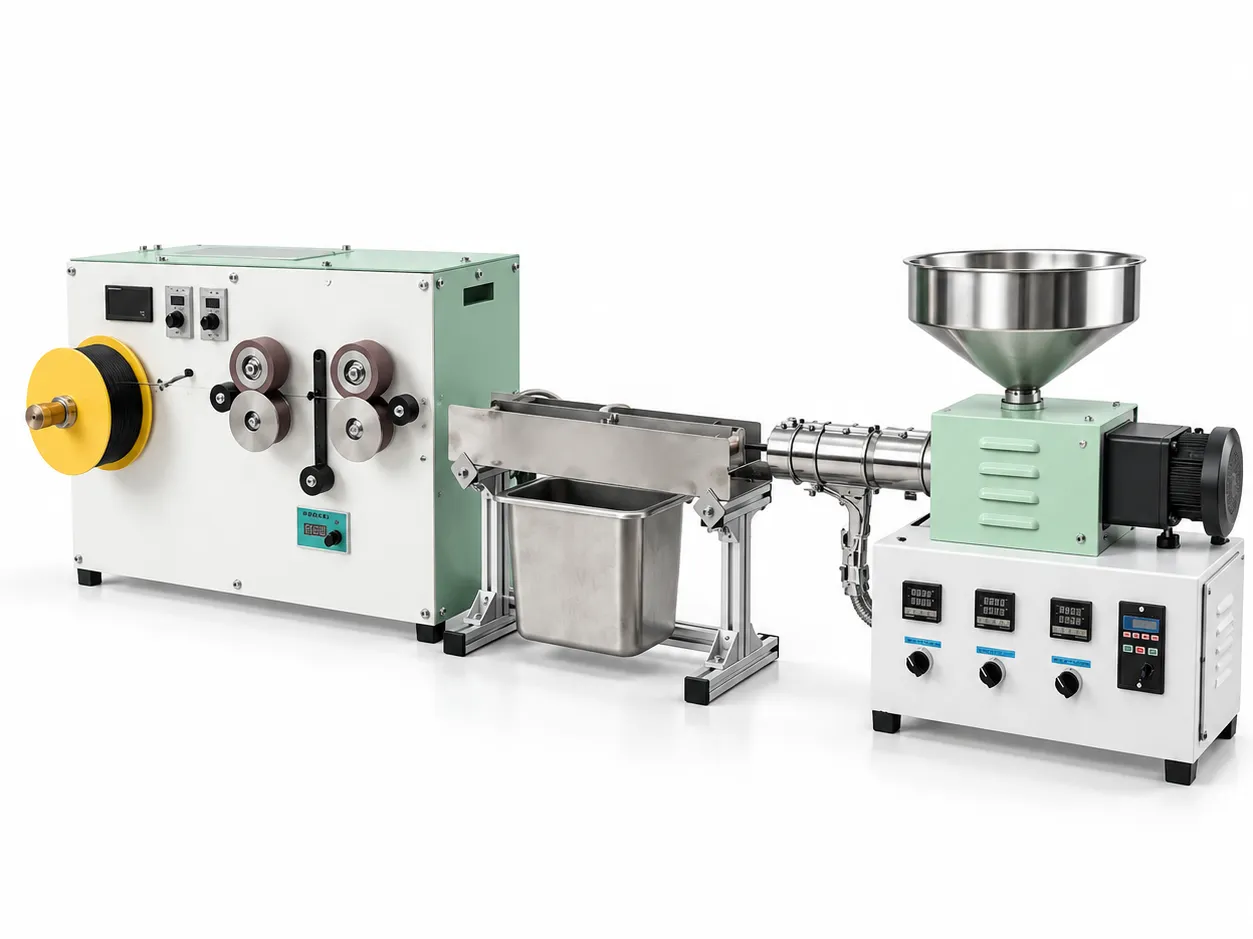
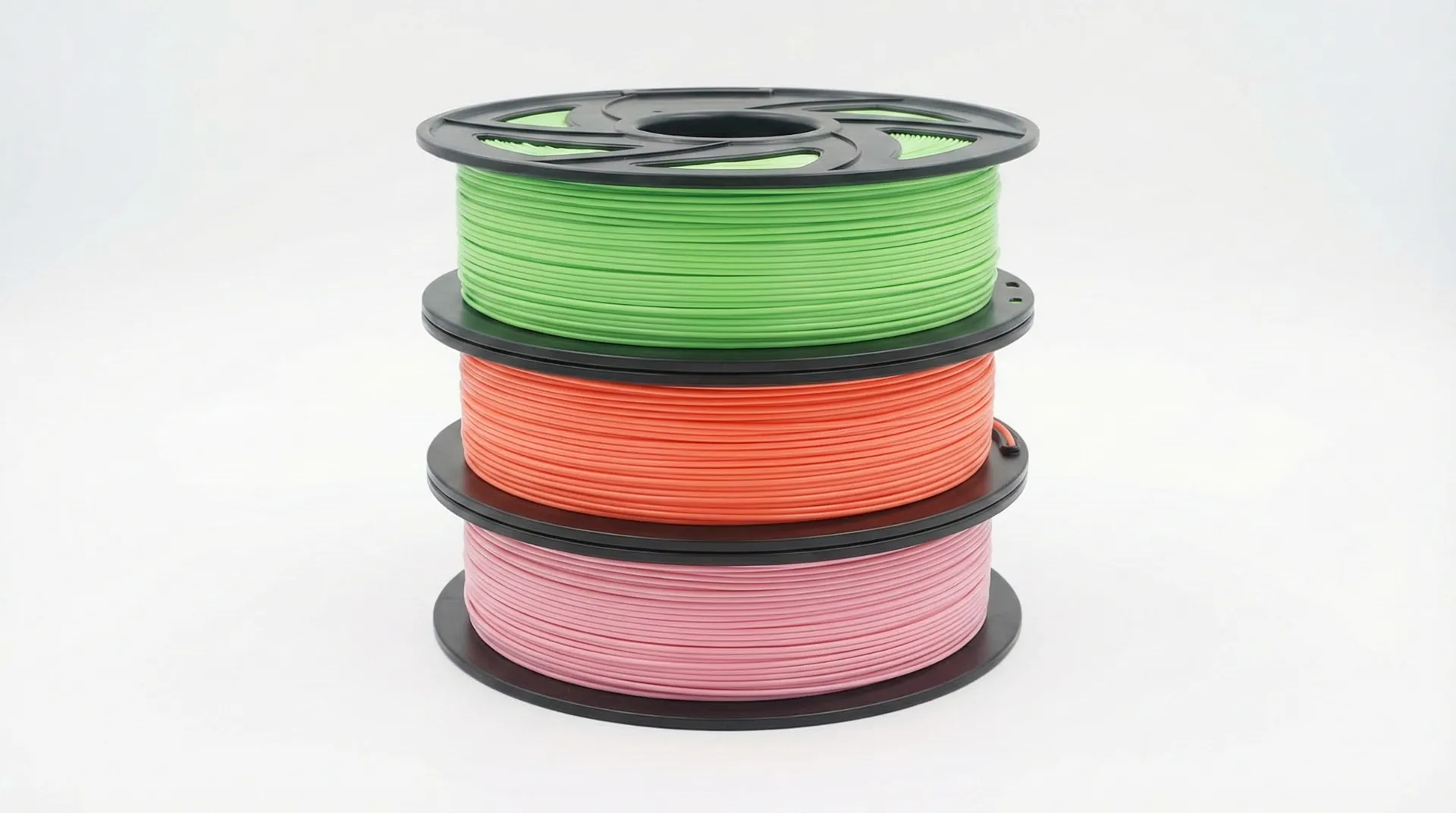
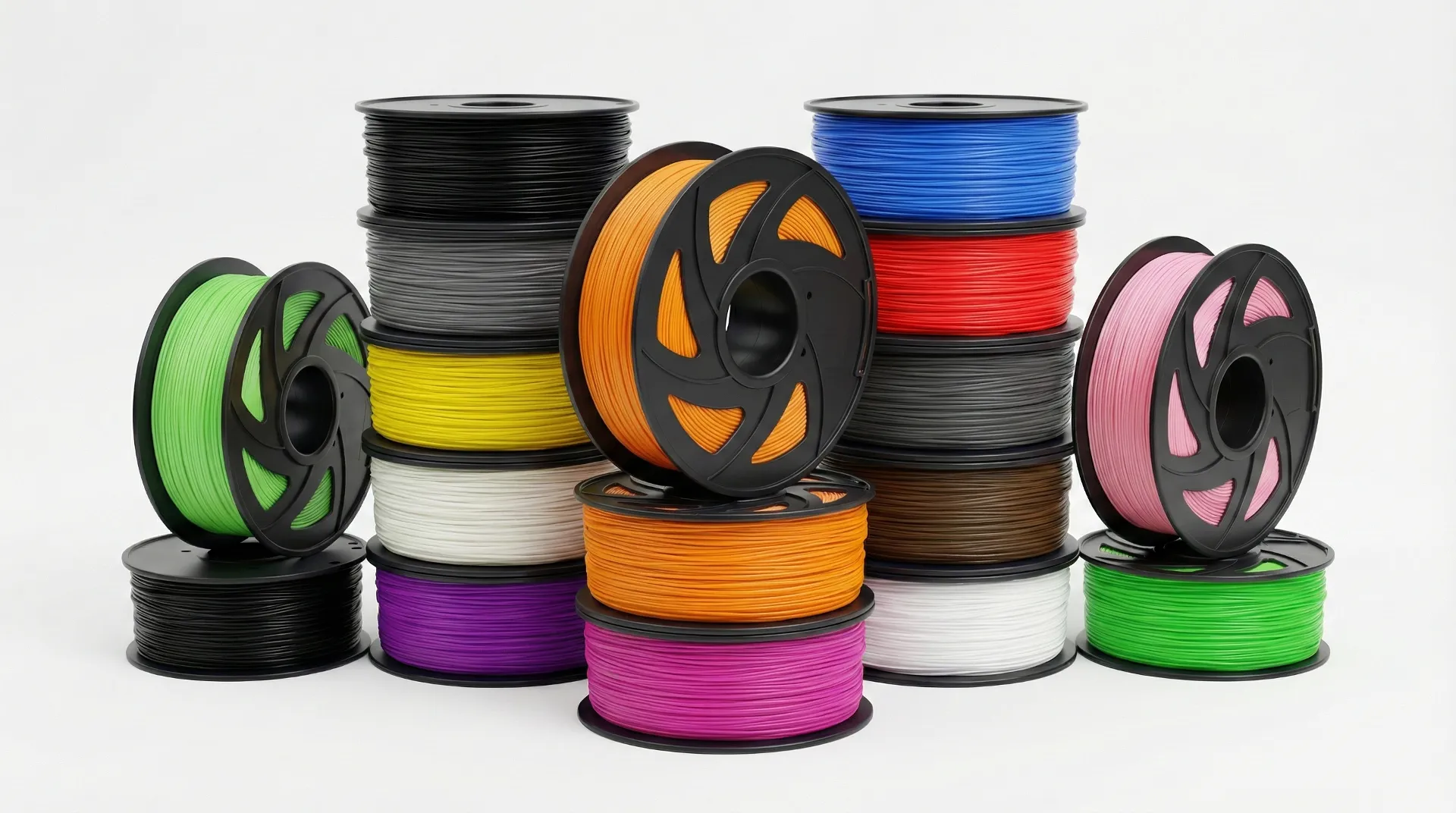
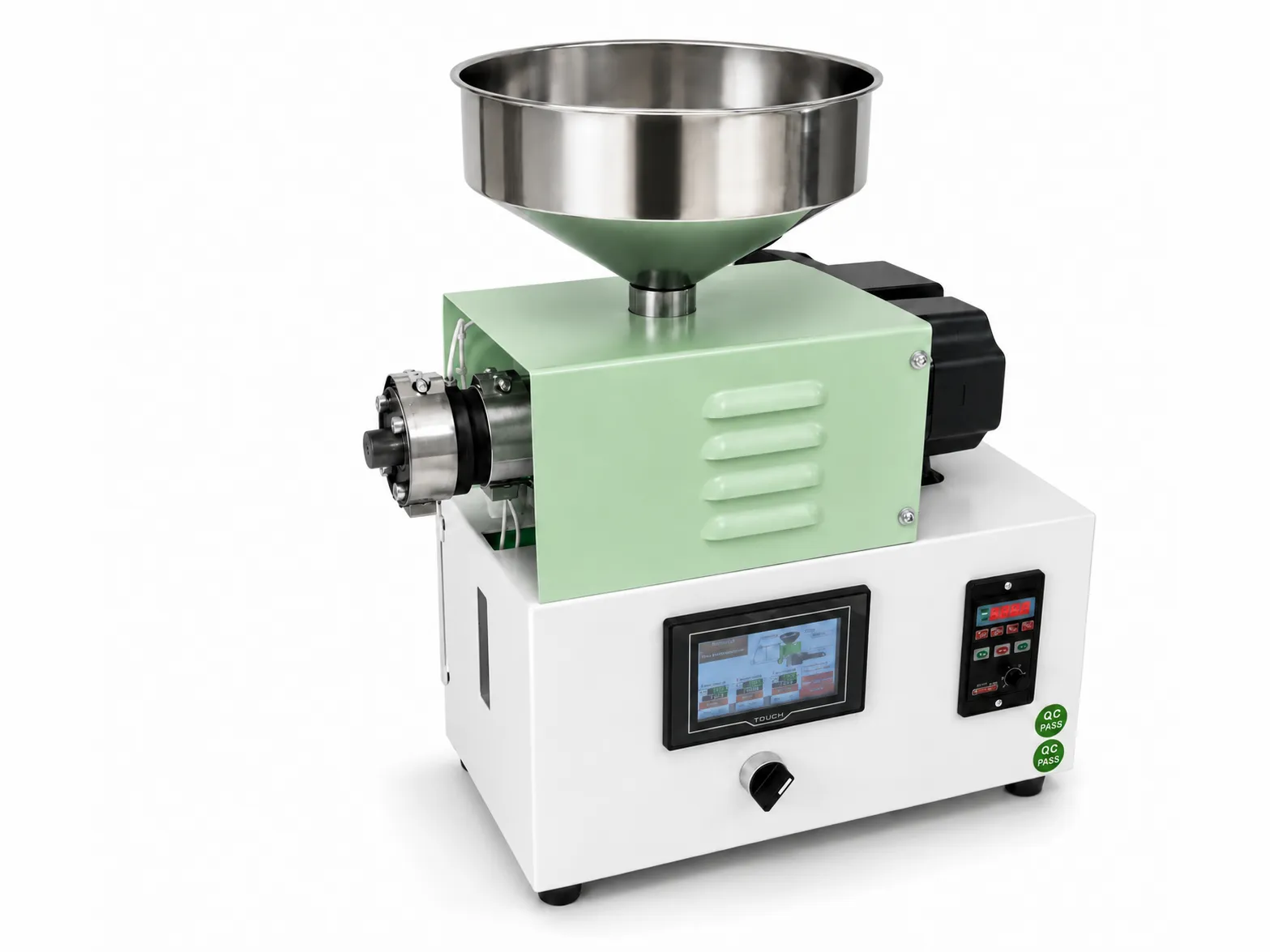
Make Filament from Pellets
Produce 3D printer filament in-house from virgin pellets, color masterbatch, custom compounds, or properly prepared recycled plastic. This compact extrusion line gives laboratories, universities, print farms, and product development teams direct control over material formulation, color, diameter, and production volume.
Lower Material Cost
Use bulk pellets instead of finished filament spools to reduce material cost and improve supply flexibility.
Recycle Print Waste
Convert clean, sorted failed prints and production scrap into new filament as part of a closed-loop workflow.
Develop New Materials
Test custom colors, polymer blends, and filled compounds with control over extrusion temperature and line speed.
Applications & Use Cases
R&D and Material Laboratories
Develop and validate polymer blends or composite formulations before scaling to a larger extrusion line.
Universities and Training Centers
Demonstrate polymer processing, extrusion control, recycling, and additive manufacturing in a practical setting.
Prototyping and Print Farms
Produce custom-colored or application-specific filament on demand for rapid prototyping and short production runs.
Recycling Workshops
Turn suitable sorted plastic waste into a higher-value feedstock for local 3D printing projects.
Compatible Materials
The standard system can be configured for common thermoplastics such as PLA, ABS, PETG, TPU, PA (nylon), and PC, as well as selected color, wood-filled, mineral-filled, and fiber-filled compounds. Processing suitability depends on the polymer grade, moisture level, particle preparation, and required extrusion temperature.
For recycled feedstock, material should be clean, sorted, dried, and reduced to a consistent particle size before extrusion. Our team can help review your target resin and recommend the appropriate screw, die, heating, and cooling configuration.
Filament Extrusion in Action
How the Extrusion Line Works
The modular line controls each stage from melting the raw material to winding the finished filament:
- Extruder: A 25 mm screw and multi-zone heating system melt and homogenize the prepared feedstock.
- Circulating cooling tank: The extruded strand is cooled and stabilized as it leaves the die.
- Laser diameter gauge (optional): A dual-axis non-contact gauge monitors filament diameter in real time.
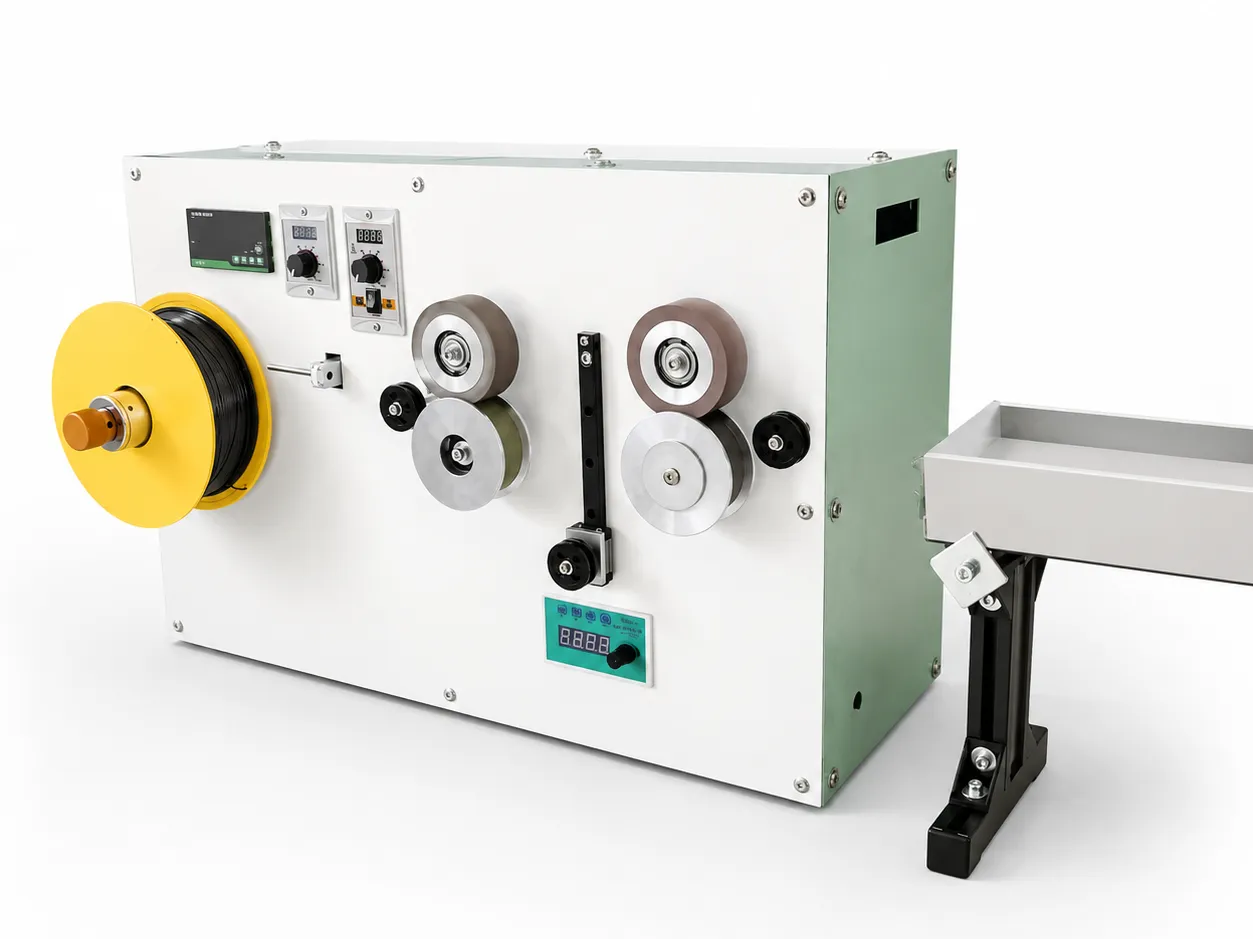
- Haul-off wheel: Digitally controlled pulling speed helps maintain a consistent final diameter.
- Dancer wheel: The tension buffer keeps the filament stable between the haul-off and winding stages.
- Meter counter: Measures produced filament length for repeatable spool quantities.
- Automatic traverse: Guides the filament evenly across the spool for an organized wind.
- Winder: Collects the finished filament on a standard reel for use, testing, or packaging.
Filament Diameter Control
Technical Specifications
| Parameter | Standard Configuration |
|---|---|
| Screw Diameter | 25 mm |
| Design Output | 0.1-2 kg/h |
| Machine Dimensions | 0.76 × 0.20 × 0.50 m |
| Motor Power | 250 W |
| Voltage | 220 V; other electrical standards available |
| Heating Temperature | Ambient to 350°C |
| Screw and Barrel Material | 38CrMoAl nitrided steel |
| Diameter Control | Optional dual-axis laser gauge with closed-loop haul-off control |
| Target Tolerance | Up to ±0.03 mm with the appropriate material and configuration |
Actual output and diameter stability vary with resin type, formulation, moisture content, target filament diameter, and operating parameters. Custom voltage, die sizes, cooling layouts, and winding configurations are available.
FAQs
Yes. Clean, single-material failed prints and production scrap can be shredded, dried, and prepared for extrusion. Consistent sorting and moisture control are essential for reliable filament quality.
Common options include PLA, ABS, PETG, TPU, PA, and PC. Filled or blended compounds may also be possible after reviewing the formulation, processing temperature, abrasiveness, and drying requirements.
The optional dual-axis laser gauge continuously measures the strand. Its readings can be linked to the haul-off wheel so pulling speed is adjusted to keep the filament close to the target diameter.
Yes. Color masterbatch and compatible additives can be blended with the base resin. We recommend small formulation trials first, especially for fiber-filled, wood-filled, or other abrasive compounds.
Yes. Available options include voltage, die size, cooling length, laser measurement, automated control, winding arrangement, and material-contact components. Share your target polymer, filament diameter, and hourly output for a suitable configuration.
Key Specifications
- Screw Diameter 25 mm
- Output Capacity 0.1-2 kg/h
- Temperature Range Ambient to 350°C
- Motor Power 250 W
- Voltage 220 V (customizable)
- Machine Size 0.76 × 0.20 × 0.50 m
Looking for a custom configuration or performance data?
Turn Your Specification Into a Production-Ready Solution
Share your material, dimensions, target output, quantity, and destination. Our technical team will review feasibility and recommend the right material, process, or equipment configuration.
- 01
Send Your Requirements
Drawings, samples, or target specifications
- 02
Technical Review
Materials, process, and production feasibility
- 03
Receive Your Proposal
Recommended solution, lead time, and quote