Is EVA Foam Toxic? BPA-Free & Baby Safety Guide
- Damao Tech
- EVA Foam
- 21 Feb, 2026
Is EVA foam toxic? No—fully cured EVA (Ethylene-Vinyl Acetate) foam is non-toxic, BPA-free, latex-free, and phthalate-free, making it the global standard material for baby play mats, bath toys, and protective sports gear.
However, because EVA is a synthetic polymer, buyers often have legitimate questions regarding chemical off-gassing, the presence of formamide, and overall material safety. This guide breaks down exactly what EVA foam is made of, the strict international testing standards it must pass, and how to ensure the foam you buy is 100% safe for babies.
1. The Chemical Reality: Is EVA Foam Toxic?
The short answer is no. EVA foam is considered one of the safest plastics available, often referred to as an eco-friendly alternative to PVC (polyvinyl chloride).
What EVA Foam DOES NOT Contain:
- No BPA (Bisphenol A): EVA foam is manufactured entirely without BPA, eliminating the risk of endocrine disruption.
- No Phthalates: Unlike PVC, which requires toxic phthalates to become flexible, EVA is inherently soft and elastic.
- No Latex: EVA is completely synthetic, making it safe for children and adults with severe latex allergies.
Because it is inert and highly stable, EVA is frequently used in medical padding, mouthguards, and teething toys where skin and mouth contact are unavoidable.
2. The Formamide Question Explained
If EVA foam is so safe, why does it occasionally make headlines regarding toxicity? The answer lies in a specific manufacturing by-product called formamide.
What is Formamide?
Formamide is a chemical compound created during the foaming process (specifically when the blowing agent decomposes to expand the foam). It is not an intentional ingredient, but a residue. In very high concentrations, formamide is considered a reproductive toxin.
How is it Regulated?
To guarantee safety, reputable manufacturers use advanced curing and vacuum-ventilation techniques to extract residual formamide before the foam is shipped.
- The EU REACH Directive and EN-71 Standards strictly cap formamide levels in children’s toys to below 200 ppm (parts per million).
- At these regulated levels, formamide exposure is statistically insignificant and entirely harmless to infants.
The takeaway: Always ask your B2B supplier for a recent EN-71 or REACH compliance test report verifying that formamide levels are within the legal limits.
3. VOCs and the “New Foam Smell” (Off-Gassing)
When you unwrap a new EVA foam play mat, you might notice a distinct, slightly sweet chemical odor. This is called VOC off-gassing (Volatile Organic Compounds).
- Is it dangerous? No. The smell comes from trace amounts of trapped gases releasing into the air.
- How to fix it: Simply unroll the foam in a well-ventilated room, garage, or outdoor patio for 24 to 48 hours. The odor will dissipate completely and permanently.
Note: If a foam product continues to smell sharply after a week of ventilation, it may be a sign of poor-quality manufacturing or cheap filler materials. Return it or find a new supplier.
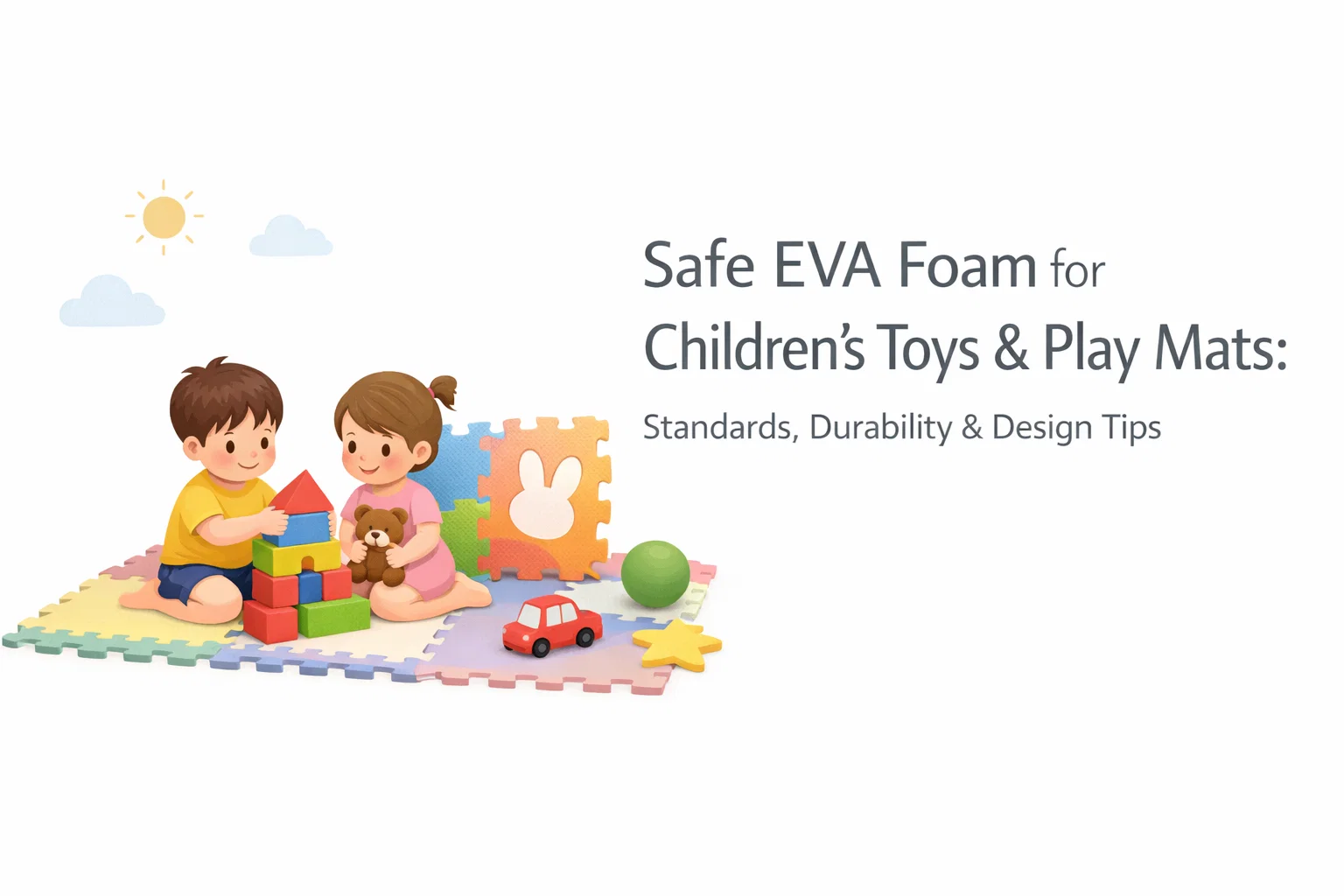
4. Why EVA Foam is Ideal for Baby Play Mats
Beyond chemical safety, EVA foam provides immense physical safety benefits for toddlers:
- Impact Absorption: The closed-cell structure acts like a microscopic airbag. It cushions falls during tummy time, crawling, and early walking stages far better than hard floors or thin carpets.
- Waterproof & Hygienic: Because it is completely waterproof, liquid spills wipe away instantly. It does not harbor mold, mildew, or dust mites, making it an excellent choice for allergy-prone households.
- Thermal Insulation: EVA foam blocks the cold radiating from tile or concrete floors, keeping infants warm.
5. Design & Safety Tips for B2B Toy Manufacturers
If you are sourcing EVA foam to manufacture children’s products, consider these critical design elements:
- Bite Hazard Prevention: If the foam is too thin or low-density, a teething baby might bite off a chunk, posing a choking hazard. Specify a higher density foam (e.g., 80–100 kg/m³) to increase tear resistance.
- Interlocking Precision: For puzzle mats, ensure the die-cut tolerances are extremely tight. Loose puzzle pieces are easily pulled apart by curious toddlers.
- Embossed Textures: Request a thermo-pressed textured surface (like a leaf or crosshatch pattern) to provide anti-slip traction for babies learning to walk.
Conclusion: Sourcing Safe EVA Foam
Is EVA foam toxic? When properly manufactured and cured, EVA foam is an exceptionally safe, non-toxic, and durable material for both children and adults. The key to safety is supply chain transparency.
At Damao Tech, we manufacture premium EVA foam blocks and sheets specifically engineered for the consumer goods market. We strictly adhere to EN-71, REACH, and CPSIA standards, ensuring our foam is BPA-free, phthalate-free, and well below formamide limits.
Need certified, child-safe foam for your next product line? Contact our engineering team for material specifications, test reports, and custom quotes.