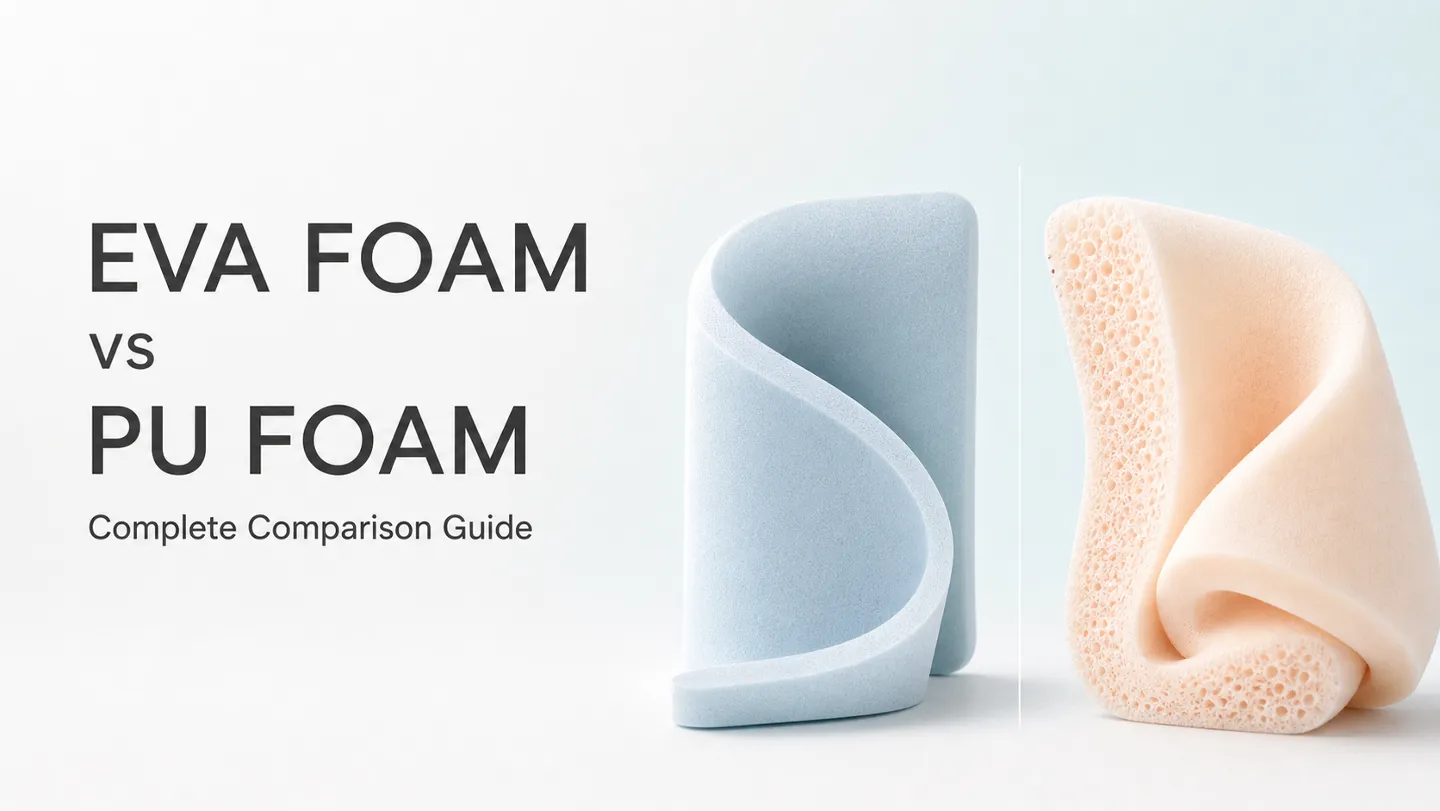
EVA Foam vs PU Foam: Complete Comparison Guide
- Damao Tech
- EVA Foam
- 05 Jul, 2026
Selecting the wrong material between EVA foam and PU (Polyurethane) foam results in premature product failure, blown material budgets, or unnecessary manufacturing complexity. This comprehensive guide directly compares EVA foam vs PU foam to clarify their specific strengths in footwear, protective packaging, automotive, and industrial applications.
What is EVA Foam?
EVA (Ethylene-Vinyl Acetate) foam is a lightweight, closed-cell copolymer material known for its immediate softness, ultra-low weight, and high flexibility. Because of its closed-cell structure, EVA naturally blocks water absorption and provides excellent initial shock absorption. Manufacturers specify EVA for running shoe midsoles, cosplay armor, and custom protective packaging where minimizing weight remains the absolute priority.
According to material testing standards, EVA foam offers an extremely high rebound rate initially. However, it will suffer from permanent compression set over extended periods of heavy, repetitive load.
What is PU (Polyurethane) Foam?
PU (Polyurethane) foam is a denser, highly resilient polymer structure that actively resists permanent deformation under sustained pressure. Unlike EVA, PU foam typically features an open-cell or micro-cellular structure, giving it a much heavier physical weight but significantly better long-term durability.
Industrial designers rely on PU foam for heavy-duty work boots, premium furniture upholstery, and automotive seating. PU foam excels because it delivers progressive cushioning—meaning the foam pushes back harder as you apply more pressure, effectively preventing the material from bottoming out under heavy loads.
EVA vs PU Foam: Technical Specifications Comparison
When evaluating these materials for B2B procurement, engineers must look beyond feel and examine the hard data. The table below outlines the general physical properties of both materials.
| Physical Property | EVA (Ethylene-Vinyl Acetate) Foam | PU (Polyurethane) Foam |
|---|---|---|
| Cell Structure | Closed-cell (waterproof) | Open-cell or Micro-cellular (breathable) |
| Density Range | 30 kg/m³ - 250 kg/m³ | 30 kg/m³ - 400+ kg/m³ (highly variable) |
| Weight | Extremely lightweight | Noticeably heavier |
| Compression Set | Moderate to High (flattens over time) | Very Low (retains shape for years) |
| Shock Absorption | High initial impact absorption | Progressive absorption under heavy loads |
| Water Resistance | Excellent (naturally waterproof) | Poor (absorbs moisture unless sealed) |
Manufacturing and Cost Differences
Beyond physical properties, the choice between EVA and PU heavily impacts your production budget and fabrication methods.
Fabrication Flexibility
EVA foam is significantly easier and cheaper to fabricate in small-to-medium runs. Because it is a solid block or sheet material, engineers can easily cut, skive, CNC route, or thermoform EVA foam. The clean, closed-cell nature of EVA means it routes without leaving jagged edges or excessive dust. PU foam, particularly molded PU, often requires expensive liquid injection molds. While PU is cost-effective at massive scales (like car seats), the initial tooling cost for molded PU is prohibitively expensive for low-volume projects.
Cost Analysis
In raw material form, standard EVA foam sheets are generally more cost-effective than specialty PU foams. If your project involves simple die-cutting or waterjet cutting (like tool box shadow boards or shipping inserts), EVA will almost always be the more economical choice. PU foam justifies its higher cost only when the application demands extreme lifespan and compression resistance (like premium hiking boot midsoles).
Environmental and Weathering Resistance
How the foam reacts to its environment often dictates the final material choice for outdoor or automotive applications.
UV and Chemical Resistance
PU foam naturally breaks down and yellows when exposed to direct UV light over long periods. While UV stabilizers can be added, PU generally requires a protective outer skin for outdoor use. EVA foam offers superior innate UV resistance and holds its color vibrancy much longer.
However, PU foam vastly outperforms EVA in chemical resistance. PU withstands exposure to motor oils, industrial solvents, and harsh cleaning chemicals without degrading. This makes PU the standard for heavy machinery gaskets and automotive under-hood applications.
When to Choose EVA Foam
Choose EVA foam when your project demands lightweight flexibility, water resistance, and immediate comfort.
- Athletic Footwear: Running shoes and sneakers require maximum weight reduction to improve athlete speed.
- Custom Packaging: Custom EVA foam inserts provide excellent shock absorption for high-value electronics without adding expensive shipping weight.
- Consumer Goods: Yoga blocks, interlocking gym mats, and aquatic gear benefit from EVA’s waterproof nature and soft touch.
When is PU Foam the Better Choice?
Choose PU (Polyurethane) foam when long-term structural support and compression resistance outrank weight concerns.
- Heavy-Duty Footwear: Work boots and hiking boots need midsoles that support heavy loads for 10+ hours a day without flattening.
- Industrial Seating: Automotive and tractor seats require PU foam’s progressive cushioning to absorb intense, repetitive shocks over a 10-year lifespan.
- Acoustic Insulation: Open-cell PU foam absorbs sound waves and airborne noise much more effectively than closed-cell EVA.
Frequently Asked Questions (FAQ)
Can you bond EVA foam to PU foam?
Yes. You can bond EVA to PU foam using strong, industrial-grade contact adhesives or specialized pressure-sensitive adhesives (PSA). Both surfaces must be clean, and the EVA surface often benefits from a slight heat treatment or primer to improve adhesion.
Which is more eco-friendly: EVA or PU foam?
Both materials are petroleum-based plastics. However, EVA foam is easier to physically recycle. Factories frequently grind scrap EVA into recycled EVA pellets to create secondary products like playground mats. PU foam is notoriously difficult to recycle due to its thermoset chemical bonds, meaning most scrap PU ends up in landfills.
Final Summary
The choice between EVA foam vs PU foam dictates the lifespan, cost, and performance of your final product. EVA foam delivers unmatched lightweight cushioning, easy CNC fabrication, and superior water resistance for packaging and athletic gear. PU foam provides superior long-term durability, chemical resistance, and progressive compression support for heavy-duty footwear and industrial applications.
If you need precise material recommendations, custom die-cutting, or rapid CNC prototyping for your next project, contact Damao Tech to consult directly with our foam engineering team.