What is EVA Foam? Complete Technical Materials Guide
What is EVA Foam? Complete Technical Materials Guide
Industrial manufacturers frequently struggle to source structural materials that combine heavy shock absorption with absolute waterproofing. This guide explains what EVA foam is, breaking down its closed-cell chemical properties and detailing why this specific polymer dominates commercial protective packaging and heavy marine applications.
What is EVA Foam Made Of?
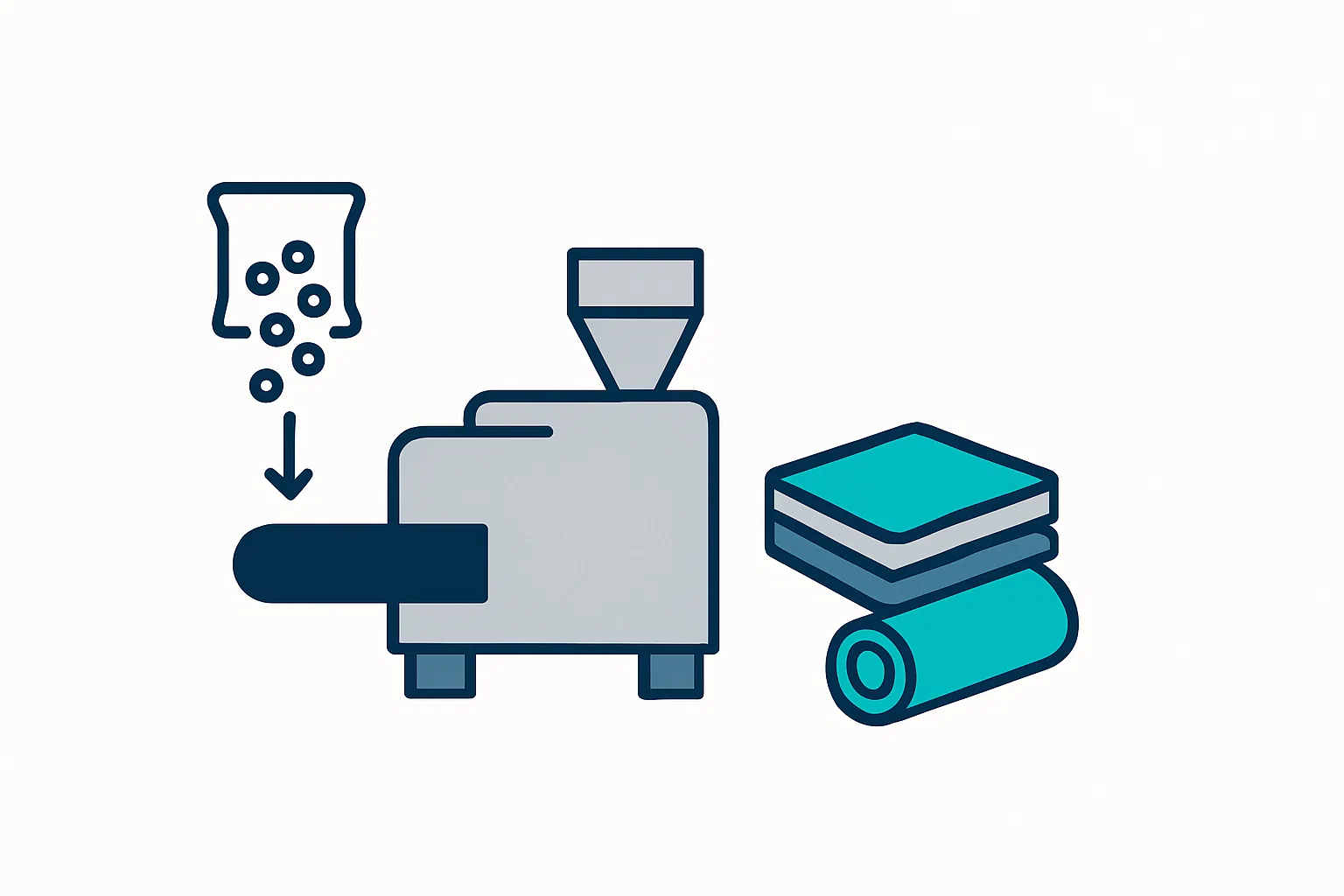
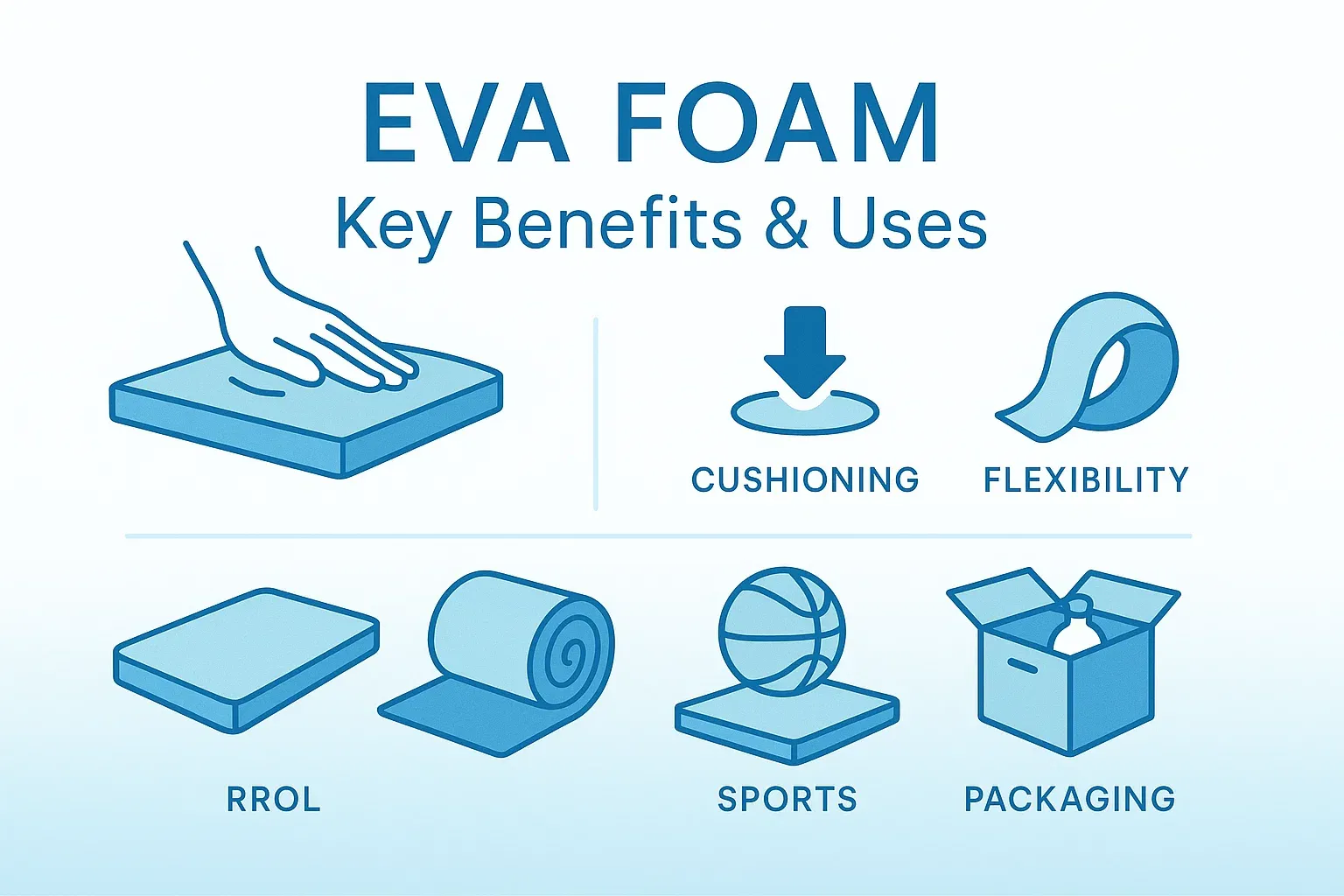
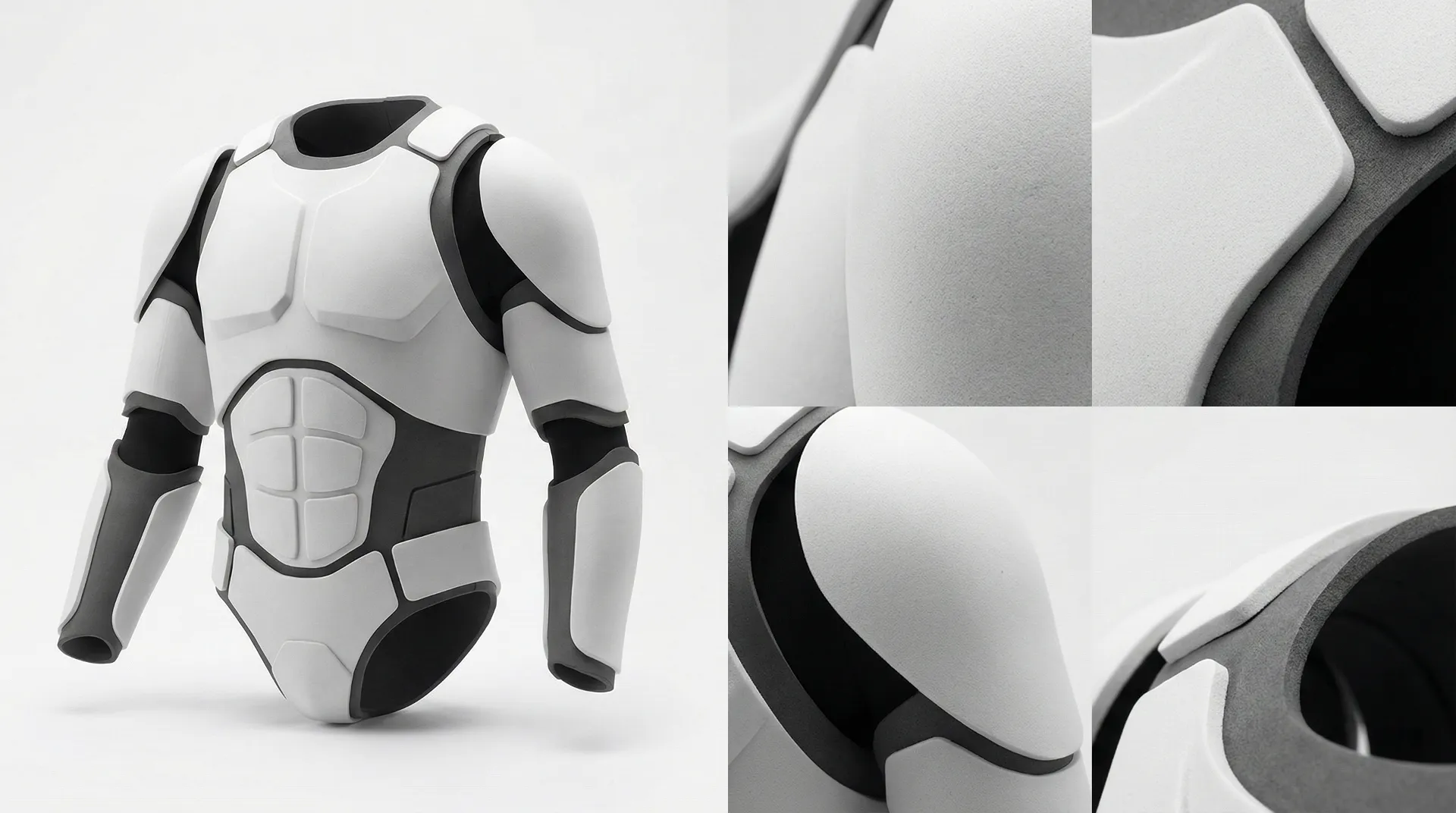
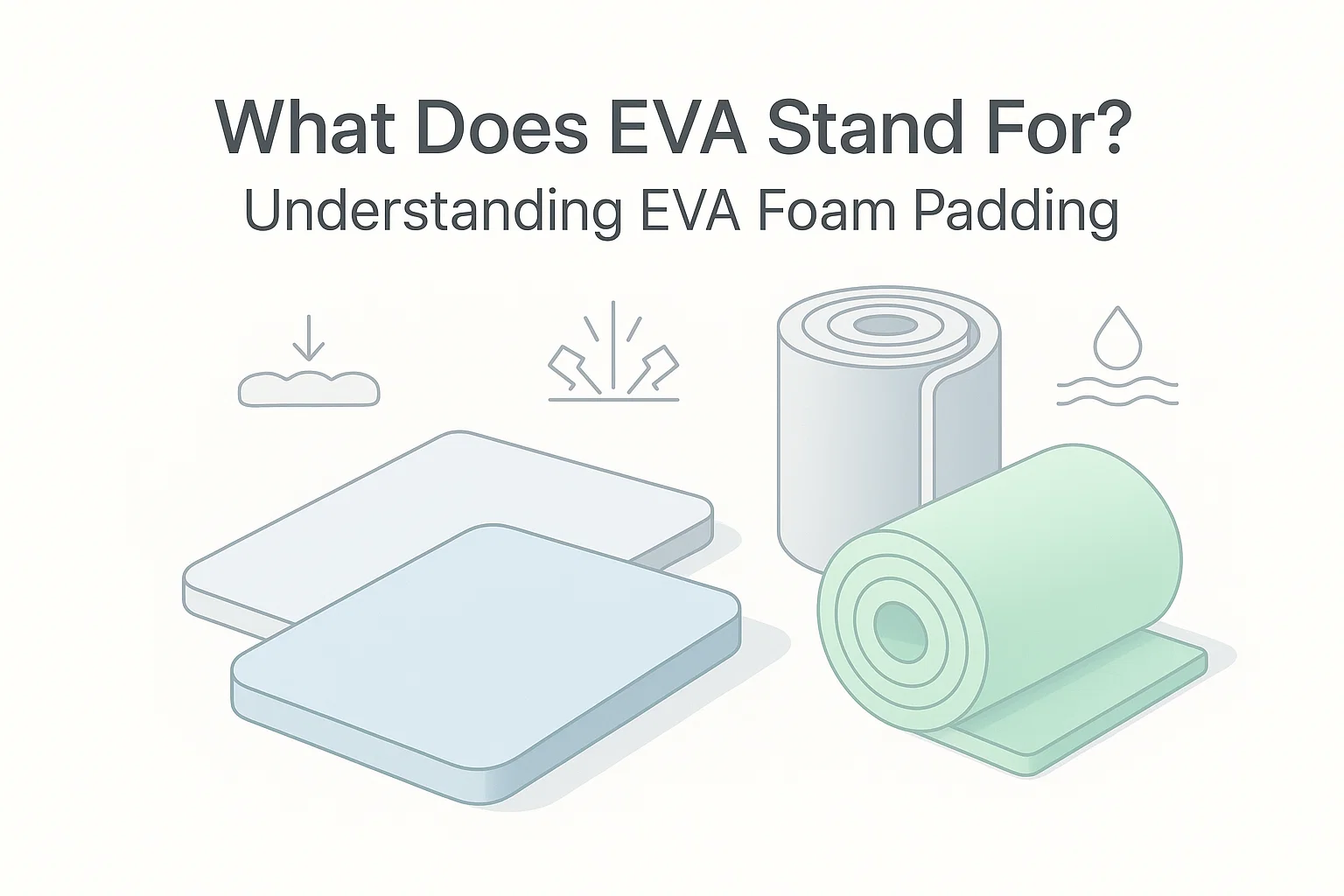
EVA foam stands for Ethylene-Vinyl Acetate. It is a synthetic polymer created by chemically copolymerizing ethylene gas and liquid vinyl acetate. Manufacturers inject gas into this compound during the curing process, creating an extremely durable, closed-cell foam material. Because the vinyl acetate directly controls the material’s elasticity, EVA foam delivers a distinct, rubber-like flexibility that significantly outperforms standard brittle polyurethane foams.
Core Closed-Cell Properties
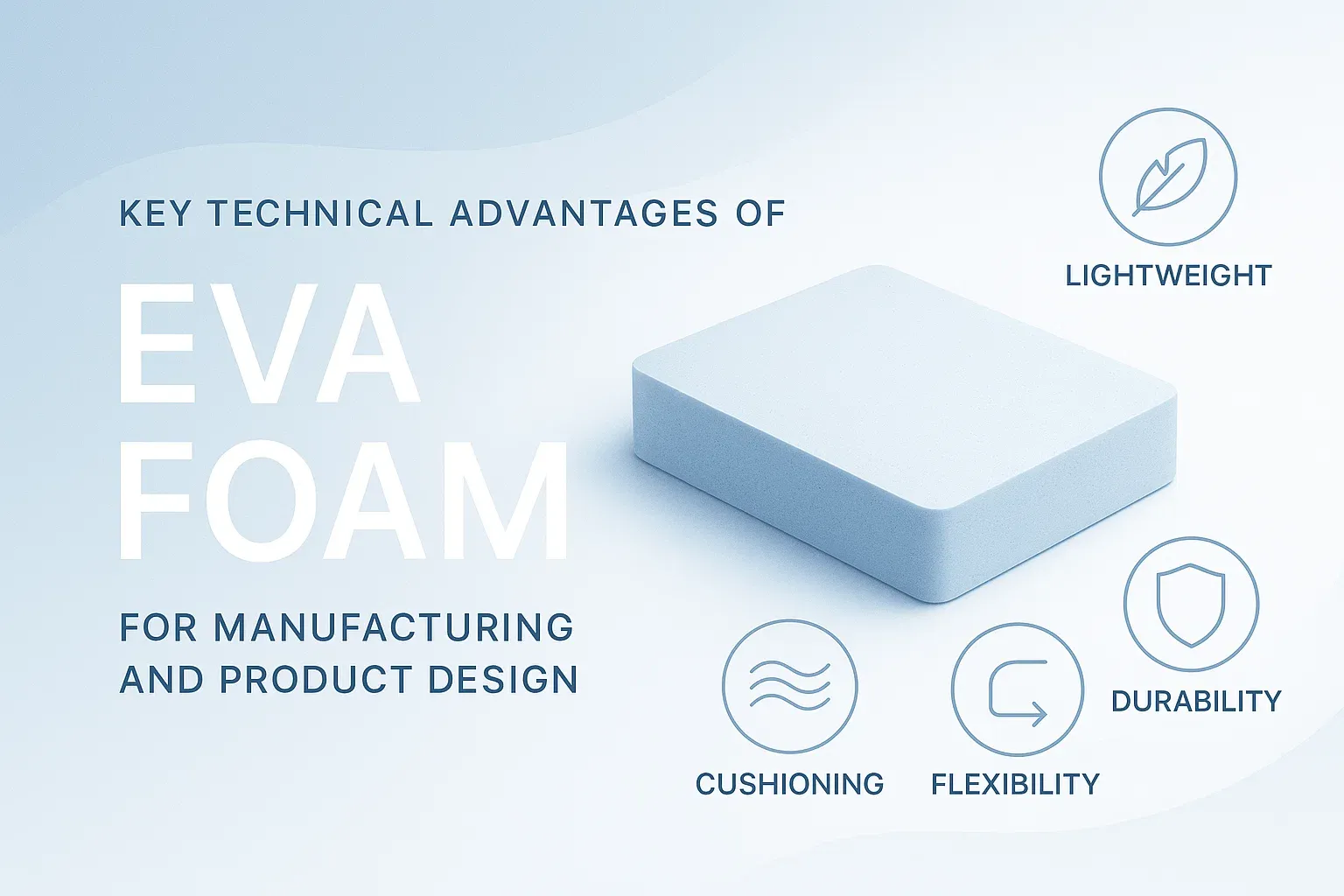
The fundamental performance of EVA foam relies entirely on its closed-cell microscopic structure. Because the internal gas bubbles remain completely sealed off from each other, the material develops several massive physical advantages.
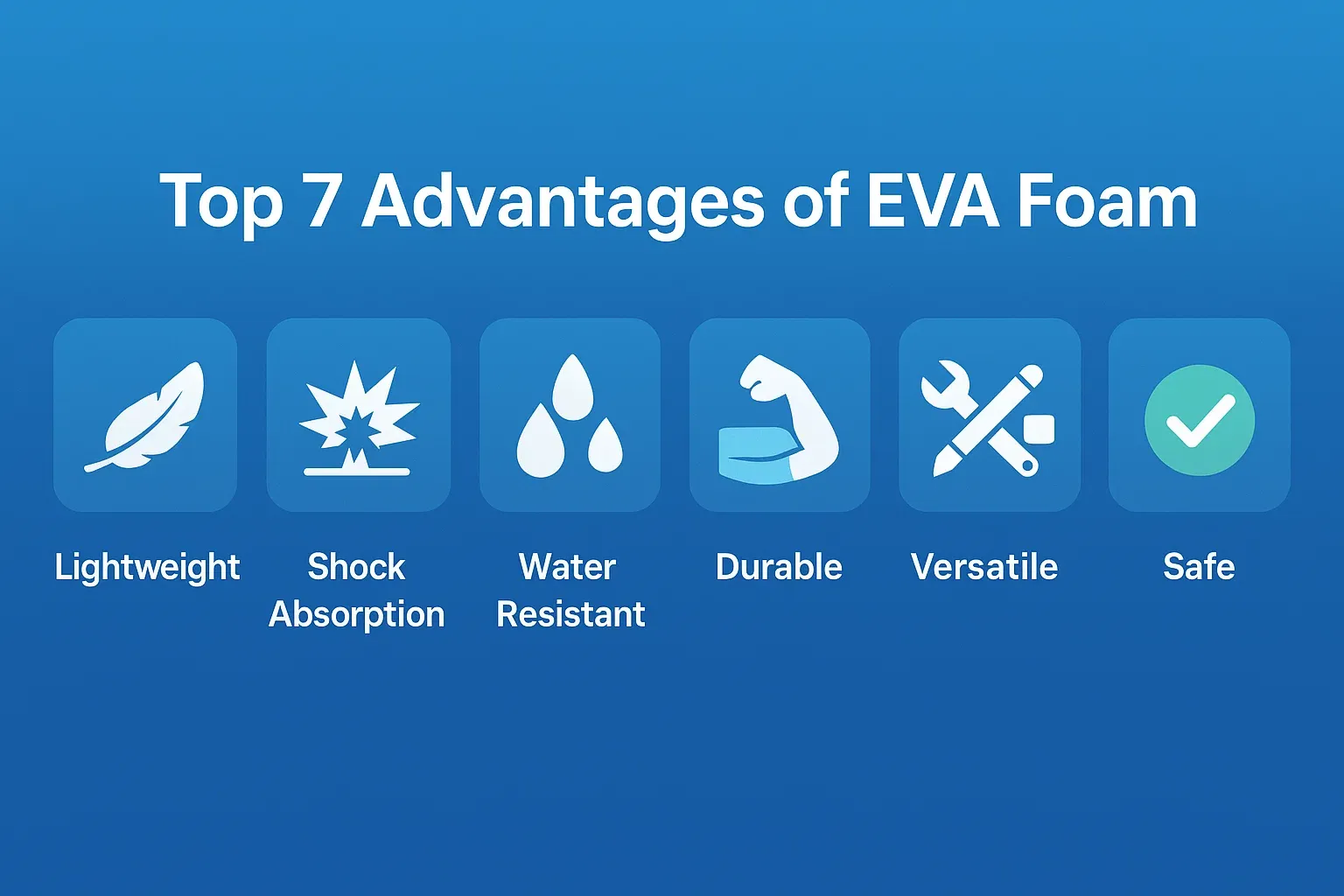
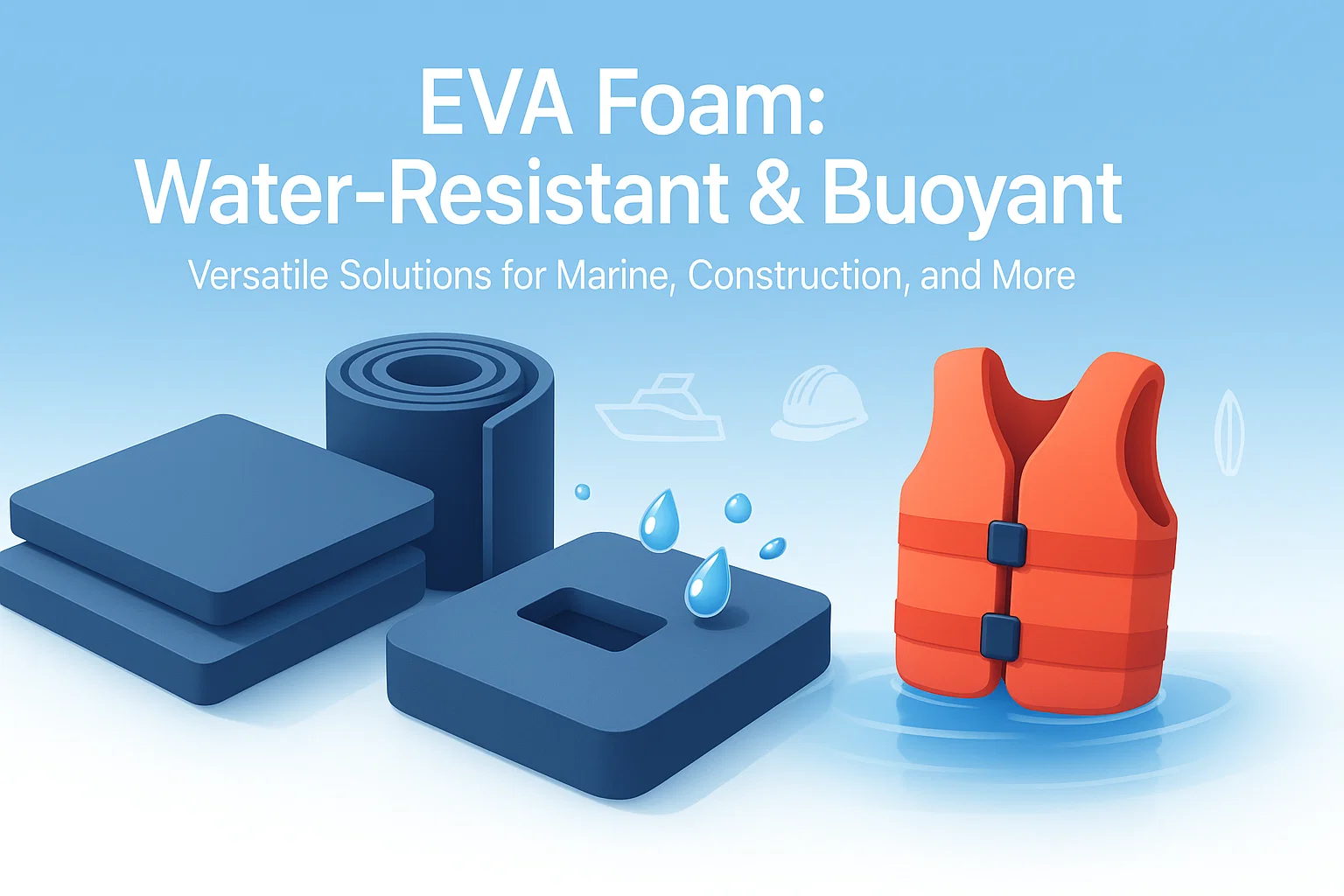
- Utmost Water Resistance: Closed cells completely block liquid moisture penetration. Boat builders rely heavily on EVA foam for floating marine devices and waterproof decking.
- Dynamic Shock Restitution: Gas trapped inside the sealed cells acts like microscopic physical springs. When placed under kinetic stress, the foam compresses and instantly bounces back to its original physical shape.
- Extreme Weather Durability: The cured polymer actively resists massive UV radiation breakdown and prevents ozone cracking during prolonged outdoor exposure.
Primary Industrial Applications
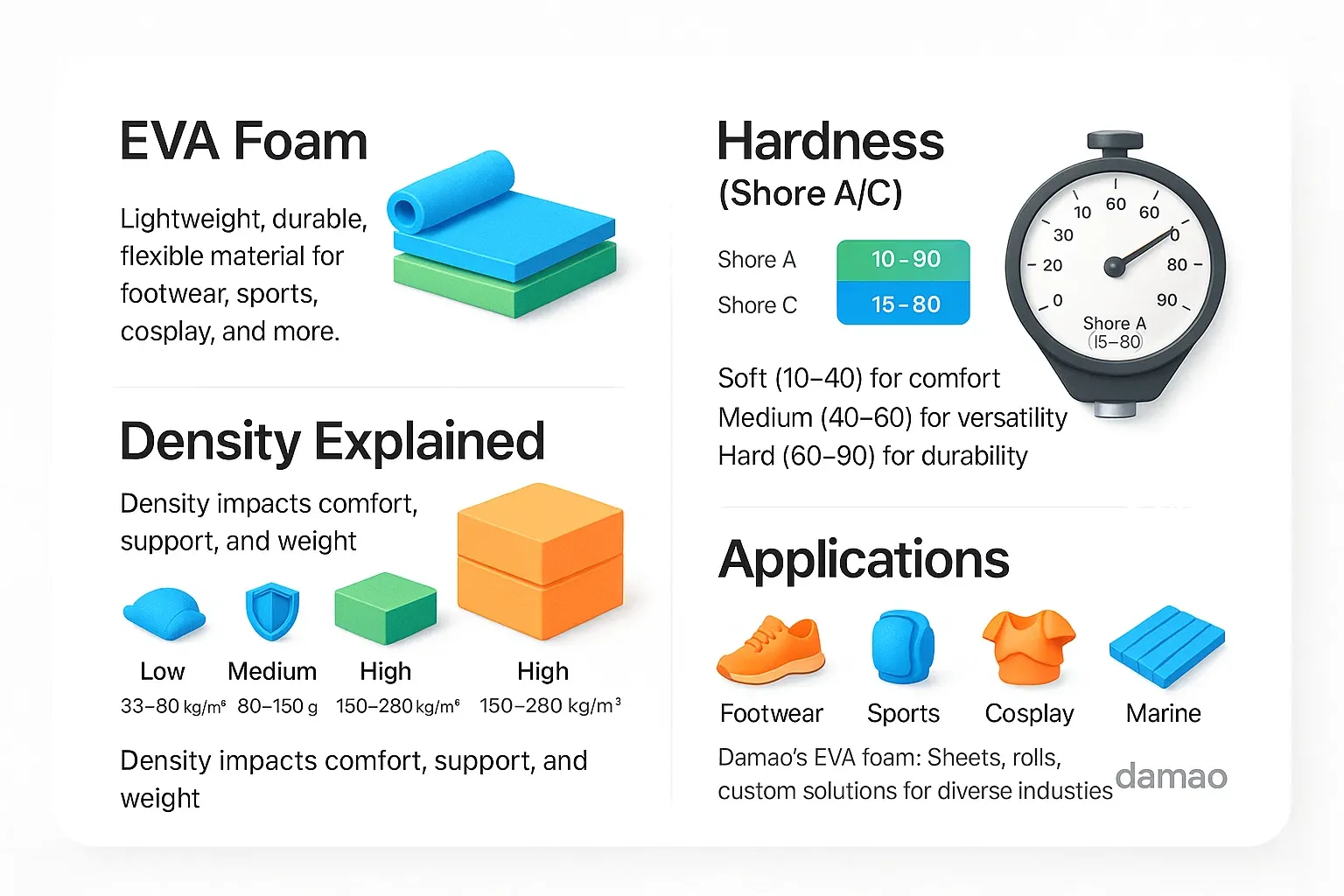
Because engineers can chemically alter the density (typically from 30 kg/m³ to 300 kg/m³) during the expansion phase, EVA foam successfully fills diverse industrial fabrication roles.
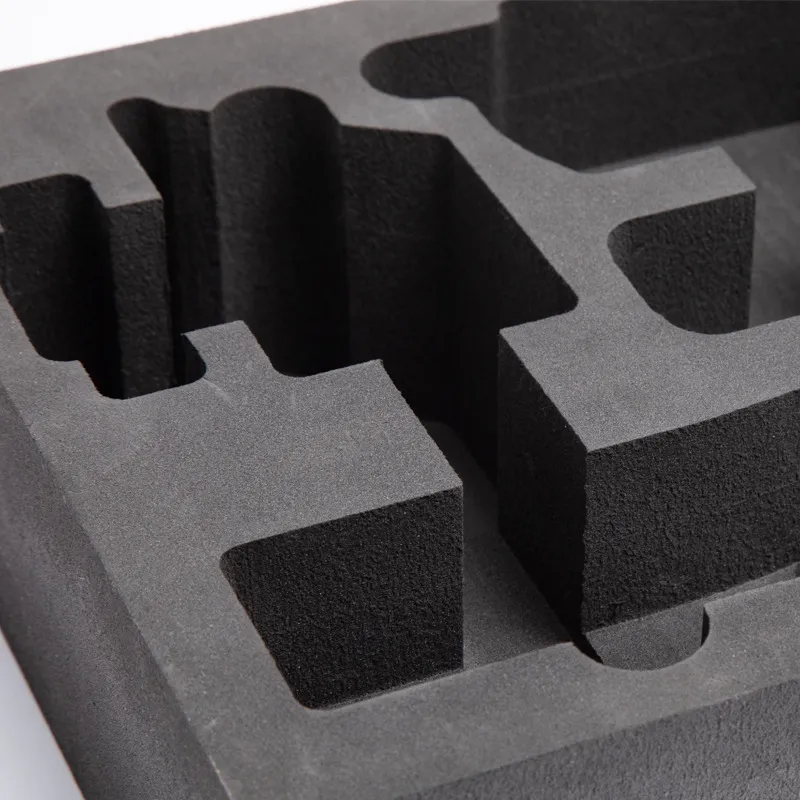
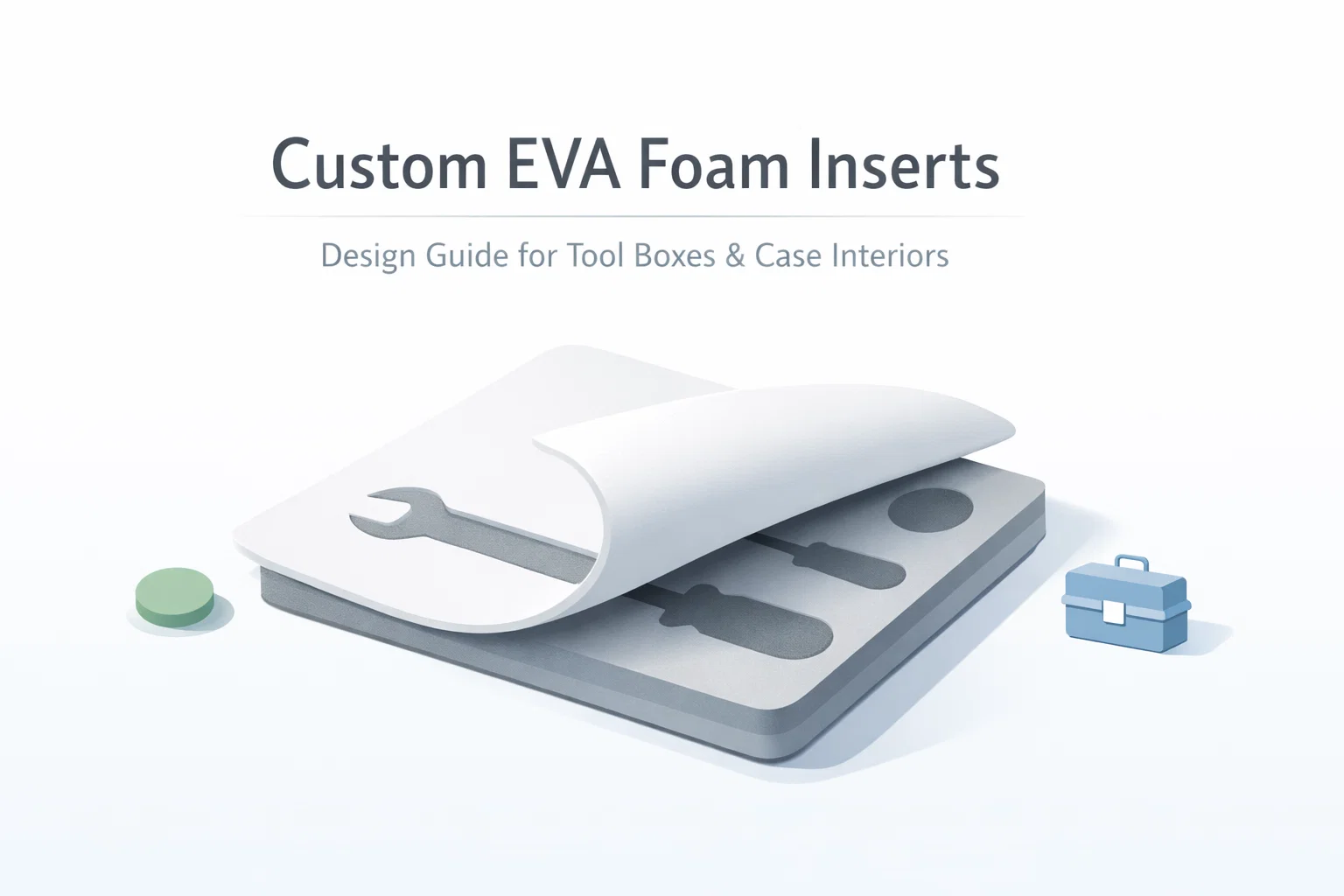
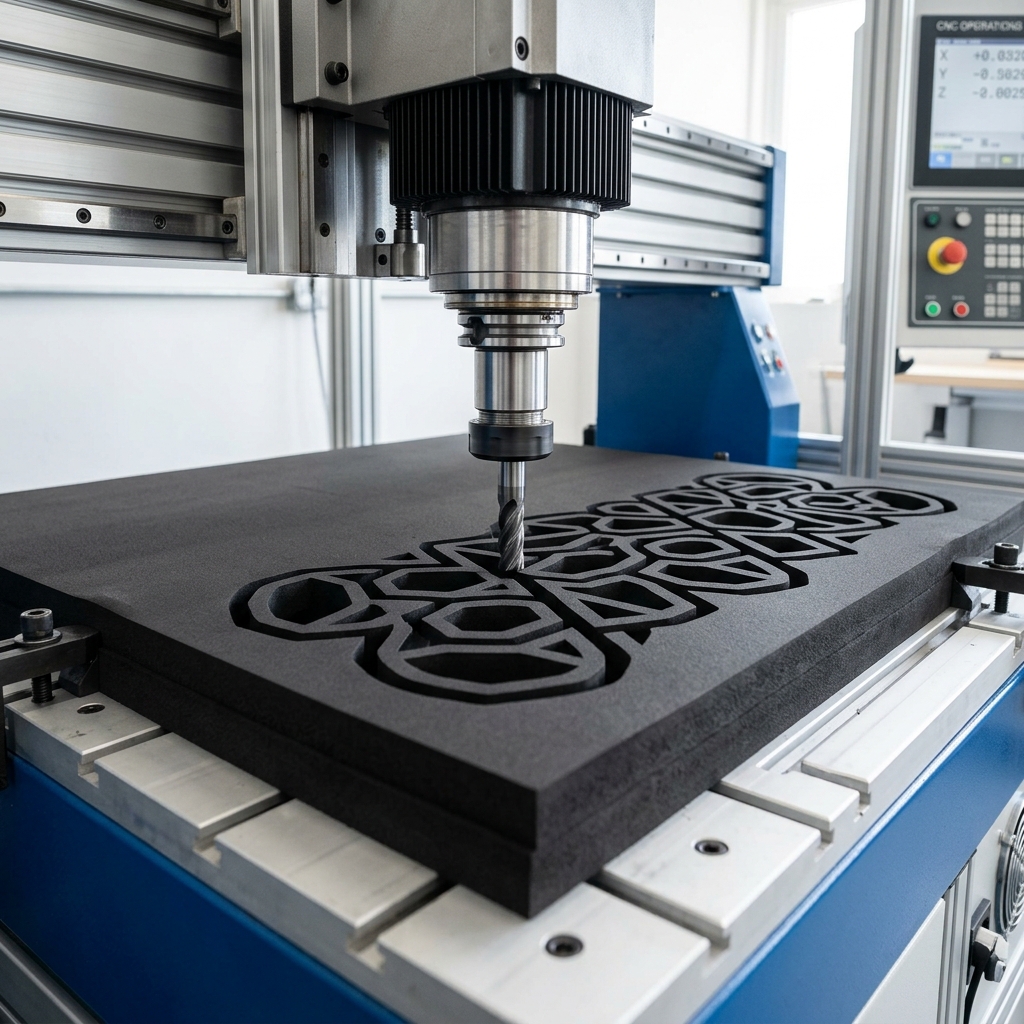
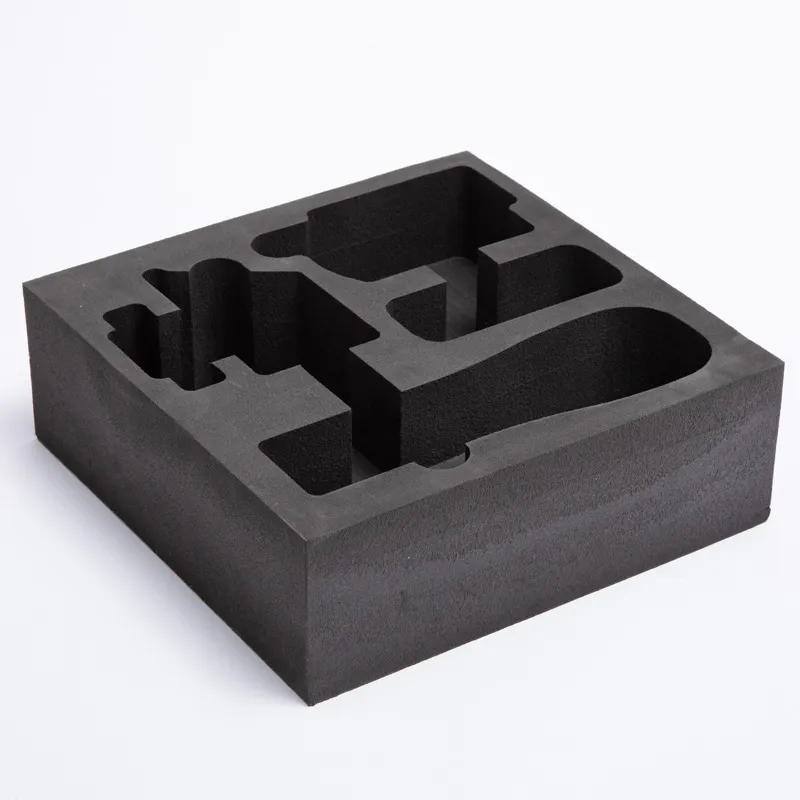
- Protective Custom Packaging: Packaging engineers CNC-route high-density EVA blocks into exact physical cavities to perfectly secure fragile electronics during heavy international shipping.
- Athletic and Medical Supports: Footwear designers inject low-density EVA into athletic shoe midsoles to absorb heavy impact forces, while medical companies use stiffer variants to line rigid orthopedic knee braces.
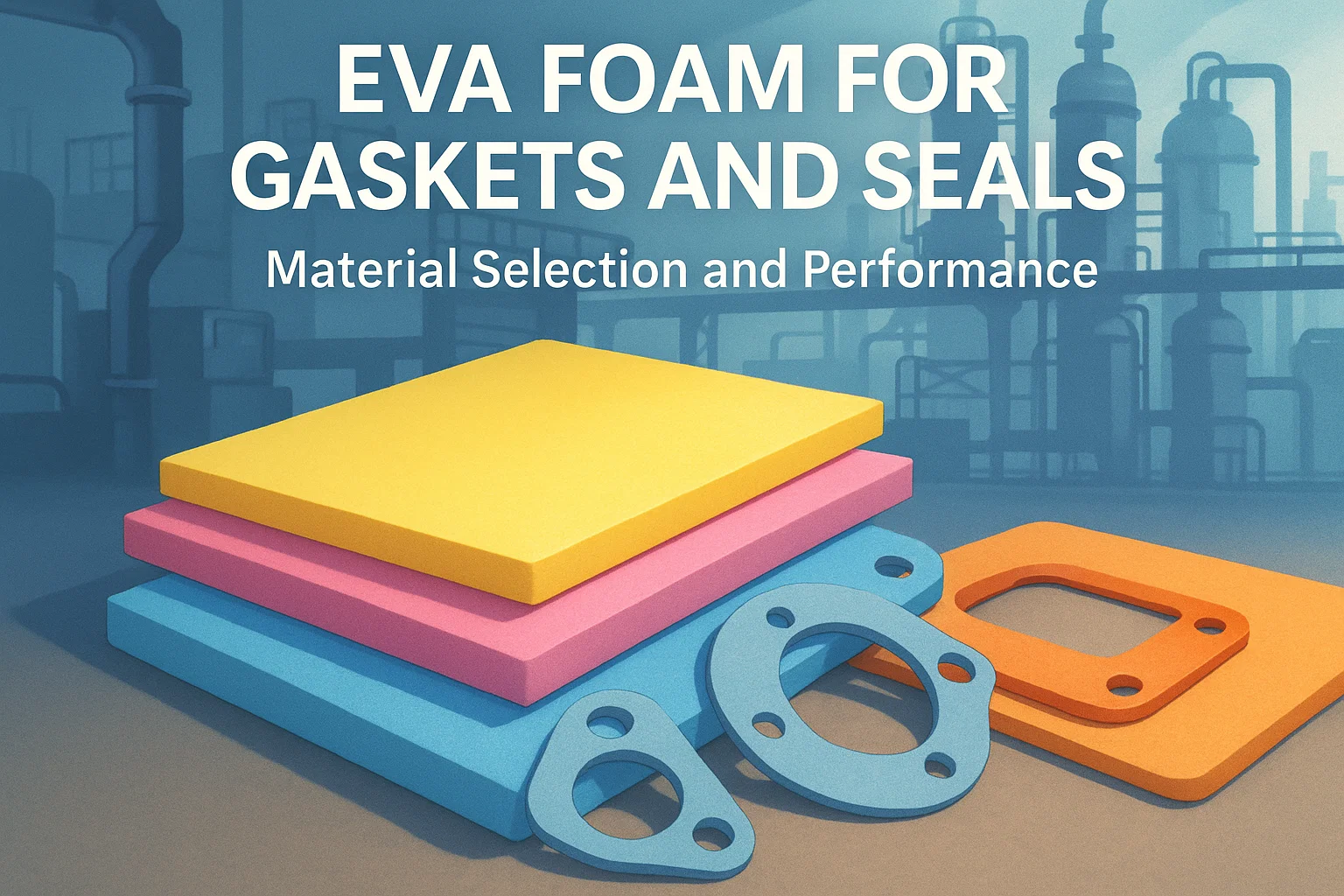
- Automotive Seals: Assembly lines use heavy EVA gasket tape to permanently seal interior door panels and physically dampen heavy engine vibration noise.
Sourcing EVA Foam Materials
Procuring the correct format ensures fast fabrication and minimal material waste on your factory floor.
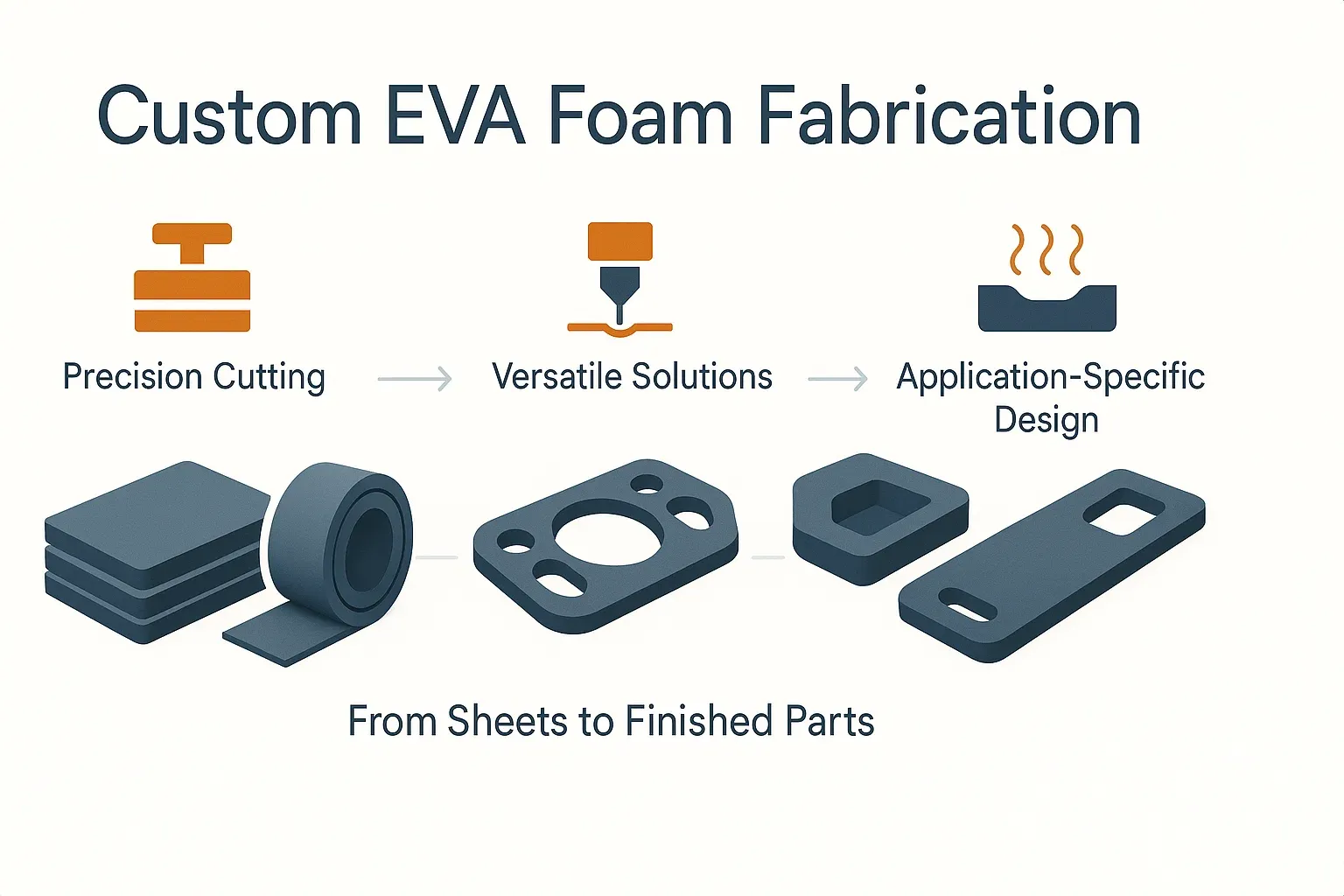
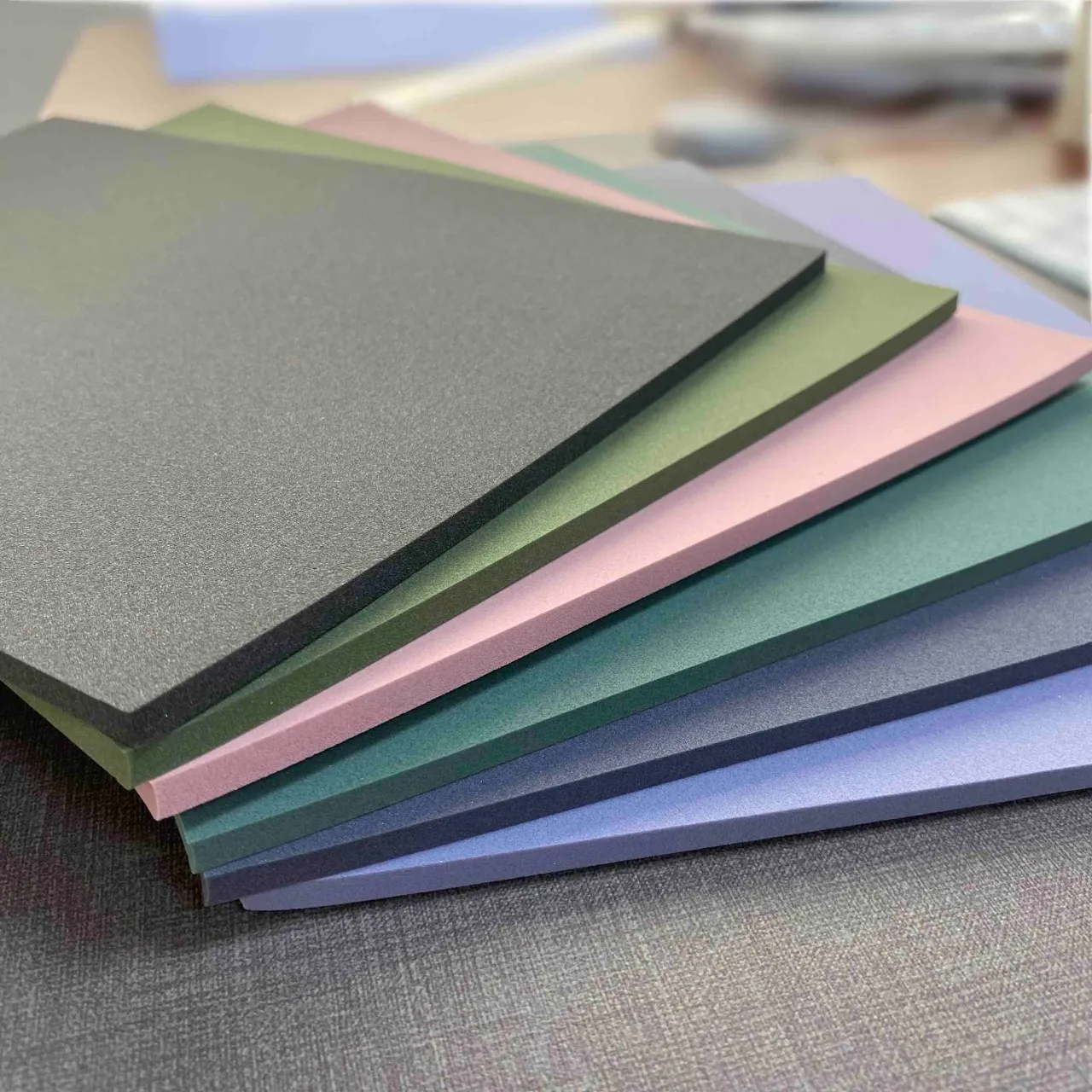
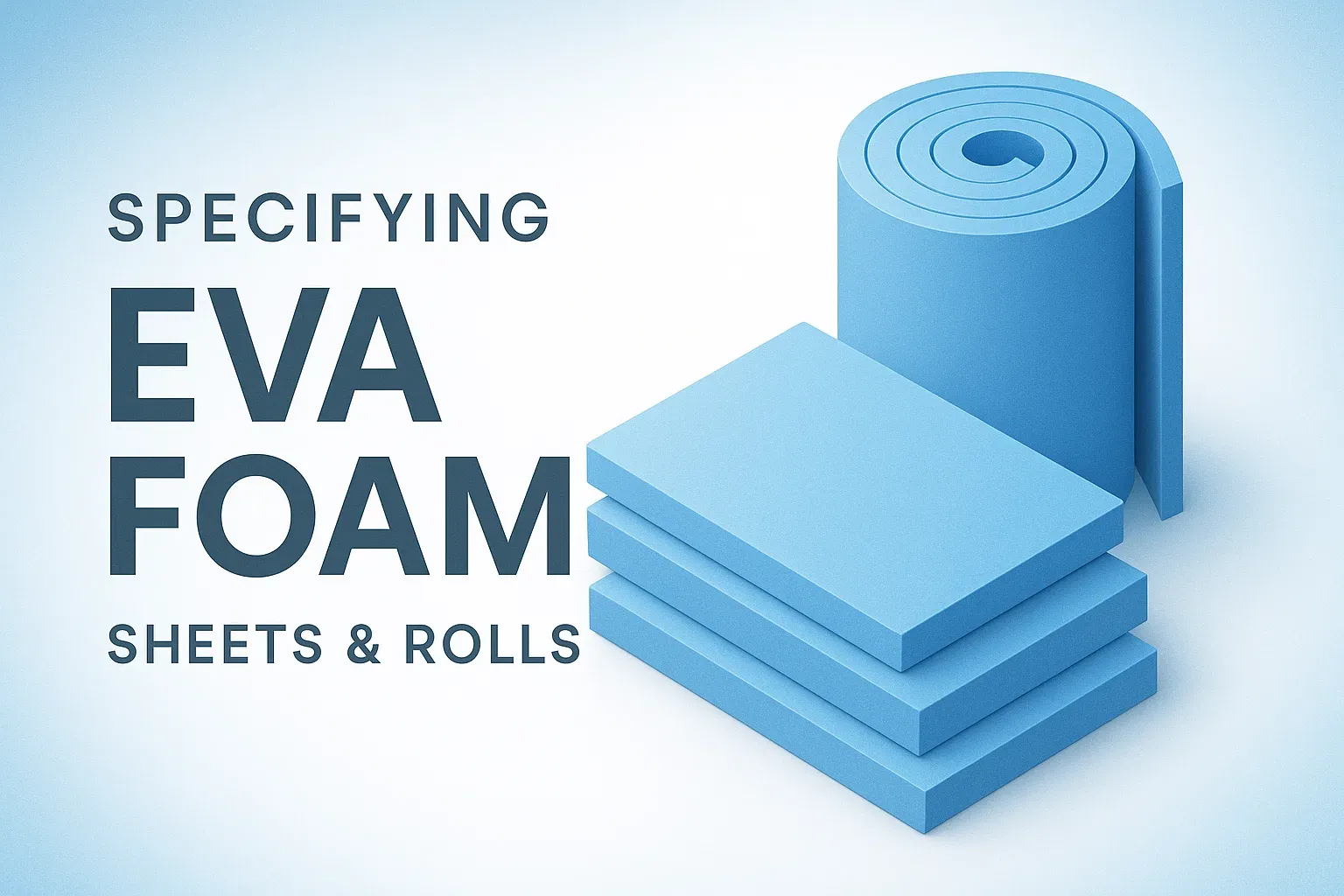
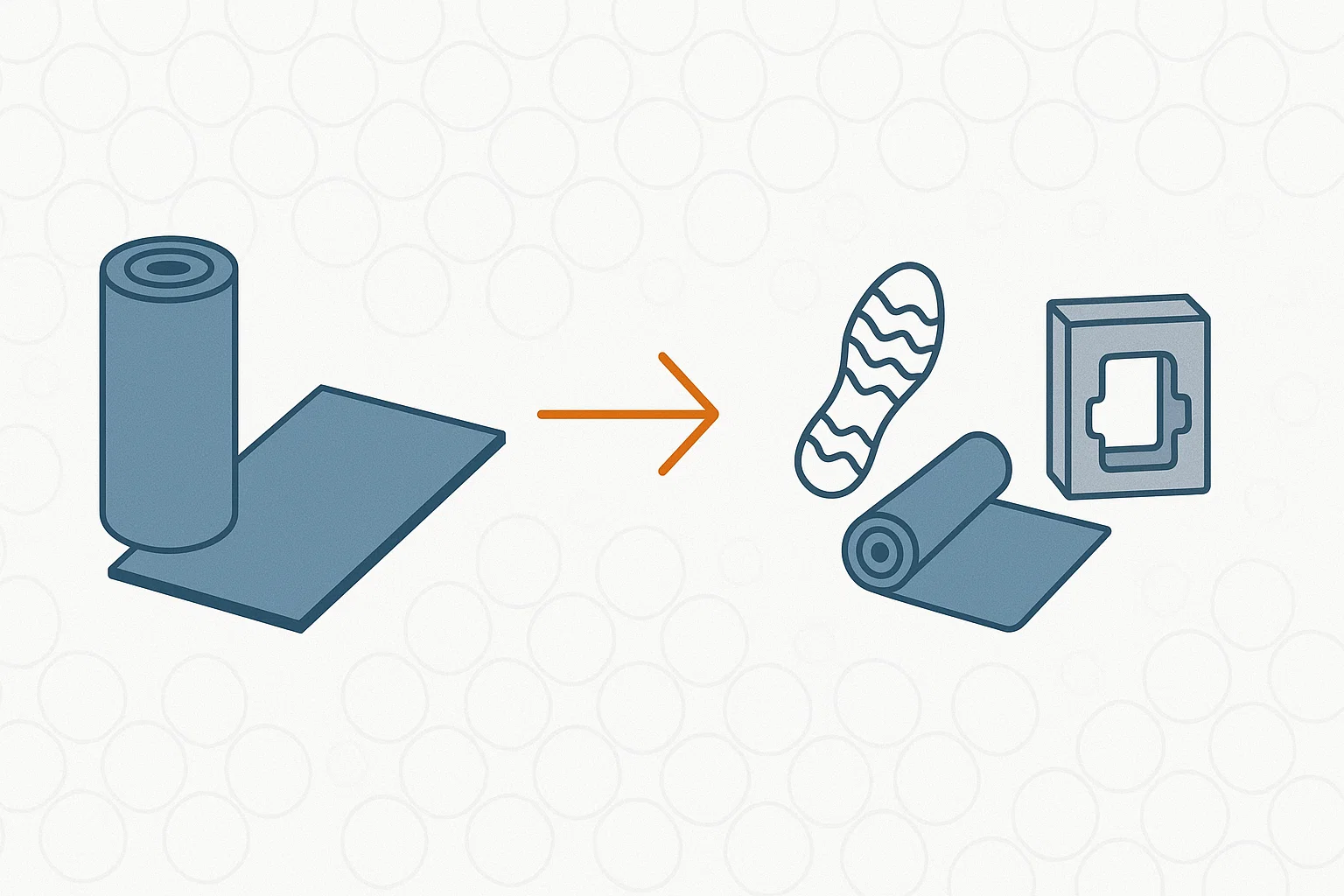
- Industrial Raw Sheets: We supply massive, uniform foam blocks engineered specifically for high-speed die-cutting presses and heavy CNC routers.
- Continuous Foam Rolls: Perfect for large-scale architectural projects requiring long, unbroken runs of waterproof underlayment flooring.
- Precision Laminated Parts: We supply perfectly finished components backed by heavy-duty 3M adhesive tape for immediate peel-and-stick manufacturing assembly.
Explore our massive inventory of custom EVA foam materials to secure the exact density block for your specific structural requirement.
Frequently Asked Questions (FAQ)
Is EVA foam toxic?
No, fully cured EVA foam remains completely non-toxic and odorless. The material contains zero harmful bisphenols (BPA) or dangerous chemical phthalates, making it standard for children’s toys and strict medical applications.
Is EVA foam waterproof?
Yes. Because EVA foam features an absolute closed-cell internal structure, the material naturally repels surface water and prevents deep liquid moisture absorption.
Can manufacturers recycle EVA foam?
Yes, manufacturing facilities actively recycle post-industrial EVA foam scrap. Production lines physically grind the excess material down into heavy aggregate and repurpose it to create thick gymnastic mats and agricultural filler.
Summary and Next Steps
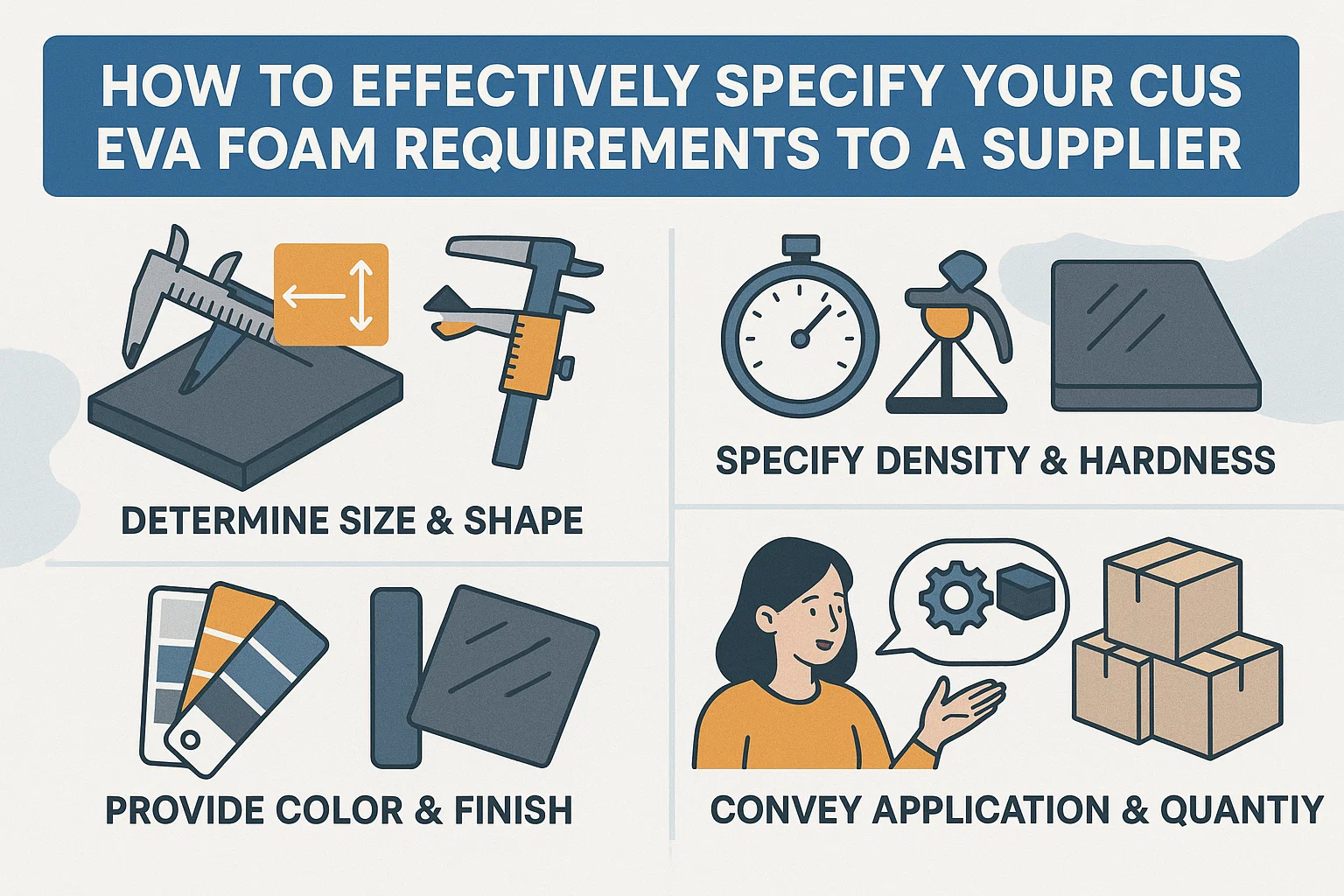
EVA foam provides an affordable, highly flexible, closed-cell physical barrier against kinetic shock and liquid water. Always specify the exact material density parameters based on your final structural load requirement. Contact our engineering team today to test physical sample blocks and verify your exact technical specifications.