EVA vs TPE Yoga Mat: Which Material Is Better for Grip and Cushion?
- Damao Tech
- EVA Foam , Gloves
- 20 Jun, 2025
An EVA vs TPE yoga mat decision is about wet grip, cushion, and how long the mat stays springy. TPE usually holds traction when the mat is sweaty. EVA is lighter and cheaper, and it packs down sooner.
The same two polymers show up in disposable gloves and industrial foam. The tables below compare them for yoga mats first, then gloves and inserts.
Quick Summary: The Core Difference
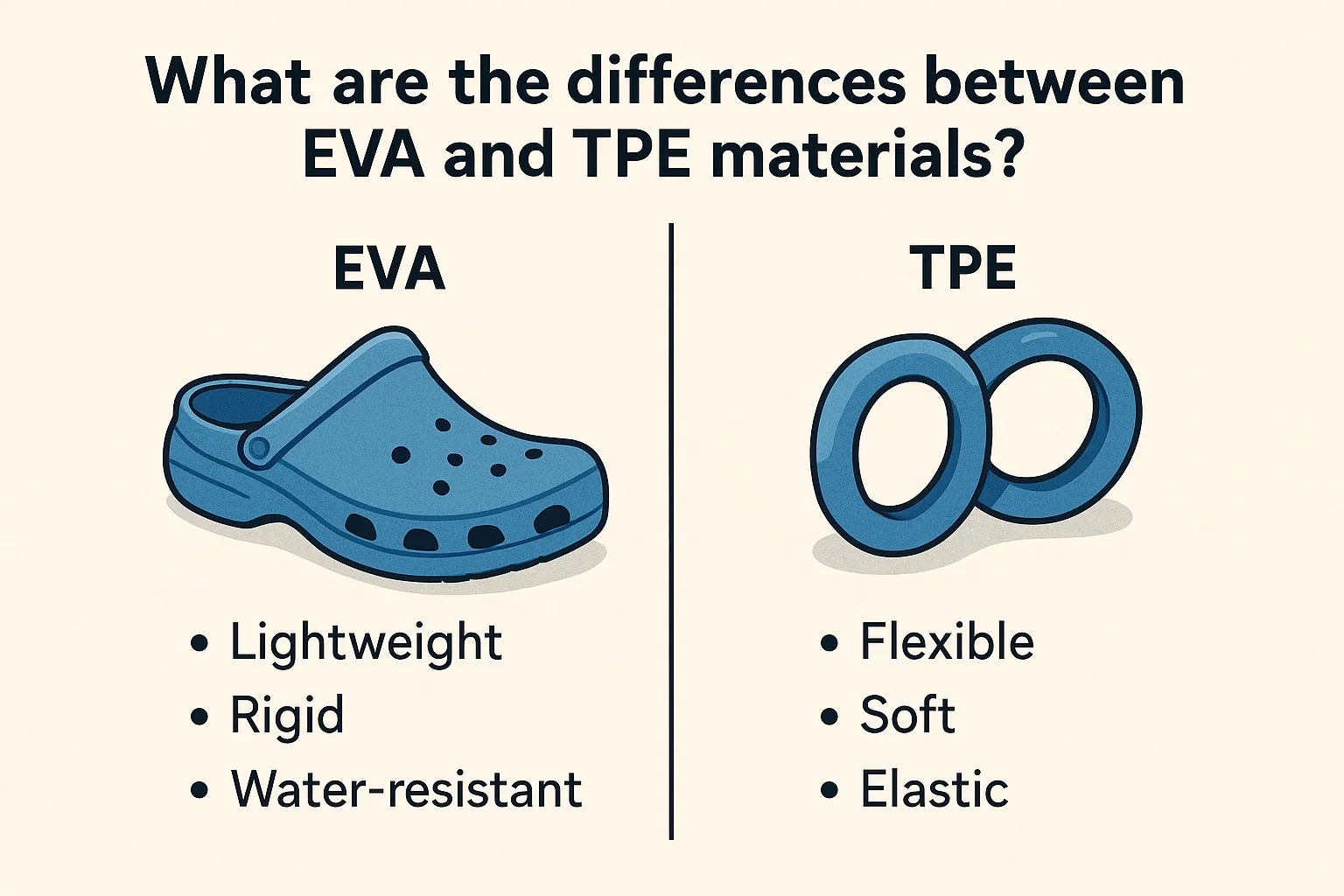
The primary difference lies in their chemical structure, elasticity, and recyclability:
- EVA is a thermoset-leaning crosslinked foam (when expanded) that excels at lightweight shock absorption and cost-efficiency. However, it is difficult to recycle once crosslinked.
- TPE is a thermoplastic rubber blend that offers superior stretch, elastic recovery, and non-slip traction. It is 100% recyclable and eco-friendly.
Head-to-Head Comparison: Yoga Mats
For yoga mats, the choice between EVA and TPE determines the mat’s target market, pricing, and performance:
| Feature | EVA Yoga Mats | TPE Yoga Mats |
|---|---|---|
| Grip / Traction | Moderate (can get slippery when wet with sweat) | High (excellent non-slip texture even during wet/hot yoga) |
| Cushioning | Firm and highly shock-absorbent | Softer, springy cushioning with fast rebound |
| Weight | Extremely lightweight (easy to carry) | Moderately heavier than EVA |
| Lifespan | Tends to pack down and crease over time | Resists creasing; retains elastic memory |
| Market Position | Budget-friendly / Entry-level | Premium / Eco-conscious / Professional |
The Verdict for Yoga Mats: Specify TPE if you are targeting professional yogis and eco-conscious brands who demand non-slip grip and recyclability. Choose EVA if your goal is a highly portable, budget-friendly promotional mat.
Head-to-Head Comparison: Disposable Gloves
In the glove manufacturing sector, both TPE and EVA have replaced traditional vinyl (PVC) for food safety and light-duty tasks, but they serve different performance niches:
TPE Gloves (The Stretch Option)
TPE gloves are highly elastic and offer a close, comfortable fit similar to latex or nitrile, but at a fraction of the cost.
- Pros: Great tactile sensitivity, high stretch, latex-free, and safe for handling greasy foods.
- Best For: Quick food service prep, sandwich assembly, and light industrial tasks requiring finger dexterity.
EVA Gloves (The Rigid / Tough Option)
EVA gloves (often blended with PE) are stiffer and have higher tensile strength and tear resistance compared to standard PE gloves.
- Pros: Excellent acid and alkali resistance, high puncture/tear safety, and very hygienic.
- Best For: Veterinary long-arm examinations, processing raw poultry, or handling mild chemical cleaners.
The Verdict for Gloves: Use TPE gloves for general food service where comfort and stretch are required. Choose EVA/PE gloves (like shoulder-length veterinary sleeves) where durability and chemical splash protection are paramount.
Head-to-Head Comparison: Industrial Foam Inserts & Gaskets
For engineering components, packaging inserts, and seals, density and compression set are the primary metrics:
EVA Foam (The Structural Cushion)
Once crosslinked (usually via DCP), EVA foam becomes highly stable and handles heavy, repetitive impacts without bottoming out.
- Applications: CNC-milled tool tray inserts, marine boat decking (non-skid), and athletic shoe midsoles.
- Advantage: Highly customizable Shore hardness (Shore 00 to Shore A) and easy to thermoform.
TPE Foam (The High-Elastic Seal)
TPE foam remains thermoplastic, meaning it can be extruded and remolded. It offers incredible compression recovery.
- Applications: High-performance seals, automotive weatherstripping, and medical device gaskets.
- Advantage: Superior weather/UV resistance and fully recyclable.
Strategic Decision Guide: Which should you choose?
graph TD
    A[Identify Product Needs] --> B{What is the primary application?}
    B -->|Yoga Mats| C{Target Market?}
    C -->|Budget / Promotional| D[EVA Foam]
    C -->|Eco-Friendly / Pro| E[TPE Rubber]
    B -->|Disposable Gloves| F{Required Property?}
    F -->|Stretch & Sensitivity| G[TPE Gloves]
    F -->|Tear & Puncture Resistance| H[EVA/PE Gloves]
    B -->|Industrial Foam| I{Operating Environment?}
    I -->|Heavy Shock Absorption| D
    I -->|UV / Weather & Recyclability| E
Choose EVA if:
- You need lightweight shock absorption.
- Cost-efficiency is a primary driver.
- The product is for budget-friendly consumer goods (e.g., standard flip-flops, packaging padding).
Choose TPE if:
- Recyclability and eco-certifications are critical selling points.
- You require a high-friction, non-slip grip (especially in wet environments).
- Long-term elastic recovery under weather/UV exposure is required.
Partner with a Multi-Polymer Manufacturer
At Damao Tech, we compound both EVA and TPE raw materials on our own production lines. This allows us to supply both premium TPE disposable gloves and custom-fabricated EVA foam sheets to meet your specific industry standards.
Not sure which material fits your technical specifications? Contact Damao Tech today to consult with our polymer engineers and request material samples.