EVA Foam for Gaskets and Seals: Selection & Performance
- Damao Tech
- EVA Foam , Gloves
- 24 Jun, 2025
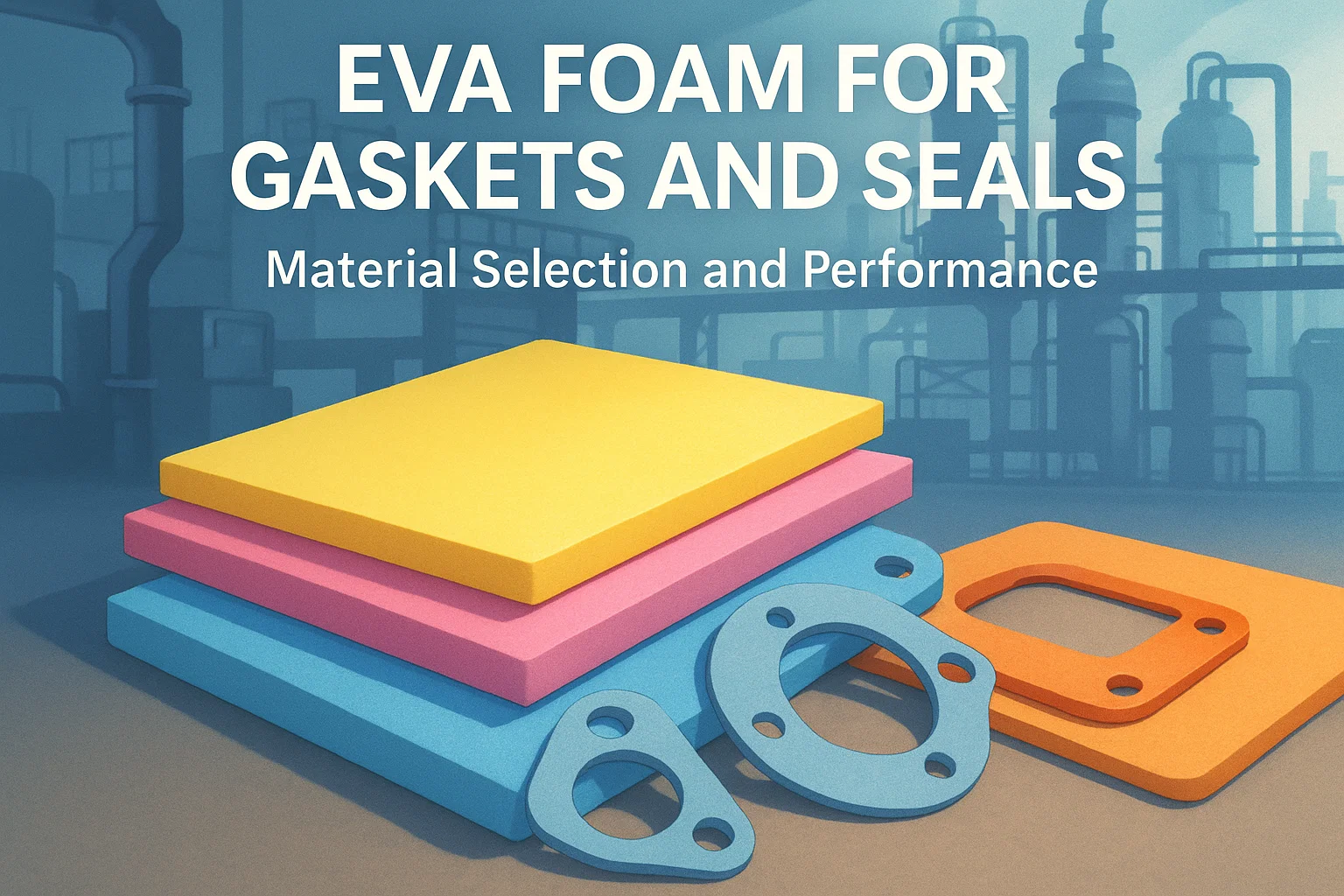
This guide to EVA foam for gaskets and seals analyzes the physical properties that drive industrial sealing performance. Selecting the correct foam grade prevents leaks and ensures your components remain protected from environmental hazards like moisture and dust.
In our experience at Damao, procurement managers often struggle to choose between different density and hardness ratings. By matching the foam’s mechanical properties to your specific substrate, you can improve seal longevity, reduce leakage risk, and avoid over-specifying expensive materials.
Map Shore Hardness to Application Needs
Shore hardness is a measure of a material’s resistance to indentation, typically measured on the Shore A or Shore C scale. Hardness determines how easily a gasket conforms to a surface and how much mechanical load it can support without failing.
| Hardness Range | Feel | Substrate Surface | Best Use Case |
|---|---|---|---|
| Shore A 25–35 | Soft | Irregular / Uneven | Light-duty dust seals, HVAC |
| Shore A 40–55 | Medium | Smooth / Flat | Automotive doors, electronics |
| Shore A 60–80+ | Hard | Rigid / Heavy Load | Structural gaskets, industrial machinery |
When testing various grades, we found that softer EVA foams are ideal for protecting sensitive electronics from moisture. Harder foam gaskets provide the structural support needed for heavy-duty enclosures where high closure force is applied.
Understand Density vs. Hardness Performance
Density is the mass per unit volume of the EVA foam, while hardness measures surface firmness. While these properties are related, they affect gasket performance differently in static and dynamic environments.
Higher density EVA foam usually offers better resistance to tearing and improved structural durability. However, it requires more force to compress, which may not be suitable for lightweight plastic housings. Our technical teams recommend medium-density foam (approx. 4–6 lb/ft³) for general-purpose industrial seals that require a balance of flexibility and strength.
Manage Compression Set for Reliability
Compression set is a technical metric that measures the percentage of permanent deformation a foam suffers after being compressed for a specific duration. A low compression set is the most critical factor for ensuring a gasket maintains a tight seal over several years.
If an EVA foam gasket has a high compression set, it will lose its “spring-back” force after the initial installation. This leads to gaps forming over time as the material thins. To minimize sealing failure, choose EVA foam formulations specifically engineered for high recovery rates in dynamic sealing applications.
Conformity Matrix for Sealing Substrates
A conformity matrix is a tool used to match foam compressibility with the roughness of the mating surfaces. Achieving a complete seal depends on the foam’s ability to fill the microscopic voids in the substrate material.
- Composite Surfaces: Use soft, low-density EVA foam to avoid damaging the substrate while filling large voids.
- Machined Metal: Medium-hardness foam ensures a precise seal against flat, smooth surfaces without excessive material bleed.
- Cast Iron/Rough Metal: Require thicker, high-density gaskets with enough compliance to “bite” into the surface irregularities.
For pressurized or dust-sensitive systems, matching foam hardness to surface roughness is critical: a gasket that is too hard may not conform, while one that is too soft can over-compress and lose sealing force over time.
Compliance and Industrial Standards
Compliance is the adherence to specific safety and performance regulations like UL 94 or FMVSS-302. Meeting these standards is a requirement for gaskets used in the automotive, aerospace, and electronics industries.
Our specialized EVA foam grades meet UL 94 flammability requirements, making them safe for use in electrical enclosures. In the automotive sector, we ensure our seal materials comply with FMVSS-302 for fire safety. Always verify that your gasket material matches the environmental and safety certifications required for your specific industry to avoid legal and safety risks.
Manager’s Gasket Selection Checklist
Use this checklist to verify your material selection before placing a bulk order for EVA foam gaskets.
- Verify Shore Hardness: Does the hardness match your surface substrate’s roughness?
- Calculate Load: Can the foam density support the mechanical compression force of the bolts or clamps?
- Check Compression Set: Is the material rated for long-term recovery in its specific operating temperature?
- Audit Compliance: Do the gaskets meet UL 94, REACH, or RoHS requirements for your market?
- Assess Exposure: Will the seal be exposed to UV, ozone, or specific chemicals that cause degradation?
Partner with Damao for Custom Sealing Solutions
Working with an expert manufacturer like Damao gives you access to precision die-cutting and specialized foam formulations. We help you choose the exact density and hardness needed to optimize your product’s performance and durability.
Looking for a reliable supply of high-performance seals? Contact Damao today to discuss your technical specifications and receive a material sample for testing.