Industrial and Commercial Applications of EVA Foam: A Technical Overview
- Damao Tech
- EVA Foam
- 15 May, 2025
Ethylene-Vinyl Acetate (EVA) foam’s versatility is a result of its unique molecular structure, which combines the flexibility of rubber with the processability of thermoplastics. Because it is a closed-cell material with high chemical and UV resistance, EVA foam is used across a wide spectrum of industrial and commercial sectors. This guide provides a technical overview of how EVA foam solves complex design challenges in several key industries.
1. Automotive and Transportation
In the automotive sector, EVA foam is primarily valued for its sound-dampening (NVH) and thermal insulation properties.
- NVH (Noise, Vibration, and Harshness): High-density EVA gaskets and pads are strategically placed in door panels, dashboards, and engine compartments to absorb vibrations and reduce cabin noise levels.
- Interior Trim: Its ability to be thermoformed into complex 3D shapes makes it ideal for soft-touch interior components, armrests, and headliner substrates.
- Seals and Gaskets: EVA’s resistance to moisture and common automotive fluids ensures long-lasting seals that prevent water ingress and wind noise.
2. Medical and Orthopedics
The medical industry requires materials that are non-toxic, biocompatible, and easy to sanitize. EVA foam meets these requirements without the need for harmful plasticizers.
- Orthopedic Supports: Used in custom insoles and braces because it can be heat-molded to match a patient’s specific anatomy.
- Prosthetic Liners: The material’s “second-skin” fit and exceptional energy return provide comfort and protection for prosthetic users.
- Surgical Positioning: Dense EVA foam pads are used during operations to position and protect patients’ limbs, ensuring pressure-sore prevention through superior load distribution.
3. Marine Industry
The marine environment requires absolute resistance to saltwater corrosion and extreme UV exposure.
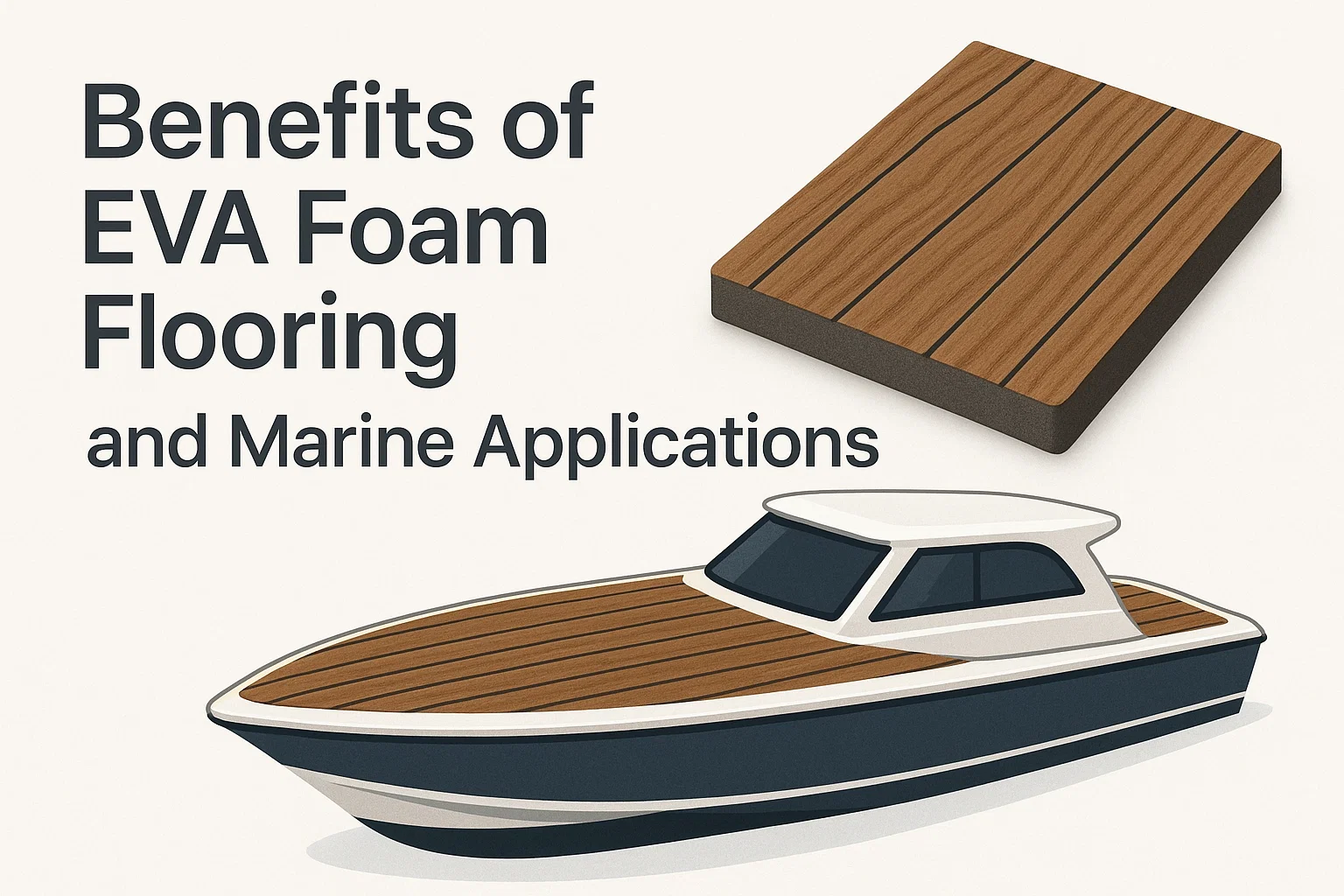
- Marine Decking: Grooved and brushed EVA foam sheets are the preferred alternative to traditional teak wood. They provide superior anti-slip traction even when wet and do not require regular oiling or sanding.
- Buoyancy and Fenders: Because it is a closed-cell foam, EVA does not absorb water. This makes it ideal for fenders, boat bumpers, and personal flotation devices (PFDs) that must remain lightweight and buoyant over decades of use.
4. Industrial Packaging and Tool Management
EVA foam is the gold standard for high-end protective packaging, especially for sensitive electronics and medical instruments.
- Custom Tool Inserts: CNC-routed EVA inserts organize and protect tools in high-stakes environments like aerospace hangars and surgical suites.
- Shock Protection: Its high energy-absorption rate ensures that fragile components are protected from G-force impacts during shipping and handling.
- Shadow Boards: Two-tone EVA foam layouts provide “at-a-glance” tool accountability, improving operational efficiency and preventing tool loss.
5. Construction and Infrastructure
In construction, EVA foam is used as a functional barrier and expansion joint material.
- Expansion Joints: Its resilience allows it to accommodate the thermal expansion and contraction of concrete slabs without failing.
- Underlayment: Used beneath flooring to provide sound insulation and moisture protection in both residential and commercial buildings.
- Thermal Breaks: High-density EVA strips prevent thermal bridging in window frames and structural joints, improving the energy efficiency of the building envelope.
Summary
From absorbing vibrations in a luxury vehicle to protecting delicate surgical instruments, the applications of EVA foam are as diverse as they are critical. Its success is driven by its ability to be precisely engineered for specific density, hardness, and environmental resistance requirements. View our complete EVA foam product portfolio to find the right specification for your industrial application.