Custom Molded EVA Foam Parts: Compression Molding, Tooling & Sourcing Guide
- Damao Tech
- EVA Foam
- 11 Sep, 2026
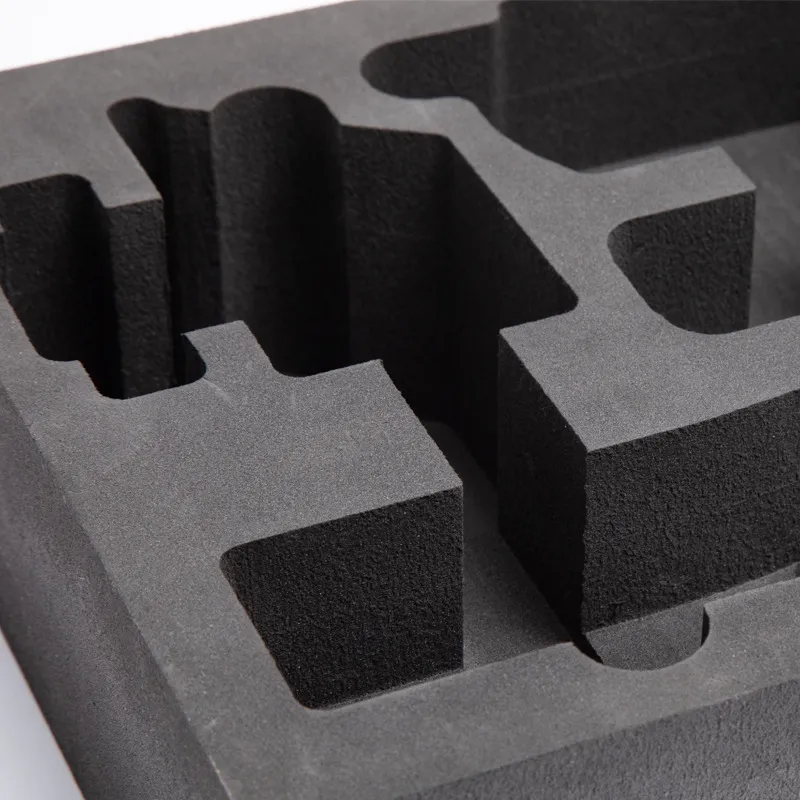
When standard flat foam conversion cannot satisfy complex geometric requirements, custom molded EVA foam parts provide the ultimate balance of 3D contouring, structural resilience, and high-volume manufacturing efficiency.
Unlike 2D die-cutting or multi-pass CNC routing—which subtract material from flat blocks—compression molding and thermoforming reshape ethylene-vinyl acetate polymer into seamless, three-dimensional components with rounded edges, embossed logos, recessed pockets, and ergonomic surfaces.
The manufacturing process typically begins with calibrated EVA foam sheet stock or compounded pre-forms, which are subsequently heated and pressed into precision-machined aluminum cavities.
At Damao Tech, we handle the complete manufacturing lifecycle from polymer compounding to mold fabrication and mass production. Whether you are engineering protective equipment, medical supports, automotive seals, or luxury packaging inserts, this technical guide explains how molded EVA foam is designed, tooled, and sourced.
For an overview of raw compound formulations, foam blocks, and factory capabilities, explore our custom EVA foam material solutions.
1. Primary Manufacturing Methods: Compression Molding vs. Injection Molding
Depending on your production volume, part complexity, and dimensional tolerances, industrial EVA foam molding is divided into two primary technologies:
| Feature / Metric | Compression Molding (Thermo-Compression) | Injection Molding (Expanded EVA Injection) |
|---|---|---|
| Starting Raw Material | Precision-skived EVA foam sheets or pre-cut blanks | EVA copolymer granules + chemical blowing agent |
| Tooling Investment | Moderate (CNC aluminum molds, $1,500 – $6,000) | High (Heavy hardened steel/aluminum molds, $15,000 – $40,000+) |
| Wall Thickness Control | Excellent for uniform & contoured cross-sections (2–40 mm) | Handles variable cross-sections with complex thick cores |
| Surface Detail | High-definition embossing, debossing, and textured patterns | High-definition monolithic skin finish |
| Economic Order Volume | 500 to 50,000+ units | 10,000 to 500,000+ units |
| Typical Applications | Orthotic braces, case liners, helmet liners, shoulder pads, grips | Footwear midsoles, clogs, solid bicycle tires, floating components |
The Compression Molding Process (Step-by-Step)
The vast majority of B2B technical parts and protective components utilize compression molding (often referred to as hot/cold press forming). Here is how a custom molded EVA foam part moves through our facility:
- Pre-Form Preparation: Calibrated blanks are die-cut or waterjet-cut from high-grade EVA foam sheet stock. Controlling the volumetric mass of the blank ensures proper mold fill without excessive flash.
- Pre-Heating (Thermal Activation): The blanks pass through continuous infrared or circulating hot-air ovens, heated to the polymer softening window (typically 120°C to 160°C, calibrated to the specific Vinyl Acetate percentage and cross-linking density).
- High-Pressure Hydraulic Compression: The softened blank is loaded into a temperature-controlled, CNC-machined aluminum tool. Hydraulic presses apply between 50 and 200 tons of clamp pressure, forcing the expanding cellular matrix into every contour and texture of the cavity.
- Rapid Chilling (Freezing Geometry): EVA is a viscoelastic polymer with significant thermal memory. To lock the molded geometry in place and prevent post-demold shrinkage or warping, the part is chilled—either inside water-cooled mold channels or transferred immediately to an adjacent cold-setting press.
- Secondary Trimming & Finishing: Automated edge-trimming dies remove perimeter flash. Parts can then undergo Pressure Sensitive Adhesive (PSA) lamination, fabric heat-bonding, or laser engraving.
2. Mold Tooling Design & Critical Engineering Rules
Designing tooling for flexible foam differs fundamentally from designing rigid injection molds. Because closed-cell EVA expands during heating and contracts upon cooling, mold designers must accommodate thermal physics:
A. Accounting for Material Shrinkage
EVA foam exhibits an unavoidable volumetric shrinkage of 1.5% to 3.5% after cooling, depending on density and VA content:
- Low-density foams (30–60 kg/m³) exhibit higher shrinkage rates (~2.5%–3.5%).
- High-density grades (100–200 kg/m³) exhibit tighter dimensional stability (~1.2%–2.0%).
At Damao Tech, our tooling engineers scale the CAD tool cavity by precise empirical shrink factors to ensure finished parts land strictly within blueprint tolerances.
B. Draft Angles & Undercuts
- Draft Angles: Apply a minimum draft angle of 2° to 5° to all vertical side walls. While flexible foam can tolerate minimal drafting better than hard plastic, adequate draft prevents surface abrasion and cell tearing during mechanical ejection.
- Undercuts: Moderate undercuts are feasible due to EVA’s elasticity, allowing parts to be stripped manually or via pneumatic ejector pins without complex side-action cams.
C. Wall Thickness & Radii
- Avoid sharp interior 90° corners. Maintain a minimum internal corner radius of R = 2.0 mm to ensure smooth material flow and eliminate localized stress concentrations.
- Maintain consistent nominal wall thickness throughout the part. Sudden transitions between thin webs (< 2 mm) and thick cores (> 30 mm) can cause surface sink marks and uneven cell expansion.
3. Selecting the Right Density & Hardness for Molded Parts
Choosing the proper formulation determines whether your molded part functions as an ultra-soft cushioning liner or a high-impact structural protector:
| Density Range | Shore Hardness | Mechanical Profile | Recommended Molded Applications |
|---|---|---|---|
| 35 – 55 kg/m³ | 20 – 35 Shore C | Lightweight, soft touch, high flexibility | Helmet comfort liners, sleep apnea mask cushions, orthotic top covers |
| 60 – 90 kg/m³ | 40 – 50 Shore C | Balanced damping, durable resilience, moderate rigidity | Ergonomic tool handles, kneeling pads, camera bag dividers, sports chest protectors |
| 100 – 160 kg/m³ | 50 – 65 Shore C | High structural memory, impact absorption, tear resistance | Industrial case inserts, protective kneecaps, drone storage pods, vibration isolators |
| 180 – 250+ kg/m³ | 65 – 80 Shore C | Rigid, dense, machinable, structural load-bearing | Equipment feet, automotive battery damping blocks, heavy-duty seal carriers |
For a comprehensive breakdown of mechanical testing and Shore scale conversion, see our EVA foam density and hardness guide.
4. B2B Tolerances: What to Expect from Molded EVA
Unlike rigid metals or polycarbonate, closed-cell foam expands and contracts with ambient temperature and atmospheric moisture. Realistic B2B manufacturing tolerances for compression molded EVA foam are:
- Overall Length & Width: ± 0.5 mm to ± 1.5 mm (depending on overall dimensions).
- Cross-Sectional Thickness: ± 0.3 mm to ± 0.8 mm.
- Feature Location & Hole Centers: ± 0.5 mm.
- Hardness Consistency: ± 3 to 5 Shore points across production batches.
To minimize manufacturing cost while ensuring strict functionality, always annotate Critical-to-Quality (CTQ) dimensions on your engineering drawing. This enables our quality assurance team to focus CMM (Coordinate Measuring Machine) verification on essential mating surfaces.
5. How to Source Custom Molded EVA Foam Parts (RFQ Checklist)
When preparing an RFQ for custom tooling and molded foam parts, providing complete specifications reduces iteration cycles by days. Ensure your inquiry includes:
- 3D CAD Model: Provide 3D vector geometry in .STEP, .STP, or .IGES format, accompanied by a 2D PDF drawing detailing critical tolerances.
- Material Specifications: State your required density (kg/m³) and Shore hardness (Shore C or Shore A).
- Compound Additives: Specify if your environment requires anti-static / ESD protection, flame retardancy (UL94-HF1), UV resistance, or medical biocompatibility.
- Surface Finish & Texture: Specify smooth matte, diamond grip texture, micro-sand, or custom engraved logos.
- Surface Bonding: Note if the molded component requires factory-applied Pressure Sensitive Adhesive (PSA), fabric lamination (velvet, Lycra, mesh, polyester), or hook-and-loop backing.
- Volume & Production Timeline: Outline your initial prototype requirement (e.g., 5–10 samples) alongside projected annual mass-production batches.
Partner with Damao Tech for Custom Foam Molding
From initial 3D mold flow consultation and prototype tooling to multi-cavity mass production, Damao Tech operates as a vertically integrated foam engineering partner.
- Need calibrated raw materials or flat stock? Visit our custom EVA foam sheet manufacturing hub.
- Looking for custom foam formulations, density tuning, or OEM supply? Explore our custom EVA foam material solutions.
- Ready to submit your CAD drawing for a manufacturability review? Contact our engineering team today for rapid quoting and DFM feedback.