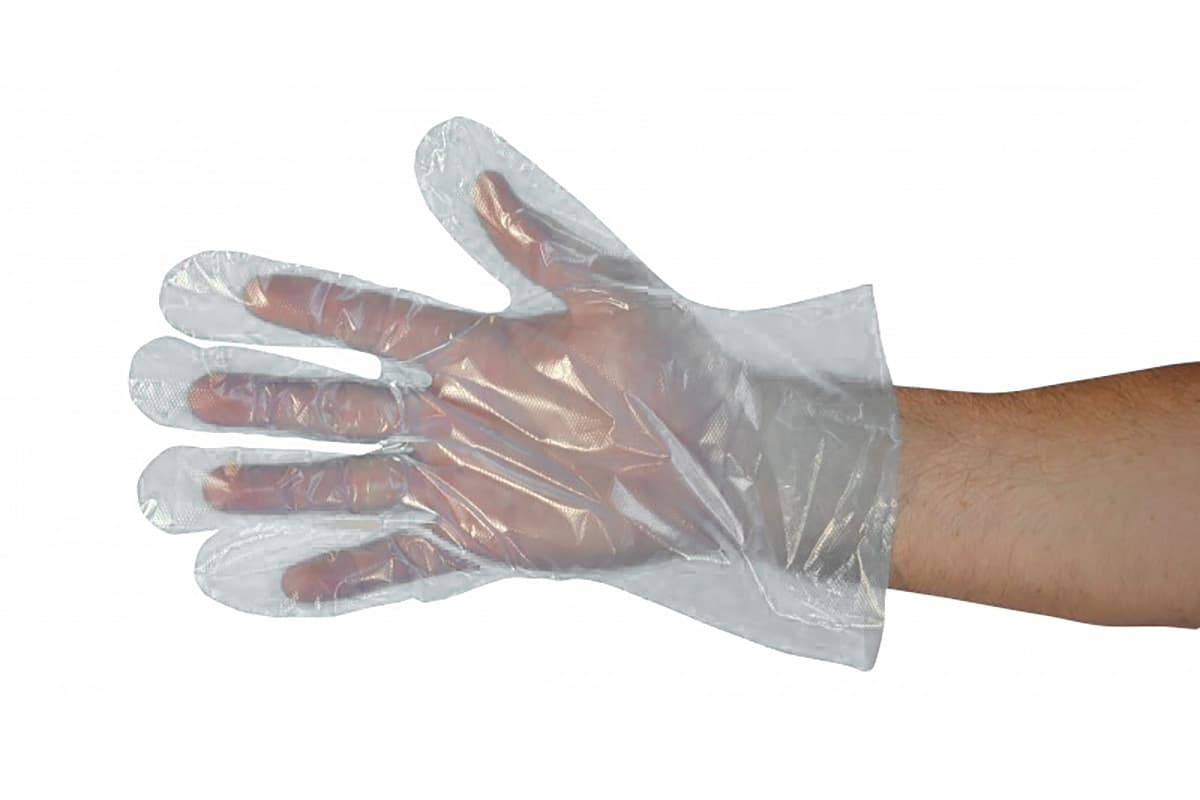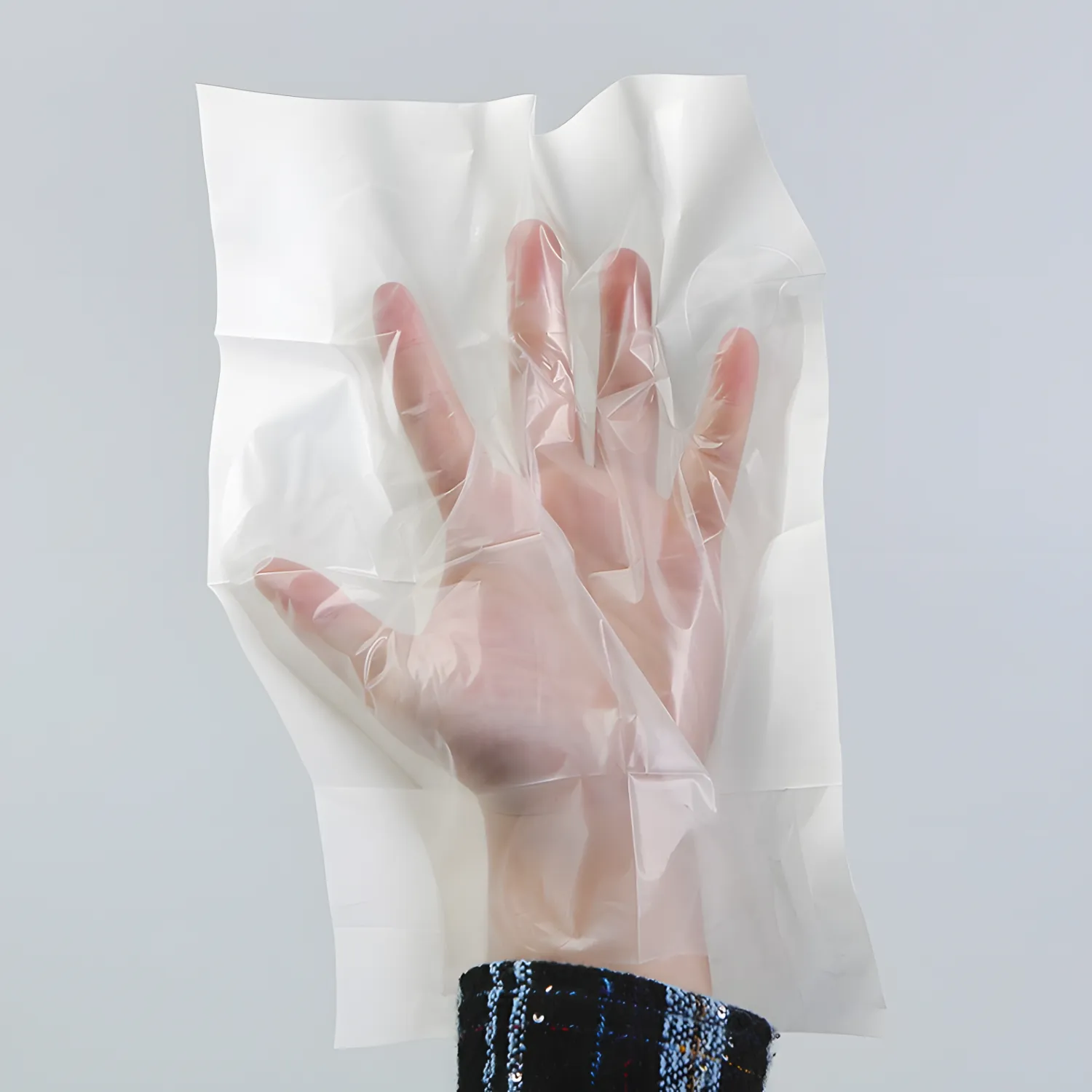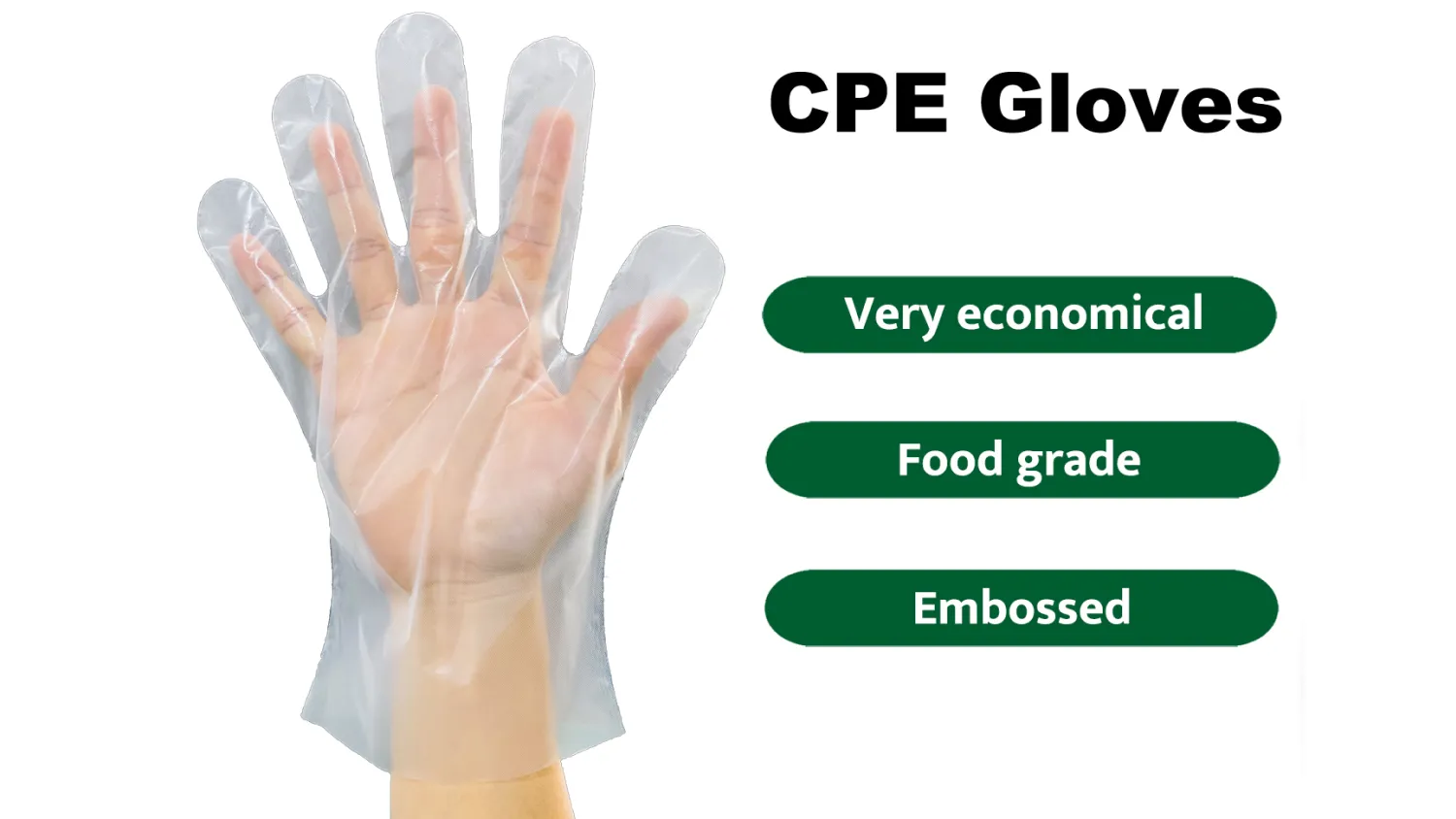
Disposable CPE Gloves: Cast Polyethylene Engineering & Buying Guide
- Damao Tech
- Gloves
- 12 Sep, 2026
In commercial food processing, meat packing, industrial catering, and sanitary maintenance, standard polyethylene (PE) gloves often fail due to seam splits, excessive crinkling, and a slick surface that slips on wet or greasy items. When operations demand a more resilient, soft-draping barrier without the cost overhead of nitrile or latex, Cast Polyethylene (CPE) gloves represent the engineering upgrade of choice.
Unlike blown-film PE gloves, CPE gloves are manufactured via precision slot T-die flat cast film extrusion onto a rapid-chilled chrome roller. This casting metallurgy alters polymer morphology, yielding greater tensile elongation, a supple drape, and an integrated textured surface that eliminates slippage.
This engineering guide details the extrusion physics of cast polyethylene, technical mechanical specifications, international food hygiene compliance (FDA 21 CFR 177.1520 and EU 10/2011), and a comprehensive benchmark against blown PE, TPE, and vinyl alternatives.
Extrusion Physics: Cast Film (CPE) vs. Blown Film (PE)
The superior physical properties of CPE gloves stem directly from the thermodynamics of the flat cast film extrusion process:
[Virgin Polyolefin Resin + Metallocene PE]
                     │
[Extruder Barrel & High-Pressure Melt Pump]
                     │
[Slot T-Die Flat Extrusion (220°C–240°C)]
                     │
[Internal Water-Chilled Chrome Casting Roll (15°C–25°C)]
                     │
[Rotary Micro-Embossing Nip Rollers]
                     │
[Automated Thermal Contour Welding & Die-Cutting]
1. Ultra-Fast Quenching and Amorphous Molecular Structure
- Blown Film (Standard PE): The molten polymer tube is inflated into a vertical bubble and air-cooled relatively slowly by an external air ring. Slow cooling allows polymer molecules ample time to arrange into dense crystalline spherulites, making standard PE crinkly, stiff, and prone to pinhole propagation along crystal boundaries.
- Cast Film (CPE): Molten resin is forced through a linear flat T-die directly onto an internally water-cooled chrome chill roll revolving at high speed (15°C–25°C). The near-instantaneous thermal quench freezes the polymer chains before large crystal spherulites can nucleate. This yields a predominantly amorphous polymer phase, giving CPE its signature rubber-like flexibility, soft drape, and silent handling.
2. Isotropic Tensile Balance
Blown film orientation is predominantly uniaxial (machine direction). In contrast, flat cast film extrusion combined with low draw ratios delivers balanced biaxial mechanical strength, meaning the glove exhibits equal resistance to tearing whether pulled lengthwise or across the palm.
Key Advantages of Disposable CPE Gloves
1. Supple Tactile Drape & Reduced Fatigue
Standard PE gloves are stiff and produce loud rustling sounds during hand movements. CPE gloves fall naturally over the palm and fingers with a soft, supple drape that closely resembles lightweight vinyl, reducing hand fatigue during continuous food prep shifts.
2. Diamond / Micro-Pitted Non-Slip Traction
During the chill roll take-off, the cast film is passed through micro-embossing nip rollers. This imprints a permanent microscopic diamond or orange-peel pattern on both interior and exterior surfaces:
- Exterior Texture: Breaks the hydraulic film when handling wet poultry, raw meats, or oily sauces, preventing accidental slippage of knives or food products.
- Interior Texture: Prevents the glove from adhering to sweaty palms, ensuring swift donning and removal in high-paced commercial kitchens.
3. Reinforced Seam Weld Integrity
Because cast film boasts superior thermal weldability, automated ultrasonic and thermal heat-sealing dies produce uniform, wider weld beads (typically 0.8–1.2 mm). This eliminates the common frustration of seam splitting when workers pull gloves vigorously over the wrist.
Technical Specifications & Physical Properties
| Technical Parameter | Standard Blown PE | Cast Polyethylene (CPE) | TPE Gloves |
|---|---|---|---|
| Film Thickness | 10 – 15 µm (0.4 – 0.6 mil) | 22 – 35 µm (0.9 – 1.4 mil) | 35 – 50 µm (1.4 – 2.0 mil) |
| Weight per Piece (Size M) | 0.75 – 0.90 g | 1.60 – 2.20 g | 1.80 – 2.40 g |
| Tensile Strength (Longitudinal) | 12 – 16 MPa | ≥ 18 MPa | ≥ 14 MPa |
| Tensile Strength (Transverse) | 10 – 14 MPa | ≥ 16 MPa | ≥ 12 MPa |
| Ultimate Elongation | 200% – 350% | ≥ 450% | ≥ 500% |
| Surface Finish | Smooth or coarse emboss | Micro-embossed diamond | Silky matte elastomer |
| Water Leak Integrity | AQL 2.5 | AQL 1.5 – 2.0 | AQL 1.5 |
| Standard Length | 270 – 280 mm | 280 – 300 mm | 280 – 300 mm |
Regulatory Standards & Food Contact Safety
Disposable CPE gloves are 100% formulated from virgin food-grade polyolefins, guaranteeing absolute compliance with major global regulatory frameworks:
- US FDA 21 CFR 177.1520: Approved for repeated direct contact with all food categories, including acidic foods, alcoholic beverages, and fatty meats.
- EU Framework Regulation (EC) No 1935/2004 & (EU) No 10/2011: Certified compliant for food contact. Overall migration limit (OML) testing validates that less than 10 mg/dm² of substances migrate under extreme temperature and exposure conditions.
- 100% Free of Harmful Plasticizers: Unlike vinyl (PVC) gloves that rely on ortho-phthalates (such as DEHP, DINP) or terephthalates to achieve flexibility, CPE achieves softness purely through polymer quenching. It contains zero phthalates, zero bisphenol A (BPA), and zero silicone oils.
- Latex-Free & Accelerator-Free: Contains zero natural latex proteins (eliminating Type I anaphylactic allergies) and zero chemical sulfur accelerators (eliminating Type IV contact dermatitis).
Material Comparison: CPE vs. Blown PE vs. TPE vs. Vinyl
| Performance Metric | Cast Polyethylene (CPE) | Blown PE (HDPE/LDPE) | TPE Gloves | Vinyl Gloves (PVC) |
|---|---|---|---|---|
| Raw Polymer | Flat-cast Polyolefin | Blown Tubular PE | SEBS/Polyolefin Blend | PVC Resin + Plasticizers |
| Flexibility & Drape | Soft, flexible drape | Stiff, crinkly | Elastic, stretch-recovery | Soft, snug fit |
| Wet & Oily Grip | High (Micro-embossed) | Low (Slippery when wet) | Moderate-High | Moderate (Smooth surface) |
| Puncture Resistance | Moderate-High | Low | Moderate | Low-Moderate |
| Food Safety Rating | Universal (Fatty & acidic) | Universal | Universal | Limited (Fat migration risk) |
| Environmental Profile | Recyclable (#4 LDPE) | Recyclable (#2 / #4) | Recyclable | Non-recyclable / Toxic incineration |
| Cost Efficiency | Highly Economical ($$) | Lowest ($) | Economical ($$$) | Moderate ($$$) |
Key Industrial & Commercial Use Cases
- Butcheries, Meat & Poultry Processing: Raw animal fats rapidly swell and degrade vinyl gloves, while blood and moisture make smooth PE gloves dangerously slippery. CPE gloves resist animal lipids and provide positive knife-grip security.
- Commercial Delis & Quick-Service Chains: Where line staff must transition between handling sandwich ingredients and operating POS touchscreens, CPE gloves provide rapid 2-second donning and tactile precision.
- Institutional Catering & Food Packaging: Bulk packaging lines for frozen seafood, pre-washed salads, and bakery goods rely on blue CPE gloves to satisfy HACCP contamination-control guidelines.
- Light Janitorial & Sanitary Maintenance: Facility crews handling non-corrosive general detergents, window cleaners, and light sanitizers benefit from the waterproof integrity and tear resistance of 30-micron CPE gloves.
Frequently Asked Questions (FAQ)
What is the difference between CPE gloves and TPE gloves?
CPE (Cast Polyethylene) is a pure polyolefin film with high amorphous flexibility, offering moderate stretch and a relaxed fit. TPE (Thermoplastic Elastomer) is a specialized polymer blend typically incorporating styrenic block copolymers (SEBS). TPE exhibits rubber-like elastic recovery and elasticity, fitting closer to the contour of the hand than CPE.
Are CPE gloves powder-free?
Yes. 100% of modern CPE gloves are manufactured powder-free. Because the micro-embossed surface naturally breaks surface tension and prevents inner walls from sticking together, no dusting cornstarch or powder lubricant is required.
Can CPE gloves be recycled?
Yes. Disposable CPE gloves are composed of pure polyethylene thermoplastic (Resin Code #4 LDPE). Clean post-industrial scrap and uncontaminated used gloves can be melted and mechanically re-extruded into plastic pallets, construction damp-proof membranes, or industrial trash bags.
Where can I buy disposable CPE gloves in bulk wholesale?
Damao Tech manufactures disposable CPE gloves in our own facilities and exports container-load quantities worldwide. We offer factory-direct wholesale pricing, custom sizes, thicknesses, and embossing patterns. Contact our sales engineering team at info@damao-tech.com for a bulk quotation.
Do you offer OEM or private label CPE gloves?
Yes. We provide OEM and private label manufacturing for CPE gloves, including custom packaging, branding, and specifications such as size, thickness, color, and embossing. Share your target specs and estimated order volume for a tailored OEM proposal.
Damao Tech is a specialized manufacturer and exporter of commercial disposable gloves, high-performance TPE Gloves, Compostable Disposable Gloves, and automated Fully Automatic Disposable Gloves Machines. For technical datasheets, private-label branding, and container-load pricing, contact our engineering sales department at info@damao-tech.com.