10 Business Reasons to Switch to Biodegradable Nitrile Gloves
- Damao Tech
- Gloves
- 04 May, 2026
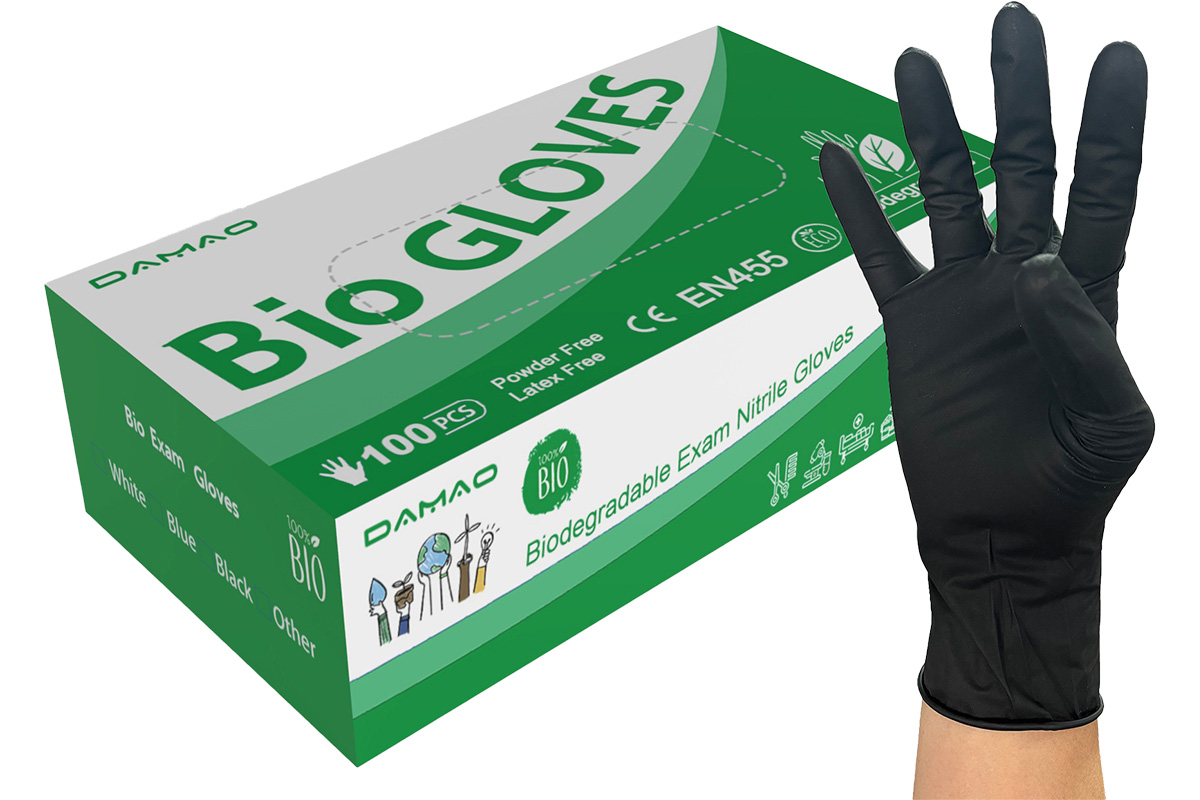
Switching to biodegradable nitrile gloves is no longer just an environmental preference. For many procurement teams, distributors, healthcare buyers, food-service operators, and industrial users, it is becoming a practical business decision tied to ESG reporting, waste reduction, brand trust, and long-term supply planning.
Traditional nitrile gloves remain popular because they are strong, latex-free, comfortable, and chemically resistant. The problem is end-of-life impact. Standard nitrile is petroleum-derived and can remain in landfill environments for decades or longer. Biodegradable nitrile gloves are designed to keep the same in-use protection while accelerating decomposition after disposal under active landfill conditions.
Below are 10 business-focused reasons to consider switching from standard nitrile to biodegradable nitrile gloves.
1. Reduce Long-Term Landfill Impact
Disposable gloves are used in huge volumes across healthcare, food service, beauty, janitorial, laboratory, and industrial environments. Even small changes in glove selection can have a measurable waste impact when multiplied across thousands or millions of pairs per year.
Biodegradable nitrile gloves use organic additive technology that helps the material break down faster in biologically active landfill conditions. For organizations that cannot realistically eliminate disposable glove use, this creates a more responsible disposal profile than conventional nitrile.
For a technical explanation of landfill testing, see our ASTM D5511 biodegradable nitrile gloves guide.
2. Support ESG and Sustainability Reporting
Sustainability programs need measurable actions, not vague claims. Switching to biodegradable nitrile gloves can support internal ESG reporting because it connects a high-volume consumable category to a clearer environmental improvement.
For procurement teams, the key is documentation. Request original third-party test reports, certification details, and batch traceability from your supplier. This gives sustainability teams evidence they can use in vendor reviews, customer audits, and annual reporting.
3. Improve Brand Trust With Customers
Customers increasingly notice whether a company takes visible steps to reduce waste. In food service, hospitality, salons, clinics, and consumer-facing care environments, glove choice can become part of a broader sustainability story.
Biodegradable nitrile gloves help communicate that your organization is not only focused on safety and hygiene, but also on reducing avoidable environmental burden. This can strengthen brand perception without requiring major workflow changes.
4. Keep Nitrile Performance Without Returning to Latex
Some businesses hesitate to move away from standard nitrile because they need reliable barrier protection, tear resistance, and latex-free comfort. That concern is reasonable.
High-quality biodegradable nitrile gloves are still nitrile gloves. The biodegradation additive is designed to remain inactive during storage and normal use, so the glove can maintain the same basic performance profile expected from nitrile: puncture resistance, elasticity, chemical splash protection, and latex-free wear.
Buyers should still confirm AQL, tensile strength, elongation, thickness, and chemical-resistance requirements before switching product lines.
5. Prepare for Stricter Waste and Procurement Policies
Regulations and corporate procurement standards are moving toward lower-waste products, recycled content, traceable supply chains, and more transparent environmental claims. Even when a specific rule does not yet require biodegradable gloves, many buyers are already building preferred-supplier lists around sustainability criteria.
Switching early gives distributors and end users time to test products, compare documentation, train teams, and update purchasing specifications before sustainability requirements become urgent.
6. Reduce the Hidden Cost of Disposable Waste
The unit price of biodegradable nitrile gloves may be higher than standard nitrile, but glove cost should not be evaluated only by price per box. Buyers should also consider:
- Waste-management cost
- Sustainability reporting value
- Customer and tender requirements
- Brand differentiation
- Product quality consistency
- Supplier documentation quality
For larger buyers, the final decision often comes down to total procurement value, not simply the lowest FOB price.
7. Strengthen Tender and Distributor Positioning
For wholesalers, importers, and distributors, biodegradable nitrile gloves can create a useful product tier between standard disposable nitrile and more specialized eco-PPE categories. This helps serve customers who want better environmental performance but still need familiar nitrile protection.
The strongest offers combine product performance with evidence: test reports, quality certifications, factory documentation, packaging options, and consistent replenishment capacity. Our biodegradable nitrile gloves factory-direct guide explains what buyers should verify before placing larger orders.
8. Support Positive Workplace Culture
Employees often respond well when a company chooses practical sustainability improvements that do not make daily work harder. Switching to biodegradable nitrile gloves is a visible change that can be introduced without disrupting normal glove-wearing habits.
For facilities with sustainability committees, safety teams, or green procurement programs, glove replacement is a relatively simple project: test samples, confirm performance, update the purchasing list, and communicate the environmental reason for the change.
9. Fit Multiple Industries Without Major Process Changes
Biodegradable nitrile gloves can be used across many of the same non-sterile, single-use workflows where standard nitrile is common, depending on certification and application requirements.
Common use cases include:
- Food handling and food service
- Beauty, salon, and personal care
- Janitorial and sanitation work
- Laboratory support tasks
- Industrial assembly and light maintenance
- General healthcare and examination workflows where specifications match the use case
Always match the glove to the actual risk profile. A food-service buyer, laboratory buyer, and industrial buyer may need different thickness, texture, color, and certification requirements.
10. Create a Clearer Path From Sustainability Claim to Purchase Decision
Many “eco-friendly glove” claims are vague. Biodegradable nitrile becomes more convincing when the buyer can connect the claim to practical purchasing criteria:
- What test standard supports the biodegradation claim?
- Is the lab report complete or only a certificate summary?
- Does the supplier provide batch traceability?
- Are barrier performance and tensile strength documented?
- Can the factory support repeat orders, private label packaging, and consistent specifications?
If those questions are answered clearly, the switch becomes easier to justify internally.
How to Evaluate Biodegradable Nitrile Gloves Before Switching
Before replacing your current glove program, request samples and documentation from the supplier. At minimum, check:
- ASTM D5511 or ASTM D5526 biodegradation documentation
- AQL and barrier integrity
- Tensile strength and elongation
- Thickness and weight consistency
- Shelf-life statement
- Food-contact, medical, or chemical-resistance documentation where relevant
- Packaging options and MOQ
- Lead time and replenishment capacity
For a broader supplier checklist, read our biodegradable disposable gloves supplier guide.
Final Takeaway
Switching to biodegradable nitrile gloves is not about replacing one box of gloves with another and calling the job finished. It is about improving a high-volume consumable category while maintaining the safety, comfort, and durability that made nitrile gloves popular in the first place.
For buyers with ESG goals, customer sustainability expectations, or long-term waste-reduction plans, biodegradable nitrile gloves offer a practical next step.
Explore Damao Tech’s biodegradable nitrile gloves or contact our team to request specifications, sample options, and OEM packaging support.