Everything You Need to Know About TPE Gloves
- Damao Tech
- Gloves
- 03 Oct, 2026
In the global PPE market, Thermoplastic Elastomer (TPE) gloves have emerged as a high-performance, cost-effective alternative to traditional vinyl (PVC) and low-density polyethylene (PE) gloves. Engineered from a blend of rubber-like elastomers and thermoplastic resins (often SEBS or SBS-based), TPE gloves provide superior elasticity and a “second-skin” fit that standard plastic gloves cannot achieve. This guide details the technical specifications and industrial applications of TPE gloves for procurement professionals.
1. Material Science: What Makes TPE Different?
Unlike traditional disposable gloves, TPE is a hybrid material. It possesses the processing advantages of plastics and the physical properties of elastomers.
- Polymer Structure: TPE gloves are typically formulated using SEBS (Styrene-Ethylene-Butylene-Styrene). This saturated polymer provides excellent resistance to UV, ozone, and heat, ensuring a long shelf life without the degradation issues seen in natural rubber latex.
- Elongation and Tensile Strength: While standard PE gloves have almost zero stretch, industrial-grade TPE gloves exhibit elongation rates of 300% to 400%. This elasticity allows the glove to conform to the hand, reducing hand fatigue during long shifts in assembly or food processing lines.
- Shore A Hardness: TPE gloves are engineered at a low Shore A hardness (typically 30-40) to maximize tactile sensitivity and comfort.
2. Industrial Standards and Compliance
For B2B procurement, compliance with international safety standards is non-negotiable. TPE gloves from Damao Tech meet the following criteria:
- Food Contact Safety (EN 1186 & FDA 21 CFR 177.2600): TPE is inherently non-toxic and free from plasticizers like phthalates. It is safe for handling all food types, including fatty foods and oils, making it the preferred choice for industrial food processing.
- EN 420: Ensures the gloves meet general requirements for design, construction, and comfort.
- REACH Compliance: Guaranteed to be free from Substances of Very High Concern (SVHC), ensuring safety for both the user and the environment.
3. Key Advantages for High-Volume Users
- Cost-to-Performance Ratio: TPE gloves provide a fit and feel close to nitrile but at a price point closer to vinyl. For high-volume users like food service chains or janitorial services, this represents a significant reduction in PPE overhead.
- Latex-Free and Powder-Free: Eliminates the risk of Type I (latex) and Type IV (chemical) allergies, ensuring a safe working environment for a diverse workforce.
- Recyclability: As a thermoplastic, TPE is 100% recyclable. Production scraps and uncontaminated used gloves can be reprocessed into secondary industrial products, supporting corporate ESG (Environmental, Social, and Governance) goals.
4. Primary Industrial Applications
- Food Processing and Service: Ideal for “high-dexterity” food tasks like sandwich prep, meat slicing, and dough handling.
- Janitorial and Sanitation: Provides an effective barrier against common cleaning detergents and water-based chemicals.
- Beauty and Salon: Used for hair coloring and aesthetic treatments where a gentle, tactile touch is required.
- Light Assembly: Protects sensitive components from skin oils and perspiration in electronics and automotive part assembly.
How Do TPE Gloves Differ From CPE and PE Gloves?
When it comes to purchasing PPE, you have numerous types of disposable gloves to select from. To help make your decision simpler, consider the difference between TPE gloves and PE gloves, as well as TPE versus CPE gloves.
Polyethylene (PE) Gloves
PE stands for polyethylene, which is a lightweight and sturdy thermoplastic material. PE gloves tend to be popular because they are the most affordable option on the market. The low price of PE gloves is due to the material’s ability to be blown extremely thin, reducing the overall cost of the gloves. Because PE gloves are usually manufactured with food-safe plastic resin material, they’re most commonly used by fast-food restaurants and other enterprises within the food industry.
Cast Polyethylene (CPE) Gloves
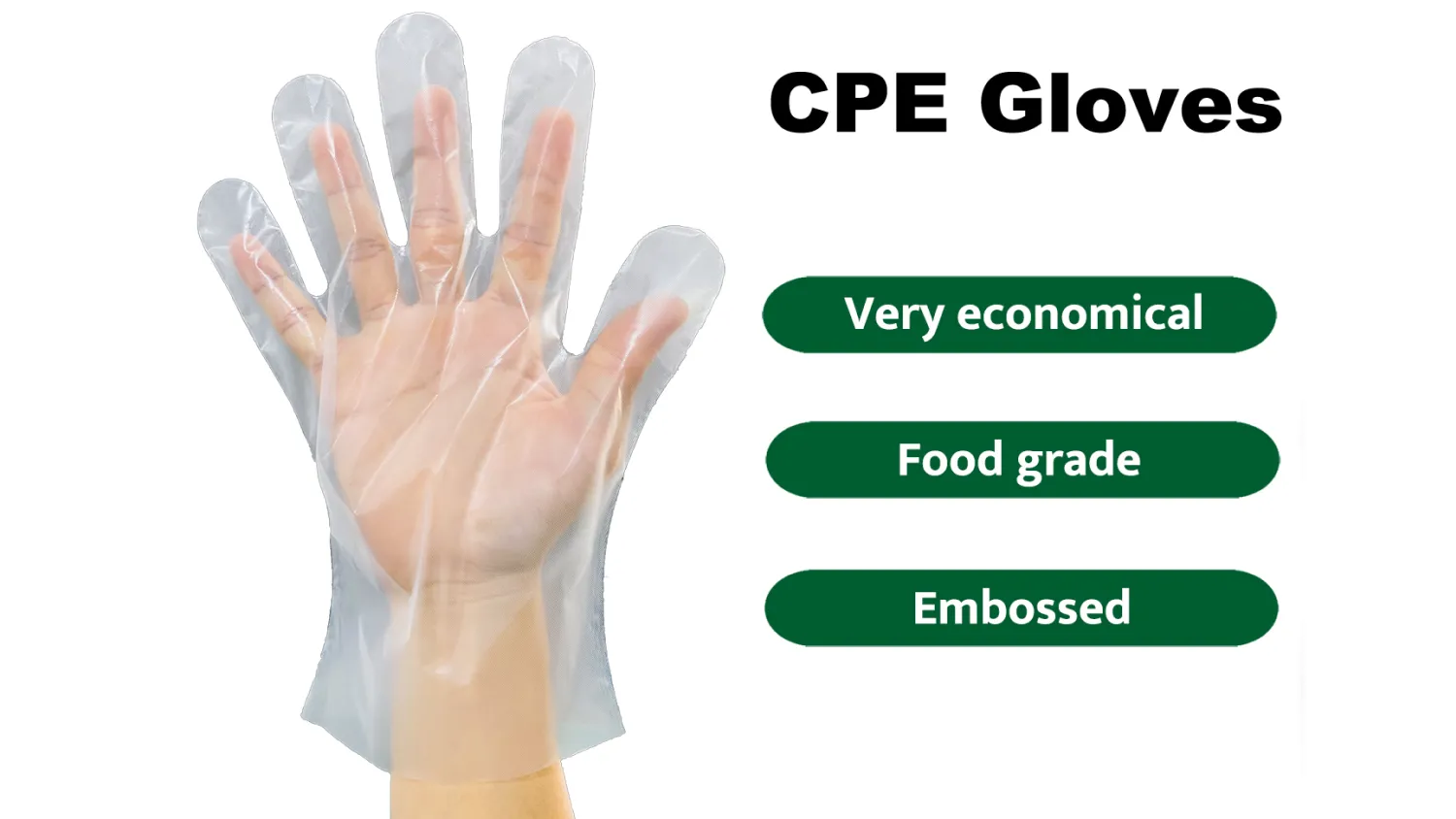
CPE gloves were invented to serve as a more resilient latex-free disposable glove option for the food service and food processing industries. CPE gloves typically fit the hands well, and a worker can wear them for an entire day without breaking their PPE, which is a feat PE gloves cannot accomplish. CPE gloves are strong and durable, and they weigh more in grams than TPE gloves.
Thermoplastic Elastomer (TPE) Gloves
TPE gloves are the next advancement from CPE gloves because they are incredibly resilient while still being lightweight. Most TPE gloves are even more robust than CPE gloves without feeling bulky or cumbersome, making them preferable to both PE and CPE gloves. Food factories typically favor TPE gloves because they merge strength and comfort.
Are TPE Gloves Food Safe?
Yes. Food-grade TPE gloves are manufactured without plasticizers, phthalates, latex proteins, or powder, and the base polymers (typically SEBS) are recognized as safe for food contact under FDA 21 CFR 177.2600 and EU migration testing per the EN 1186 series. Because TPE contains no plasticizers that can leach out, it is rated safe for all food types — including fatty foods and oils that cause problems for some vinyl formulations.
For procurement teams, the practical advantage goes beyond compliance. TPE’s 300–400% elongation means fewer tears and pinholes during high-speed handling, which directly reduces contamination risk on food processing lines. The soft, second-skin fit also improves grip on wet or greasy products, from meat and poultry to bakery dough and ready-meal components. Many food plants standardize on TPE for tasks with frequent glove changes, since the lower per-unit cost versus nitrile adds up quickly at scale.
A few caveats before you buy. First, “food safe” is a certification, not a material property — always ask the supplier for current migration test reports or an FDA/EU compliance declaration rather than taking a marketing claim at face value. Second, match the glove gauge to the task: thinner gauges suit high-dexterity prep work, while heavier gauges hold up better on lines handling sharp bones or shells. Third, if your facility runs HACCP color-coding, confirm the supplier can provide consistent colors (blue is the industry standard for food areas) across batches.
Frequently Asked Questions (FAQ)
Are TPE gloves food safe?
Yes — provided they are certified food-grade. Look for FDA 21 CFR 177.2600 compliance or EU EN 1186 migration test reports. TPE contains no plasticizers or latex, making it safe for all food types including fatty foods, but always verify the supplier’s documentation.
What are TPE gloves used for?
Food processing and food service, janitorial and sanitation work, beauty and salon treatments, and light assembly such as electronics and automotive parts. They suit any high-dexterity task that needs a latex-free, powder-free disposable barrier at high volume.
How do TPE gloves compare to nitrile gloves?
TPE offers a fit and feel close to nitrile — 300–400% elongation with a second-skin fit — at a price point closer to vinyl. Nitrile still leads on chemical resistance and for medical examination use; TPE wins on cost for food handling and general-purpose tasks.
Are TPE gloves recyclable?
Yes. As a thermoplastic, TPE is 100% recyclable. Clean production scrap and uncontaminated used gloves can be reprocessed into secondary industrial products, which supports corporate ESG goals.
Summary
TPE gloves offer a unique combination of elasticity, food safety, and economic value. For organizations looking to upgrade from vinyl or PE gloves without the high cost of nitrile, TPE represents the most technically sound transition. At Damao Tech, we manufacture food-safe disposable TPE gloves in various gauges and colors to meet your specific industrial needs. Contact our technical team for material safety data sheets (MSDS) and bulk pricing.