Latex Gloves Guide: Material Properties, Standards & Clinical Uses
- Damao Tech
- Gloves
- 12 Sep, 2026
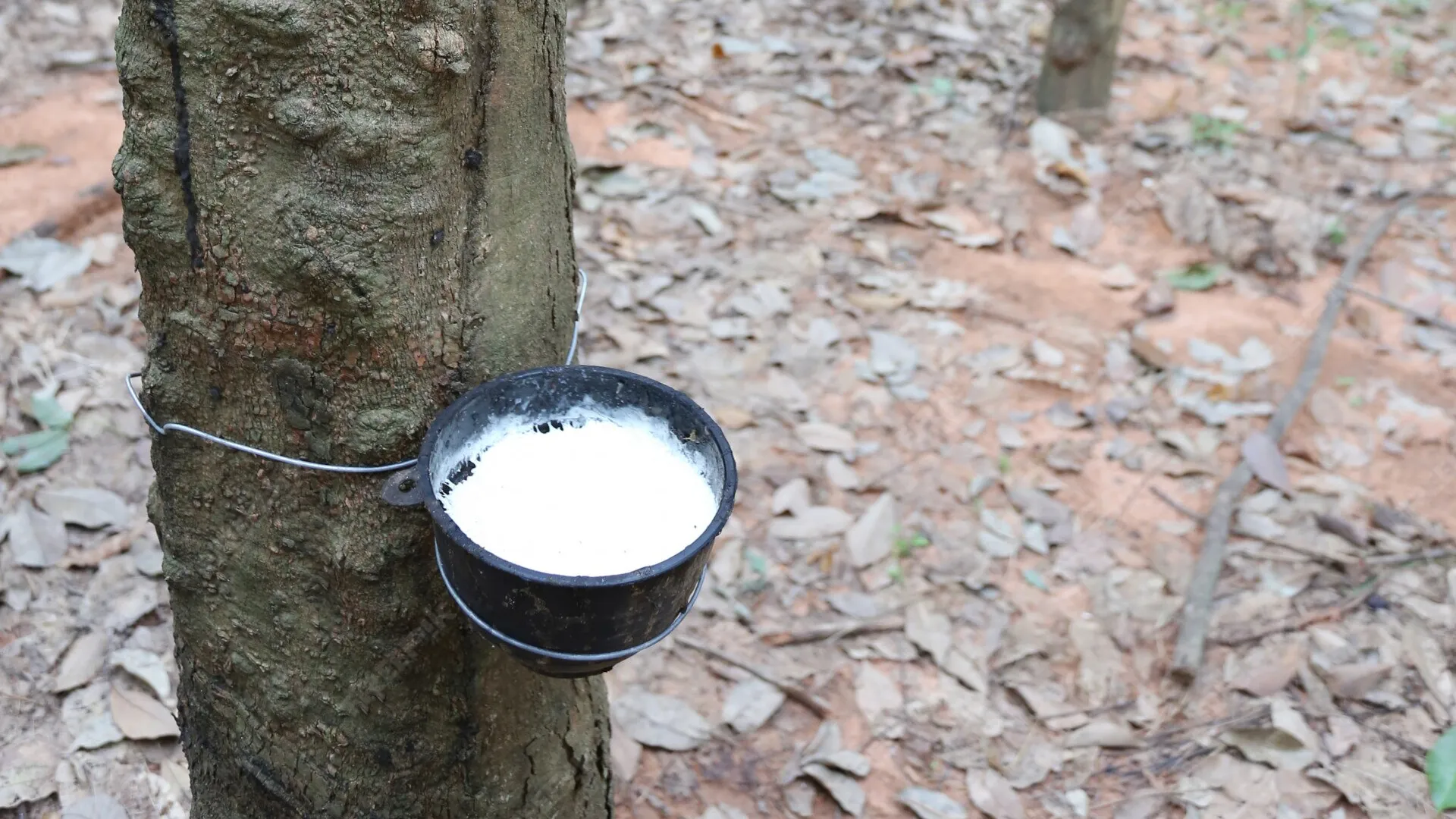
Natural rubber latex (NRL) gloves have served as the benchmark for tactile sensitivity, biological barrier integrity, and ergonomic elasticity in healthcare and laboratory environments for over a century. Extracted from the sap of Hevea brasiliensis, natural latex offers a unique molecular structure that synthetics strive to replicate. However, understanding protein reduction, sterile vs. non-sterile specifications, and chemical permeability is essential for institutional procurement teams.
This technical guide examines the polymer physics of natural rubber latex, modern protein leaching processes, compliance standards (ASTM D3578, ASTM D3577, EN 455), and how latex compares to synthetic alternatives.
Polymer Physics: Why Natural Latex Delivers Unmatched Elasticity
Natural rubber latex consists predominantly of cis-1,4-polyisoprene, an organic polymer chain characterized by high molecular weight and an exceptionally low glass transition temperature ((T_g \approx -70^\circ\text{C})). This molecular architecture provides mechanical properties that synthetic rubbers struggle to match:
- Extreme Elastic Elongation (750% – 850%): When subjected to mechanical stress, the tangled coils of polyisoprene uncoil rapidly. Upon release of tension, strong intermolecular thermodynamic driving forces snap the material back to its exact initial dimension with near-zero permanent set.
- Superior Tensile Strength (≥ 18 to 24 MPa): Natural latex exhibits strain-induced crystallization. As the material stretches under physical tension, polymer chains align parallel to one another, forming temporary micro-crystallites that drastically increase resistance to tearing and snagging.
- True “Second-Skin” Conformity: Body warmth softens the natural polymer matrix within seconds of donning, reducing surface pressure against the hand muscles. This minimizes hand fatigue during prolonged, delicate surgical or microsurgical procedures.
- Natural Biodegradability: Unlike petroleum-derived nitrile or PVC, natural rubber polyisoprene is biodegradable. Soil bacteria such as Streptomyces and Gordonia produce enzymes that cleave the isoprene backbone, breaking down the material under environmental composting conditions over several months to years.
Protein Leaching & Modern Manufacturing Technology
The primary challenge historically associated with natural rubber gloves is the presence of endogenous plant proteins (Hev b 1 through Hev b 13) responsible for Type I allergic reactions. Over the last two decades, advanced manufacturing has introduced multi-stage leaching cascades and inline surface chlorination to mitigate this risk:
1. Pre-Vulcanization and Post-Vulcanization Hot-Water Leaching
After dipping porcelain hand formers into compounded latex and initiating sulfur cross-linking, the semi-gelled and cured gloves travel through multi-tier continuous hot water extraction tanks (60°C to 80°C). This extended leaching process dissolves and rinses away water-soluble antigenic proteins and chemical surfactant residues from both the interior and exterior film surfaces.
2. Inline Chlorination
Rather than dusting gloves with cornstarch powder—banned by the US FDA in 2017 due to airborne protein vectoring—modern factories treat gloves with an acidified aqueous chlorine bath. Chlorination provides two critical benefits:
- Surface Friction Reduction: Chlorine chemically modifies the surface layer by forming microscopic micro-ridges that dramatically lower the coefficient of friction, allowing effortless dry and damp hand donning.
- Protein Denaturation: The active hypochlorous acid oxidizes and permanently denatures residual surface proteins, dropping extractable protein levels well below regulatory thresholds.
Under ASTM D5712 and EN 455-3 testing, high-quality medical latex gloves maintain extractable protein levels under 50 µg/g (or < 20 µg/dm²), drastically decreasing sensitization risks for healthcare workers.
Sterile Surgical vs. Non-Sterile Medical Exam Latex Gloves
Healthcare facilities must clearly distinguish between examination-grade and surgical-grade latex gloves:
| Parameter | Medical Exam Latex (ASTM D3578 / EN 455) | Sterile Surgical Latex (ASTM D3577 / EN 455) |
|---|---|---|
| Pinhole Quality (AQL) | ≤ 1.5 | ≤ 0.65 (Significantly stricter defect limit) |
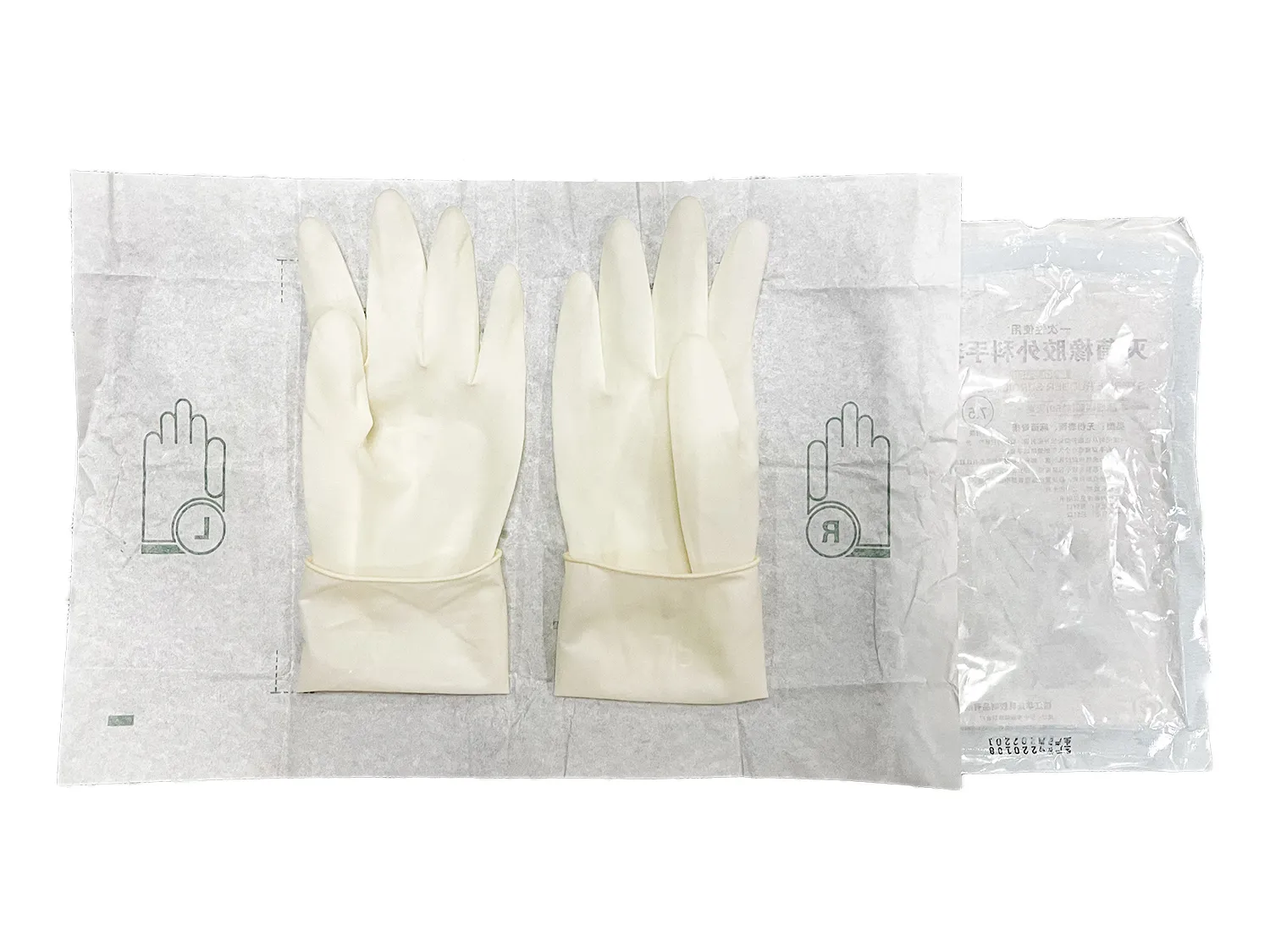
| Sterility Assurance | Non-sterile (Clean bulk packaging) | Sterile (Individually packaged pairs, SAL (10^{-6})) |
| Sterilization Method | N/A | Gamma Irradiation (Cobalt-60) or Ethylene Oxide (EtO) |
| Molding Geometry | Flat, ambidextrous hand formers | Anatomical, curved-finger hand formers |
| Tensile Strength (Unaged) | ≥ 18.0 MPa | ≥ 24.0 MPa |
| Ultimate Elongation | ≥ 650% | ≥ 750% |
| Typical Thickness | 0.10 – 0.14 mm (4.0 – 5.5 mil) | 0.18 – 0.23 mm (7.0 – 9.0 mil) |
| Primary Clinical Setting | Phlebotomy, triage, physical exams, hygiene care | Operating theaters, trauma surgery, sterile compounding |
Understanding Glove Allergies: Type I vs. Type IV
When managing occupational safety, occupational health departments must distinguish between two separate forms of allergic response:
-
Type I Latex Allergy (Immediate Hypersensitivity):
- Trigger: Soluble natural rubber plant proteins (Hev b allergens).
- Symptoms: Immediate hives, contact urticaria, rhinitis, or systemic anaphylaxis.
- Prevalence: ~1%–5% of healthcare personnel.
- Management: Sensitive individuals must transition immediately to synthetic alternatives such as Purple Medical Exam Nitrile Gloves or Premium Nitrile Gloves.
-
Type IV Chemical Allergy (Delayed Contact Dermatitis):
- Trigger: Sulfur vulcanization chemical accelerators (thiurams, dithiocarbamates, mercaptobenzothiazoles) used during the curing process.
- Symptoms: Dry, itchy eczema, scaling, and skin redness developing 24 to 48 hours post-exposure.
- Note: Type IV allergies occur in both natural latex and synthetic nitrile gloves if conventional vulcanization accelerators are present. Accelerator-free formulations eliminate this issue.
Comprehensive Material Comparison
| Performance Metric | Natural Latex | Premium Nitrile | Vinyl (PVC) | TPE Gloves |
|---|---|---|---|---|
| Polymer Type | Cis-1,4-polyisoprene | Nitrile Butadiene Rubber | Polyvinyl Chloride | Thermoplastic Elastomer |
| Tensile Strength | High (18–24 MPa) | Superior (20–32 MPa) | Low (9–12 MPa) | Moderate (12–15 MPa) |
| Elasticity & Elongation | Exceptional (750%–850%) | High (500%–650%) | Low (300%) | Moderate (400%–500%) |
| Tactile Sensitivity | Industry Benchmark | Excellent | Moderate | Fair |
| Puncture Resistance | Moderate | Superior (3x Latex) | Low | Low-Moderate |
| Hydrocarbon / Oil Barrier | Poor (Rapid swelling) | Excellent | Moderate | Good |
| Chemotherapy Drug Testing | Not Recommended | ASTM D6978 Approved | Not Recommended | Not Recommended |
| Biodegradability | Yes (Natural rubber) | Specialized eco-grades only | No (Recyclable code 3) | Thermoplastic recyclable |
Chemical Resistance & Clinical Limitations
While natural latex provides an impermeable barrier against infectious bloodborne pathogens (HIV, Hepatitis B and C) complying with ASTM F1671, it has distinct chemical limitations:
- Susceptible to Hydrocarbons: Natural latex rapidly degrades, swells, and softens when exposed to mineral oils, petroleum jellies, engine lubricants, and non-polar organic solvents.
- Incompatible with Chemotherapy Drugs: Cytotoxic oncology compounds rapidly permeate natural rubber matrices. For oncology handling, hospital staff must use chemotherapy-rated nitrile gloves tested under ASTM D6978.
- Oxidative Degradation: Natural rubber is prone to degradation by ozone, atmospheric oxygen, and UV light, which break down double bonds in the polyisoprene backbone. Store latex gloves in opaque cartons away from electric motors and direct sunlight.
Frequently Asked Questions (FAQ)
Why do surgeons still prefer natural latex gloves over synthetic alternatives?
Despite the popularity of synthetic nitrile, many operating room surgeons prefer sterile latex surgical gloves because of their natural stretch, rapid tactile feedback, and anatomical fit. Curved-finger latex molds mirror the natural resting posture of the hand, minimizing muscle cramping during complex micro-vascular, orthopedic, and neurosurgical operations.
What is the difference between powdered and powder-free latex gloves?
Powdered latex gloves were traditionally coated with cornstarch to simplify donning. However, cornstarch particles absorb soluble latex proteins, aerosolizing them into the air when gloves are snapped off and provoking severe respiratory allergies. Powder-free gloves undergo water leaching and inline chlorination or polymer coating, delivering clean donning without contamination risks.
Are natural latex gloves environmentally friendly?
Yes. Natural rubber latex is tapped renewably from the bark of living rubber trees without felling the forest. Furthermore, untreated natural latex undergoes microbial biodeterioration in soil and compost environments significantly faster than synthetic nitrile or PVC plastics.
Looking for certified hand protection solutions for clinical, laboratory, or industrial use? Review our range of Purple Medical Exam Nitrile Gloves, Premium Nitrile Gloves, or contact Damao Tech’s technical specialists at info@damao-tech.com.